The Mediterranean Diet
Olive oil, vegetables, legumes, fish, whole grains and nuts — the everyday food of the people who live around the Mediterranean Sea, and the single most-researched diet in the history of nutrition science. Already close to how many South Asian and Muslim families eat — once you trade the ghee and the deep-fryer for olive oil and the grill.
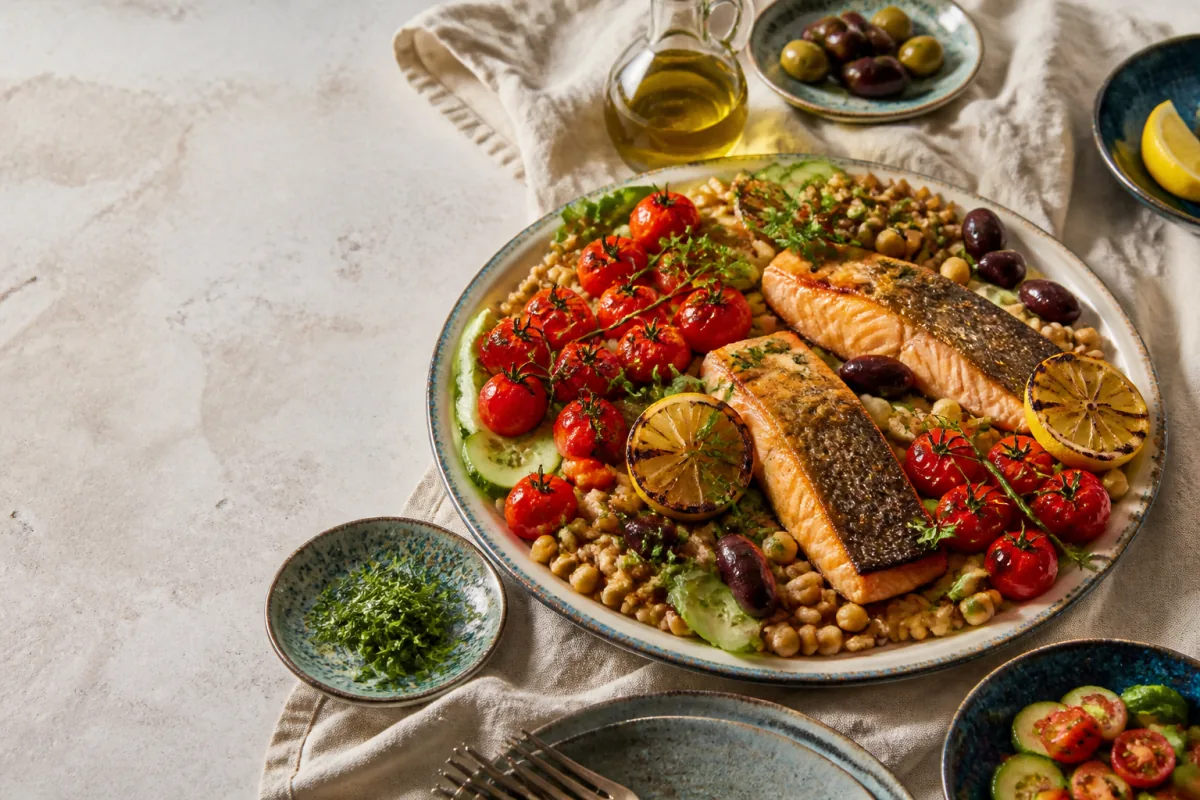

A diet nobody invented
The Mediterranean diet isn't a program someone designed. It's the ordinary, everyday eating of the people who lived around the Mediterranean Sea in the mid-20th century — Crete, southern Italy, Greece, the Levant, coastal Spain — built on what the land and sea gave them: olives, wheat, legumes, vegetables, fish, and very little meat.
It entered science by accident. In the 1950s the American physiologist Ancel Keys noticed that poor Cretan farmers — who ate a fat-rich diet — had strikingly low rates of heart disease compared with wealthier Americans. To find out why, he launched the Seven Countries Study in 1958, the first major investigation to link diet to heart disease across populations. It pointed, again and again, to the Mediterranean table.
Seventy years and hundreds of trials later, it remains the diet against which every other diet is measured. In 2010, UNESCO added it to the Representative List of the Intangible Cultural Heritage of Humanity — not as a fad, but as a way of life.
"There is no single 'Mediterranean diet.' There is a pattern — more plants, better fat, less meat, shared at an unhurried table — that the healthiest long-lived populations on earth happen to share."The pattern, not the rulebook
No diet has been tested more
Four of the landmark trials behind the Mediterranean diet's "strong" rating — the highest in the atlas.
PREDIMED
High-risk adults assigned a Mediterranean diet rich in extra-virgin olive oil or nuts had roughly a 30% lower rate of heart attack, stroke and cardiovascular death than those told to simply cut fat — even without calorie restriction.
Lyon Diet Heart Study
Survivors of a first heart attack placed on a Mediterranean-style pattern had a dramatically lower rate of recurrence and cardiac death than those on a standard "prudent" Western diet — the trial was stopped early on ethical grounds.
The Seven Countries Study
The study that started it all: tracking diet and heart disease across the US, Europe and Japan, it found coronary mortality was lowest where the Mediterranean pattern — olive oil, plants, fish, little red meat — was the norm.
Longevity & the brain
Across large pooled analyses, higher Mediterranean adherence tracks with lower all-cause mortality, less type-2 diabetes, and slower cognitive decline — the evidence base that also seeded the brain-focused MIND diet.
Three things it does in the body
Better fat, not less fat
Monounsaturated olive oil and omega-3 fish replace saturated fat (ghee, fatty meat, butter). LDL cholesterol and arterial inflammation fall — the change that drove the PREDIMED and Lyon results.
Fiber & polyphenols
Vegetables, legumes, whole grains and olive-oil polyphenols feed the gut microbiome and slow how fast carbohydrates hit the blood — steadier energy, steadier blood sugar.
Less of what harms
Little red and processed meat, minimal refined sugar, almost no ultra-processed food. Much of the benefit is simply what the Mediterranean table leaves off the plate.
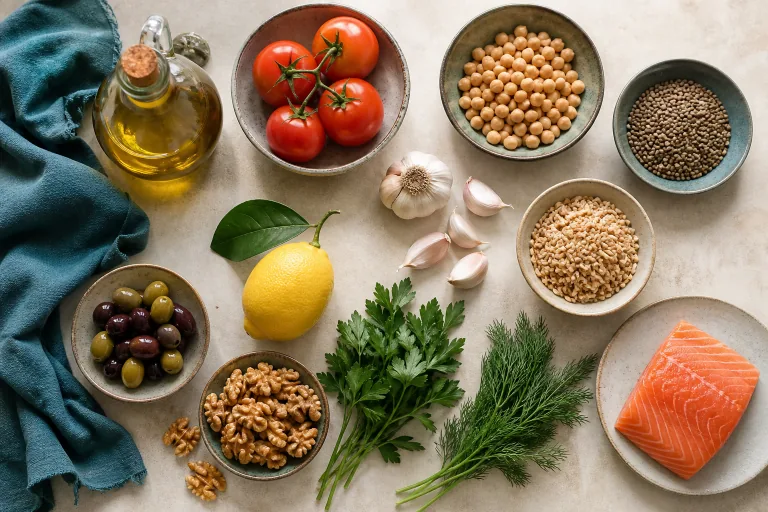
The eight everyday foods
None of these are exotic or expensive. Most are already in a South Asian kitchen.
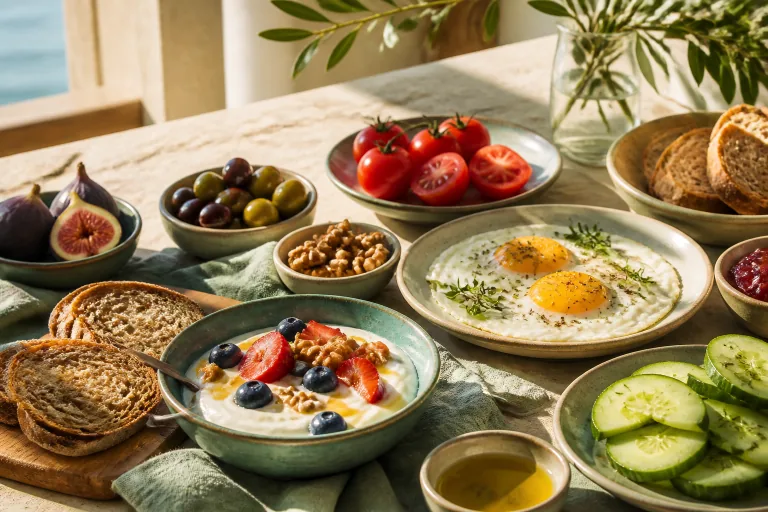
A day on the Mediterranean
A realistic, halal, desi-friendly day — not a photoshoot. We tune portions and timing to you.
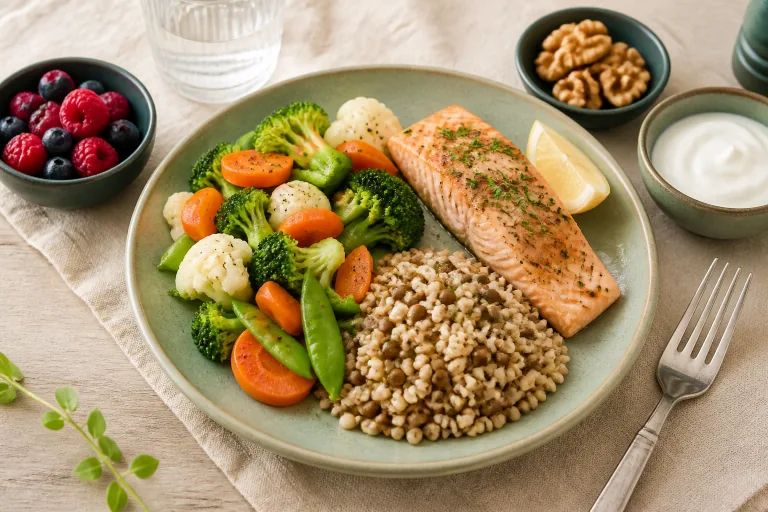
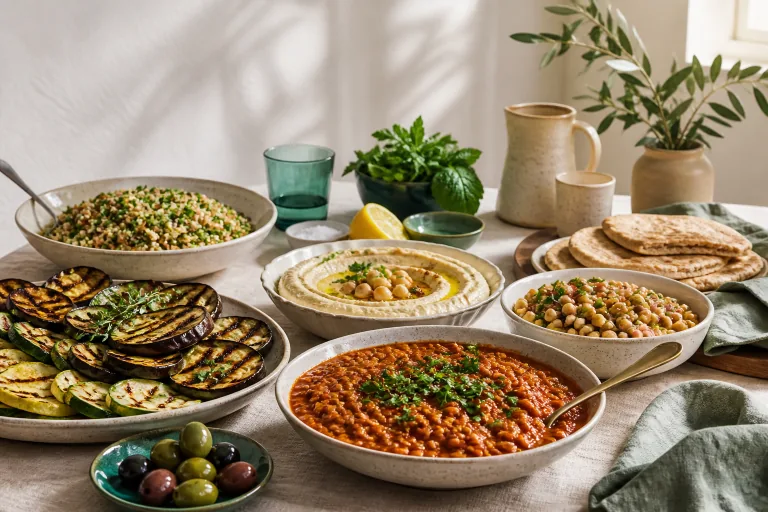
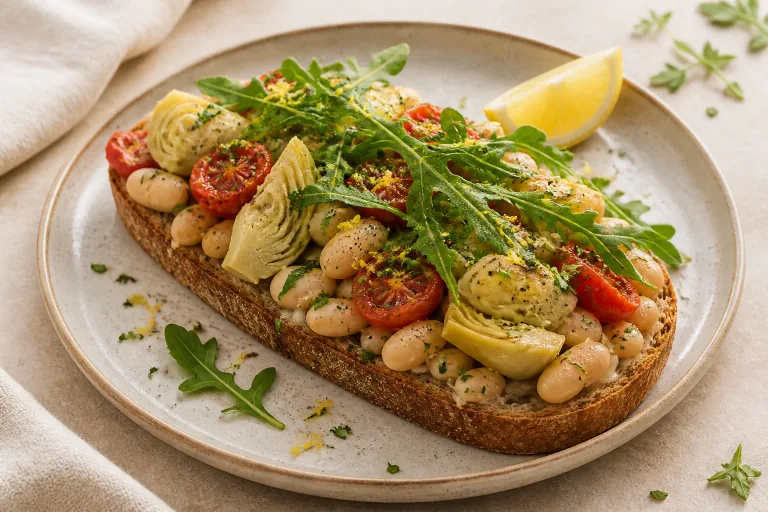
Four halal Mediterranean recipes
Starter recipes. In a consult, Maryam or Minahil build a full week around your tastes and budget.
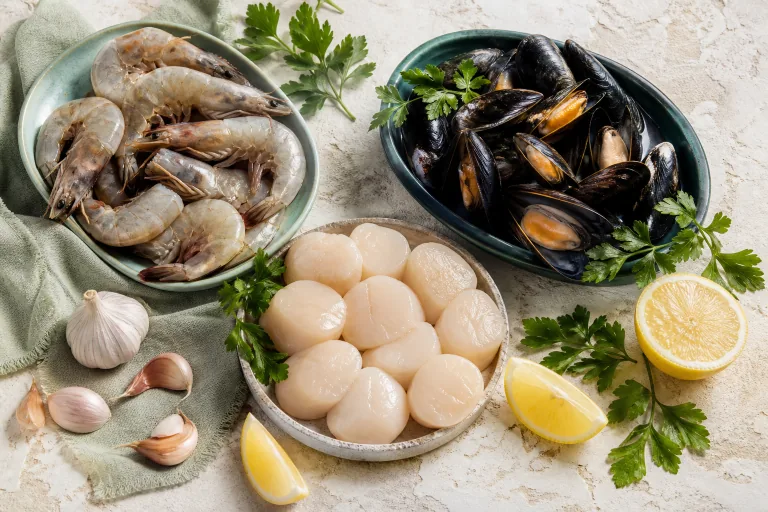
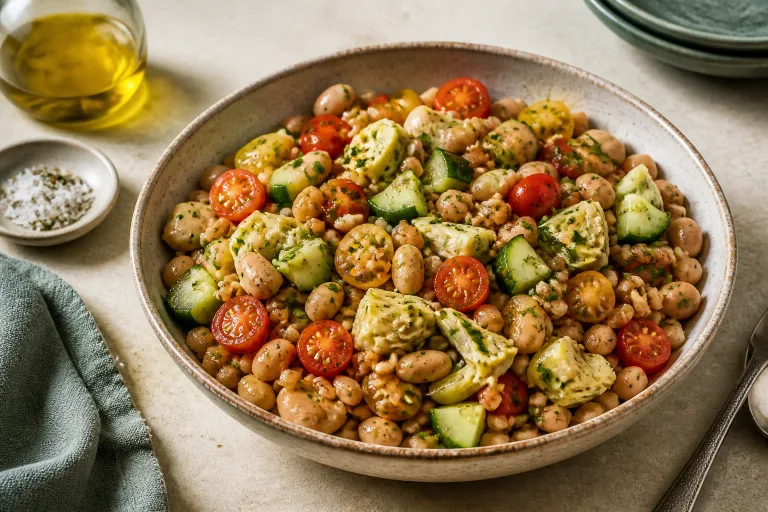
Who this is for
A strong fit if you…
- Have heart-disease or high-cholesterol risk — or a family history of it
- Want something sustainable for life, not a restrictive reset
- Have PCOS or insulin resistance (we add a low-GI overlay)
- Already like vegetables, lentils, fish and olive oil
- Want the most evidence-backed diet there is
Look elsewhere if you…
- Need rapid, medically-supervised weight loss for surgery or fertility timelines
- Have advanced kidney disease (needs a tailored renal plan)
- Want a short, strict reset — see Sunnah Intermittent Fasting
- Truly dislike fish and olive oil (we can adapt, but the fit is weaker)
The diet is the start. You are the rest.
The Mediterranean diet is a public template. What we do is make it yours — halal, desi, and tuned to your body.
We make it halal
Every protein halal-sourced. No wine in the cooking, no compromise — the Mediterranean table is naturally halal once the alcohol comes out, which is rarely the point of the food anyway.
We make it desi
Your dal counts as legumes. Roti goes wholemeal. Sabzi gets cooked in olive oil instead of being drowned in it. The spices and the flavours you grew up on stay — we change the fat and the flour, not the food.
We layer your condition
PCOS, type-2 diabetes, high cholesterol, pregnancy, perimenopause — we keep the Mediterranean base and tune the carbohydrate, portion and timing details to your labs and your life.
The honest answers
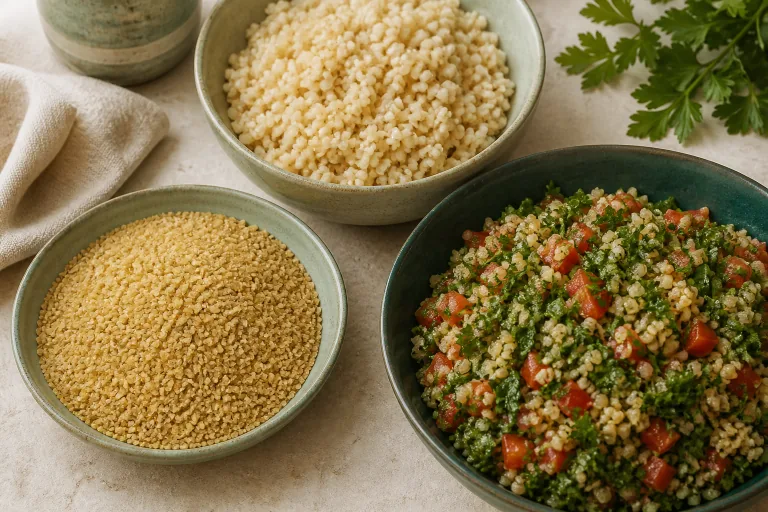
Yes. The Mediterranean diet isn't low-carb — it's better-carb. We move you toward wholemeal roti, brown or par-boiled rice and bulgur, and we right-size the portion. You are not giving up your staples; you're upgrading them.
A good bottle goes a long way, and any decent olive oil beats ghee or refined oil for the heart. Where budget is tight, we prioritise it for finishing and dressing (where flavour matters most) and use it sensibly for cooking. We plan around what's actually in your shops and your budget.
It still works, just with a little more attention. Fish is the easiest source of omega-3s, so without it we lean on walnuts, flax, and (with your dietitian) possibly a supplement, and we keep legumes and poultry doing the protein work. The fit is slightly weaker, but it's very workable.
It's an excellent base. We add a low-glycemic overlay — pairing carbs with protein and fat, favouring lower-GI grains, and timing meals — which is exactly the approach in our dedicated PCOS Metabolic Protocol.
Many people do, gently — the high fibre and protein are very filling, so you tend to eat less without counting. But the Mediterranean diet's real claim to fame is heart, brain and longevity, not the scale. If weight loss is the specific goal, we build a calorie-aware version on this same base.
"Eating healthy" is vague; the Mediterranean diet is specific and tested — a defined pattern with decades of randomized trials behind it. That's why it's the one diet doctors and dietitians most consistently recommend, and why it earns the only "strong" evidence rating clustered across the whole atlas.
Where this comes from
- Randomized trialPREDIMED. Estruch R, et al. Primary Prevention of Cardiovascular Disease with a Mediterranean Diet Supplemented with Extra-Virgin Olive Oil or Nuts. N Engl J Med 2013;368:1279–1290 (re-analyzed and republished 2018). Estruch 2018 (NEJM) ↗
- Randomized trialLyon Diet Heart Study. de Lorgeril M, et al. Mediterranean diet, traditional risk factors, and the rate of cardiovascular complications after myocardial infarction. Circulation 1999;99:779–785. de Lorgeril 1999 (Circ) ↗
- Cohort · foundationalSeven Countries Study. Keys A, et al. Seven Countries: A Multivariate Analysis of Death and Coronary Heart Disease. Harvard University Press, 1980.
- Meta-analysisAdherence & health outcomes. Sofi F, et al. Adherence to Mediterranean diet and health status: meta-analysis. BMJ 2008;337:a1344. Sofi 2008 (BMJ) ↗
- ReviewsCognition & longevity. Pooled cohort analyses linking Mediterranean adherence to slower cognitive decline and lower all-cause mortality — the basis the MIND diet later built on. Sofi 2008 (BMJ) ↗
- CulturalUNESCO. The Mediterranean Diet inscribed on the Representative List of the Intangible Cultural Heritage of Humanity, 2010.
Compiled by Nidari Nutrition, June 2026. Pending formal clinical review by Maryam Shabbir, DN. Educational reference — not a substitute for individual medical advice.
Ready to discuss this diet?
Fifteen minutes with one of our dietitians. We'll tell you honestly whether the Mediterranean diet is your foundation — or point you to the one that is. Halal, desi, and built around you.