The Anti-Inflammatory Diet
Chronic, low-grade inflammation sits underneath heart disease, type-2 diabetes, joint pain and more. This isn't one rigid plan — it's a pattern that turns the fire down: omega-3s, colourful plants, fibre, and the very spices already in your masala dabba. Your kitchen is half-built for it.

A pattern, not a fad
As scientists came to understand that chronic, low-grade inflammation quietly drives heart disease, type-2 diabetes, some cancers and autoimmune flares, a question followed: can food turn that fire down? The "anti-inflammatory diet" — popularised in the 2000s and built on the Mediterranean pattern plus spice science — is the answer that emerged.
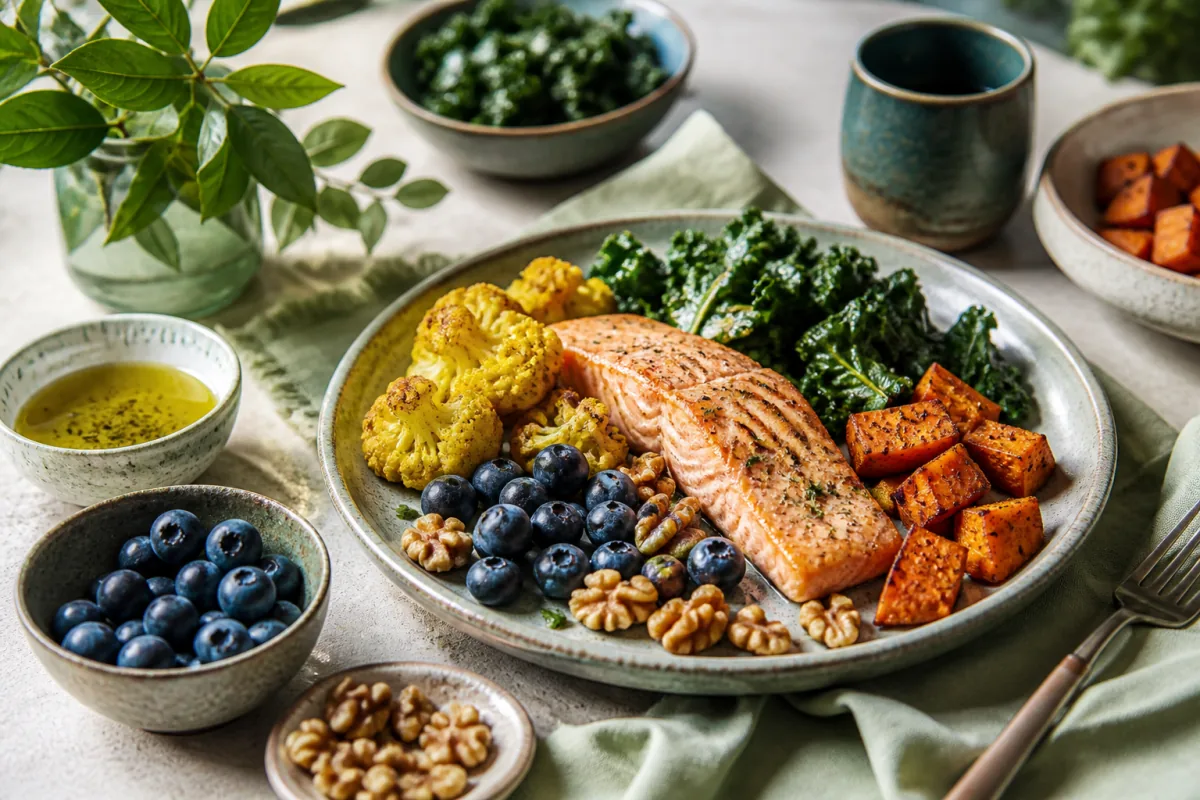
It was never a single branded plan. It's a way of choosing: more oily fish, olive oil, colourful vegetables and fruit, whole grains and nuts; far less sugar, refined carbohydrate, processed meat and fried food. And it leans hard on the polyphenol-rich spices — turmeric, ginger, garlic — that the science finds most interesting.
Which is the good news for us: the South-Asian spice cabinet is, almost by accident, an anti-inflammatory toolkit. Turmeric, ginger, garlic, cumin, black pepper — you already cook with them daily. The work is mostly in what we remove: the sugar, the maida, the deep-frying.
"Half of an anti-inflammatory diet is already in your masala dabba. The other half is putting down the sugar, the maida and the karahi full of oil."Turn the fire down
What the research shows
Real, moderate support for the pattern — and honesty about the "miracle spice" hype.
Diet & inflammatory markers
Diets scored as more "pro-inflammatory" track with higher CRP (an inflammation marker) and more heart disease and diabetes; more anti-inflammatory diets track the other way.
It's Mediterranean, essentially
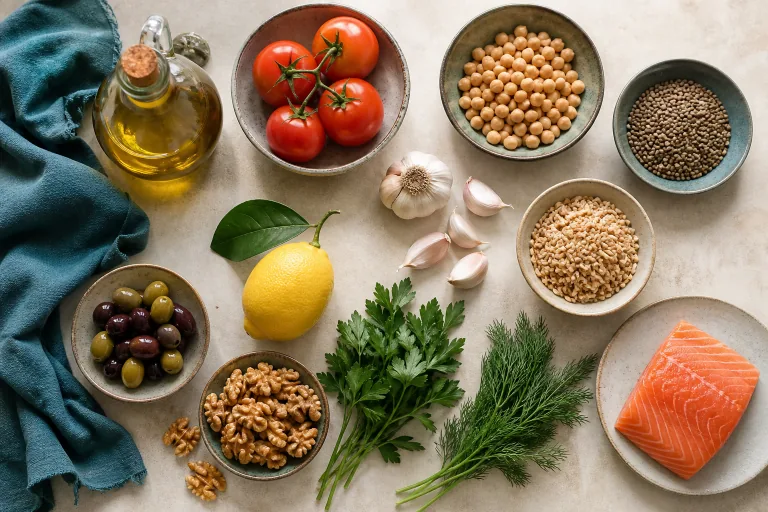
The anti-inflammatory plate is, in practice, the Mediterranean plate — which has the strongest trial evidence in nutrition for lowering heart events and inflammation.
Omega-3 fats
The omega-3s in oily fish have genuine anti-inflammatory effects and modest benefits for triglycerides and some joint conditions — a real, if not dramatic, lever.
Turmeric: promise, not magic
Curcumin shows anti-inflammatory signals, but it's poorly absorbed (needs black pepper + fat) and is no cure. Best treated as a healthy daily spice — not a supplement that replaces treatment.
Three ways it cools the fire
Better fats
Omega-3 fish and olive oil replace pro-inflammatory excess saturated fat and processed-meat fats — shifting the body's chemistry toward calm.
Polyphenols & fibre
Colourful plants, berries, green tea and spices flood the body with antioxidants and feed an anti-inflammatory gut microbiome.
Less sugar & refined carb
Sugar spikes and refined flour are quietly inflammatory. Removing them — the deep-fried and the mithai — is half the entire effect.
Foods that calm — and foods that flare
Colour, omega-3s and spice in; sugar, refined carbs and fried out.
An anti-inflammatory day
Spice-forward, omega-3-rich, low in sugar — and unmistakably desi.
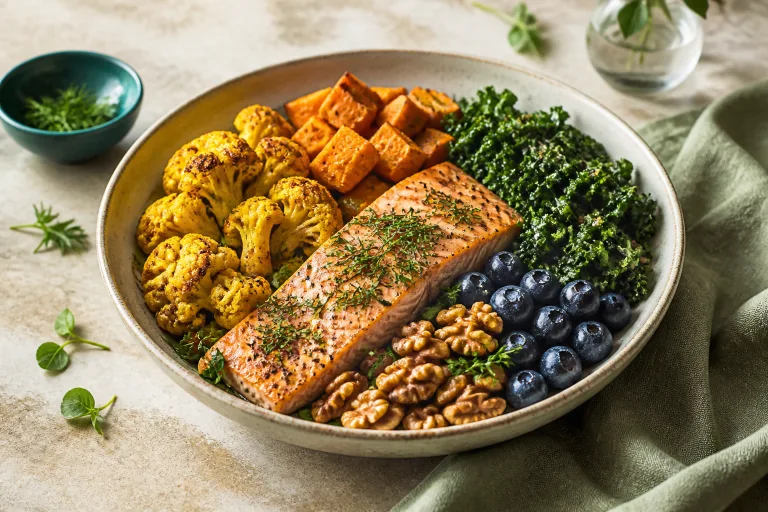
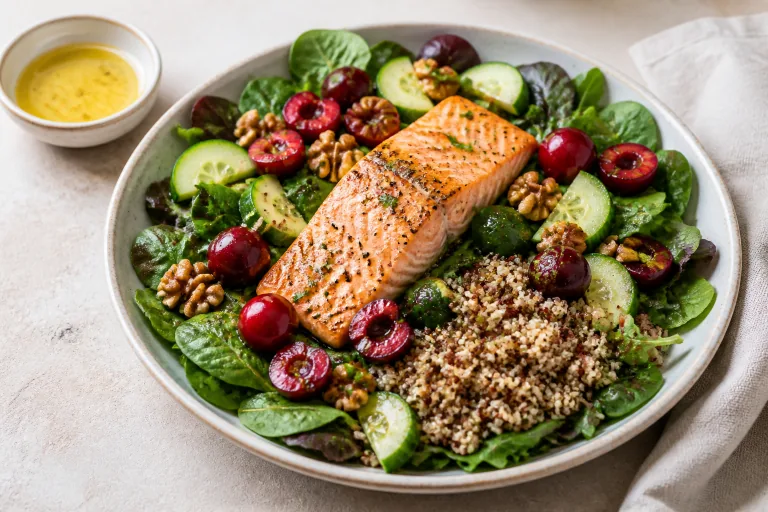
Four anti-inflammatory recipes
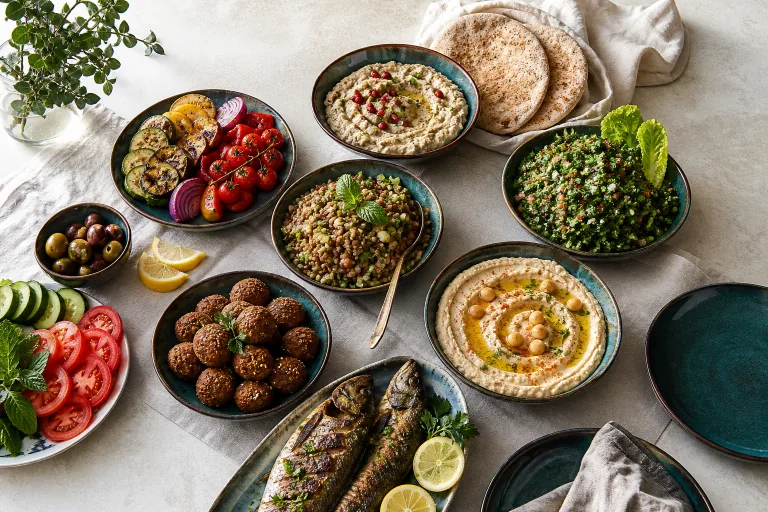
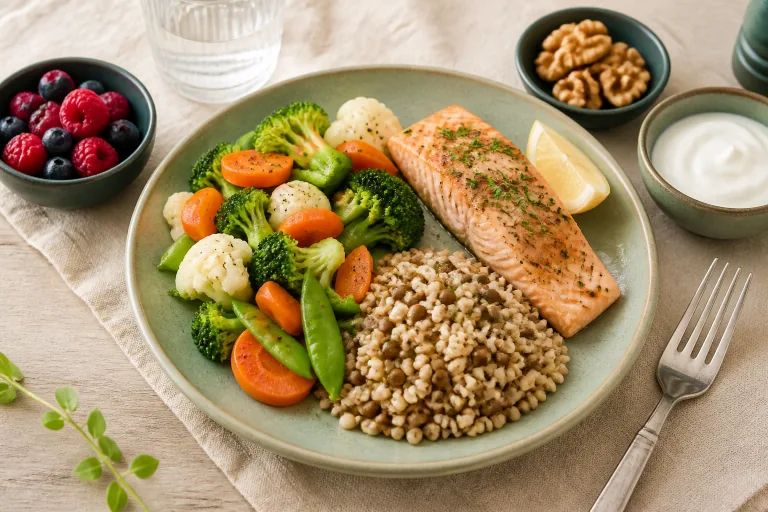
Spice-led and omega-3-rich, halal throughout. Maryam tunes them to your goals.
Who this is for
A strong fit if you…
- Have joint pain, an autoimmune condition, or a lot of inflammation
- Carry heart-disease or type-2 diabetes risk
- Have PCOS (which involves low-grade inflammation)
- Already cook with turmeric, ginger and garlic and want to lean in
Keep expectations honest if you…
- Have an autoimmune disease — diet supports but does not replace your medication
- Are hoping turmeric capsules will fix things on their own (they won't)
- Need targeted treatment for a specific diagnosis
The pattern is the start. You are the rest.
You already own most of the spice rack. We amplify what helps and remove what flares.
We turn up the spice
Turmeric (with black pepper), ginger, garlic and greens become daily, used the way they actually absorb — in food, with a little fat — not as expensive capsules.
We cut the flares
The real work: removing sugar, maida, deep-fried snacks and processed meat. That alone calms the fire more than any "superfood" ever will.
We target your condition
Joints, PCOS, gut, heart — we shape the anti-inflammatory base around what's actually inflamed in you, alongside your doctor's plan.
The honest answers
Curcumin, turmeric's active compound, has real anti-inflammatory signals in studies — but it's poorly absorbed unless paired with black pepper and a little fat, and it's a helpful food, not a cure. Cook with it daily (as you already do); don't expect a capsule to replace treatment.
No — and we won't pretend otherwise. An anti-inflammatory diet can ease symptoms and lower flare frequency for many people, and it's worth doing, but it works alongside your medication and rheumatologist, never instead of them.
Largely, yes — and that's a strength, because the Mediterranean diet has the best evidence in nutrition. The anti-inflammatory framing simply emphasises the omega-3s, colour and spices, and is even easier to "desi-fy" through your existing masala.
Yes — PCOS involves low-grade inflammation as well as insulin resistance, so an anti-inflammatory, low-GI base helps on both fronts. It's woven into our PCOS Metabolic Protocol.
Fish is the easiest omega-3 source, so it helps a lot — but if you don't eat it, we lean on walnuts, flax and chia and consider an algae-based omega-3 supplement. The pattern still works; it just needs a little planning.
Cutting sugar and refined carbohydrate — sugary chai, mithai, maida, biscuits. People reach for magic spices, but removing the pro-inflammatory sugar and fried food is where most of the benefit actually comes from.
Where this comes from
- CohortsDiet & inflammation. Dietary Inflammatory Index studies linking diet patterns to CRP and cardiometabolic outcomes. Shivappa DII meta-analysis ↗
- Randomized trialMediterranean overlap. Estruch R, et al. (PREDIMED), N Engl J Med 2013 — the anti-inflammatory plate is, in practice, the Mediterranean one. Estruch PREDIMED (NEJM 2018) ↗
- TrialsOmega-3s. Studies of marine omega-3 fatty acids on inflammatory markers, triglycerides and joint symptoms. Omega-3 & RA (Clin Rheum 2024) ↗
- ReviewsCurcumin. Reviews of turmeric/curcumin bioavailability and anti-inflammatory effect — promising, absorption-limited, not curative. Hewlings 2017 curcumin review ↗
Compiled by Nidari Nutrition, June 2026. Pending formal clinical review by Maryam Shabbir, DN. Educational reference — not a substitute for individual medical advice. An anti-inflammatory diet supports, but does not replace, treatment for any diagnosed condition.
Ready to turn the fire down?
Fifteen minutes with a dietitian. We'll build an anti-inflammatory plate from the spices already in your kitchen — and target it at whatever's actually inflamed: joints, hormones, heart or gut.