Traditional South Asian
Dal, sabzi, roti, dahi — transformed by spice. The everyday eating of Pakistan, India and Bangladesh is, at its heart, one of the most plant-forward, gut-friendly cuisines on earth. The trouble isn't the tradition. It's the modern drift — the maida, the sugar, the deep-frying, the rivers of oil. We don't replace your food. We tune it back.
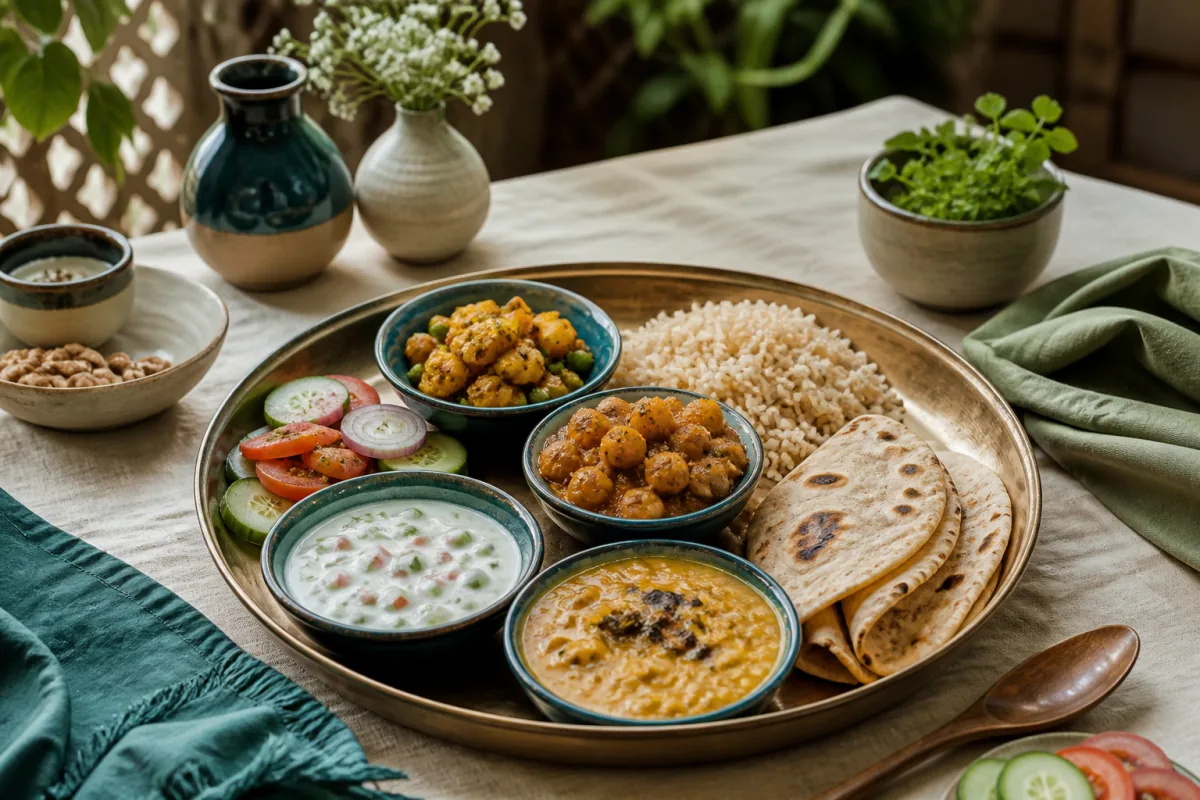
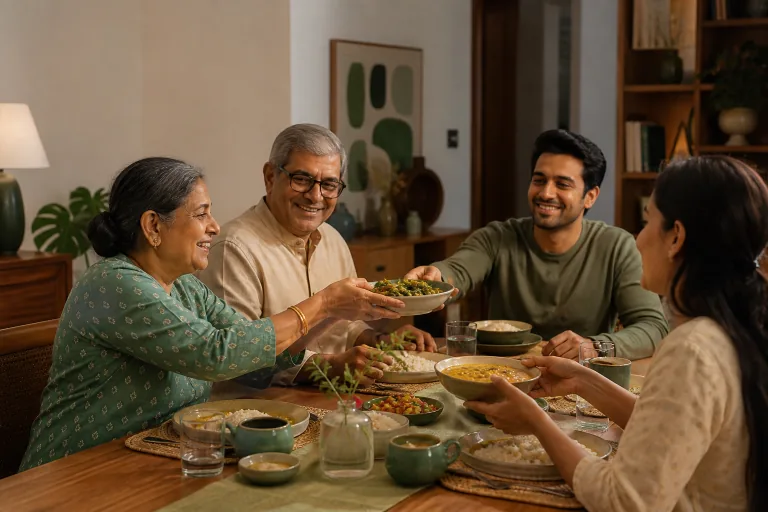
The plate your grandmother set
For centuries the everyday meal across the subcontinent was modest and plant-forward by design: a bowl of dal, a seasonal sabzi, a couple of whole-grain rotis, a little rice, fresh dahi, and a fistful of spice. Meat appeared often as a guest, not the host. It is, almost by accident, a textbook heart-and-gut diet.
What changed is not the cuisine — it's the era. Cheap refined flour (maida), industrial oil, sugar in everything, and a festival-and-restaurant menu eaten every day rather than on Eid. Naan instead of roti, biryani instead of dal-chawal, mithai instead of fruit, and pakoras deep-fried in oil reused all week.
So we rate this diet honestly as mixed — because there are two of them. The traditional version is genuinely excellent. The modern drift quietly drives the high rates of diabetes and heart disease in our community. Our whole job is to walk you back to the first one — with the same flavours intact.
"We have never once told a client to stop eating desi food. We tell her to eat the version her great-grandmother would recognise — more dal, smarter oil, real atta — and keep every spice she loves."The Nidari approach
Honest about both versions
The traditional plate has strong science behind it. The modern drift has strong science against it. We rate it "mixed" for exactly that reason.
Dal & pulses, daily
Daily lentils, chickpeas and beans are among the most consistently studied foods in nutrition — linked to lower LDL cholesterol, steadier blood sugar and better satiety. The dal habit is one of the healthiest things about the cuisine.
Whole grain over maida
Real atta roti, brown rice and millets (bajra, jowar) digest slowly and carry fibre. Swapping them for maida and white rice is one of the clearest evidence-based upgrades — better blood sugar, better heart markers.
Dahi & fermented dairy
Fresh dahi, lassi and chaas bring live cultures and protein; fermented dairy is associated with favourable gut and metabolic outcomes — a far better daily drink than sugary chai or soda.
Why our community is at risk
South Asians tend to develop type-2 diabetes and heart disease earlier, and at a lower body weight, than many other groups. The biggest dietary driver is the modern version — deep-fried snacks, maida, sugar and heavy oil — not the plant-forward tradition.
Three things the old plate got right
Dal + roti = complete
Lentils and whole-grain bread together make a complete protein with slow carbohydrate and fibre — filling, blood-sugar-friendly, and cheap. The everyday combination was nutritionally smart long before anyone measured it.
Spice does the heavy lifting
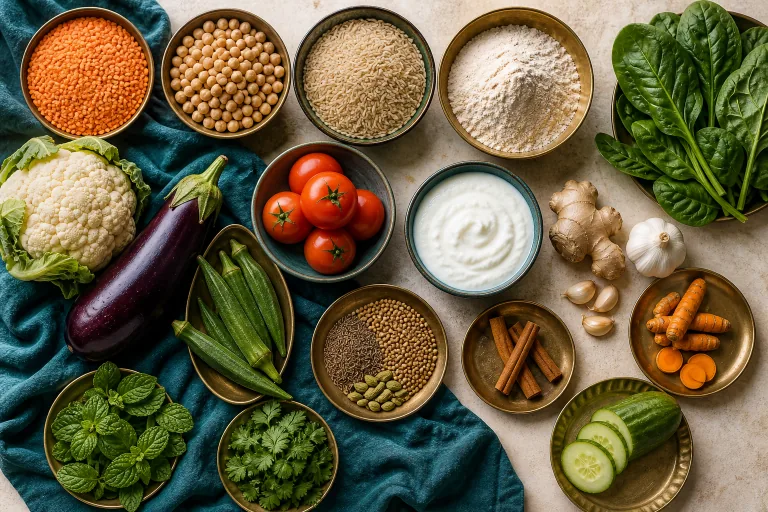
Haldi, jeera, dhania, adrak and lehsan (turmeric, cumin, coriander, ginger, garlic) carry the flavour — which means you can cook with less salt and far less oil and still eat something delicious. Anti-inflammatory bonus included.
Plant-forward by default
Vegetables and legumes were the centre of the plate and meat the occasional guest. That ratio — lots of plants, modest meat — is exactly what heart and longevity research keeps landing on.
The desi kitchen, rebalanced
Keep the first seven. Ease off the last one — that's the whole tune-up.
A desi day, tuned
The same meals you already cook — just the traditional, lighter version of each.
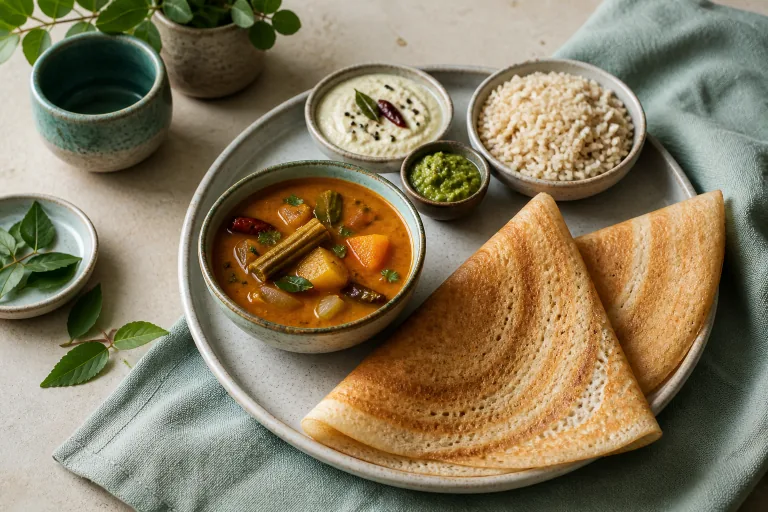
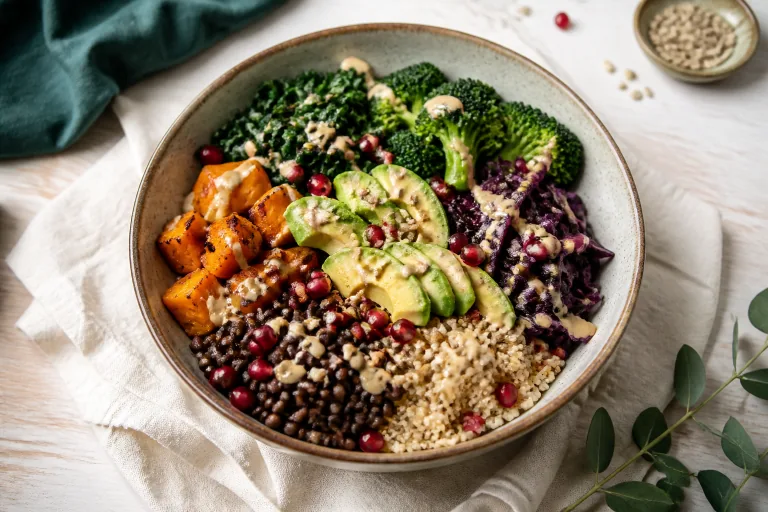
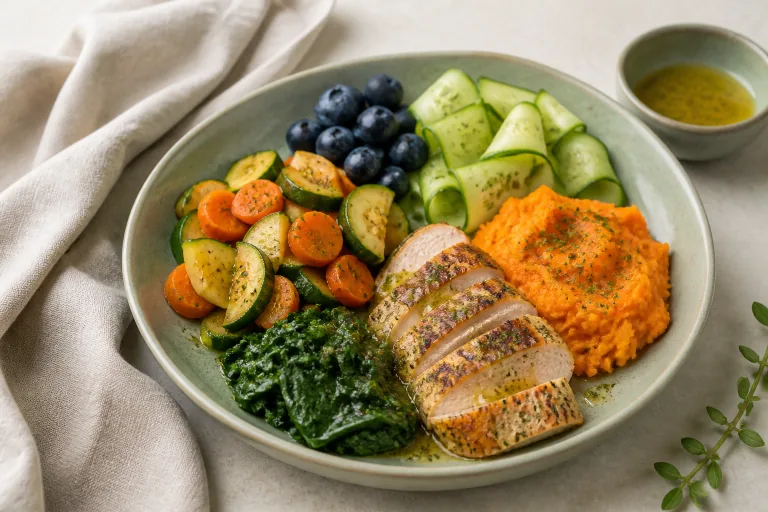
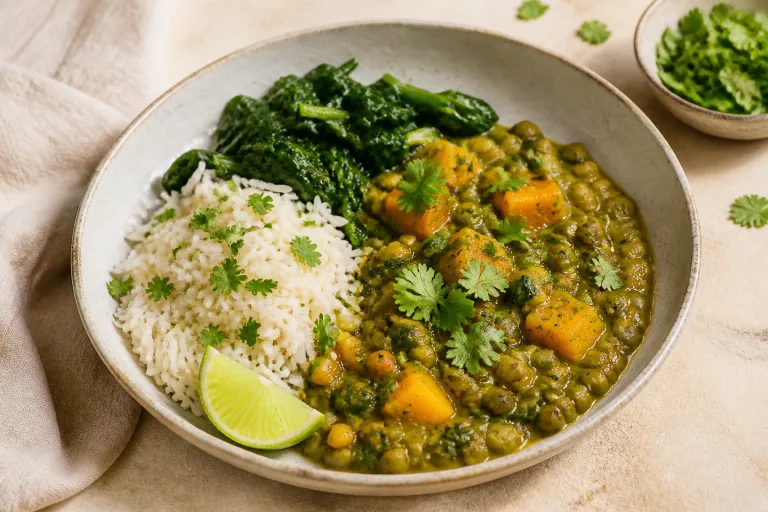
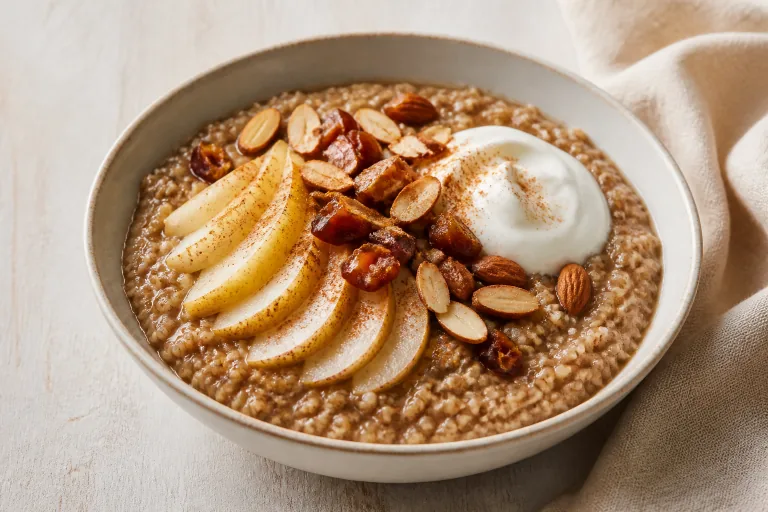
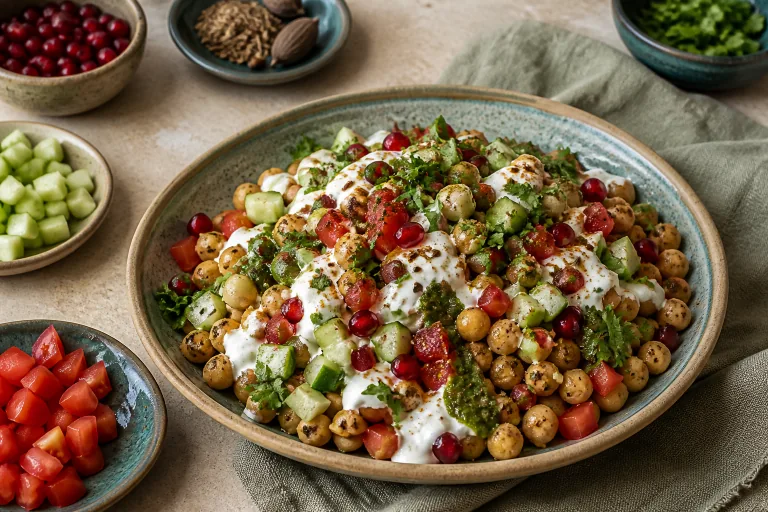
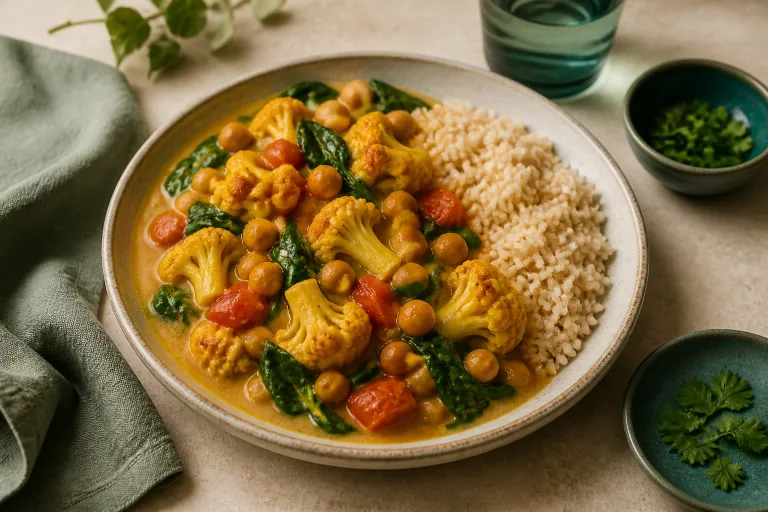
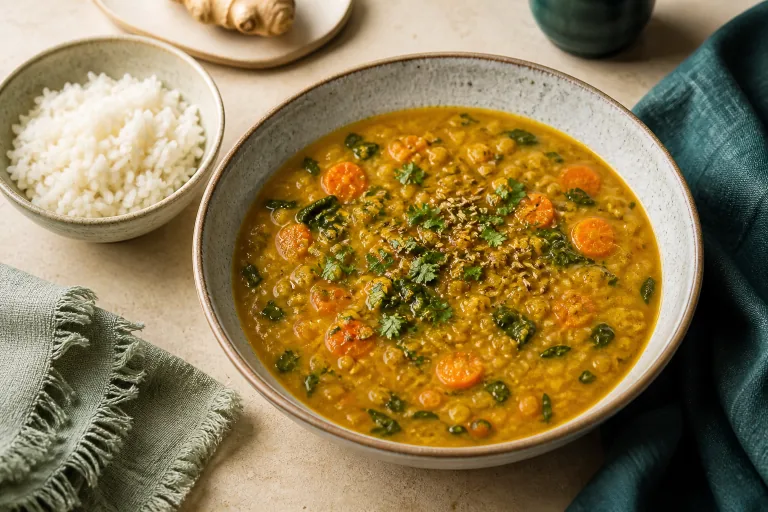
Four desi staples, done well
The food you already love, in its honest traditional form — descriptive, halal, and easy to scale. Maryam keeps the nutrition sound.
Who this is for
Home turf if you…
- Are South Asian and want to keep your food, not abandon it
- Have a family history of diabetes, high BP or heart disease
- Want changes that fit your real home kitchen and your family's plate
- Already cook dal, sabzi and roti and just want them tuned
Needs a layer if you…
- Eat the daily restaurant / deep-fried / mithai version — that's the part driving the risk
- Have a diagnosed condition (diabetes, kidney, PCOS) needing a tailored clinical plan
- Assume "desi food is healthy" without separating the tradition from the drift
We keep the flavour. We tune the drift.
Same masala, same dal, same roti — quietly rebalanced for the body you actually have.
We keep your flavours
The same spices, the same dishes, the same family recipes. Nothing on your table becomes "forbidden." We start from your real kitchen, not a printout.
We tune the cooking
Whole-grain atta over maida, modest oil over the ladle, baked and air-fried over deep-fried, fruit and chana chaat over mithai and namkeen. Small swaps, same taste.
We watch your numbers
Because South Asians develop diabetes and heart disease earlier, we build the plate around your labs — blood sugar, cholesterol, weight — and keep every meal halal.
The honest answers
Because there are two desi diets. The traditional plate — dal, sabzi, roti, dahi — is genuinely heart-and-gut friendly. The modern one — maida, deep-frying, mithai, sugary chai and heavy oil, eaten every day instead of on Eid — is a major driver. South Asians also tend to develop these conditions earlier and at a lower body weight, so the drift matters more for us, not less.
No. Rice and roti stay — we just shift toward whole grains (real atta, brown rice, millets like bajra and jowar) and mind the portion, always paired with dal, sabzi and salad so the meal digests slowly. You keep your staples.
Yes — as occasions, not as the everyday. The harm is never one plate of biryani at a wedding; it's deep-fried snacks and sweets becoming a daily habit. We plan for the celebrations on purpose so you enjoy them without guilt.
A small amount of ghee is fine and flavourful — the tradition always meant a little. The problem is quantity: the ladles of oil and ghee modern cooking uses. We keep it modest and let the masala carry the flavour instead.
Both work beautifully. The cuisine is naturally dal- and vegetable-led, so a vegetarian version is easy and protein-secure. If you eat meat, we keep it as the occasional guest — grilled or curried in modest amounts — rather than the centre of every meal.
Often, yes — a dal-based, whole-grain, lower-fried plate is exactly the direction that supports insulin sensitivity. For PCOS specifically we'd layer this with our PCOS Metabolic Protocol, and for a diagnosed condition we build a tailored plan with your dietitian rather than rely on tradition alone.
Where this comes from
- HeritageThe tradition. The everyday plant-forward eating of Pakistan, India and Bangladesh — dal, vegetables, whole grains, fermented dairy and spice, with meat as an occasional food.
- PulsesLegumes. Meta-analyses of dietary pulses (lentils, chickpeas, beans) showing reductions in LDL cholesterol and improved glycaemic control and satiety. Ha 2014 (CMAJ) ↗
- RiskSouth Asian cardiometabolic risk. Scientific statements documenting higher rates of type-2 diabetes and cardiovascular disease in South Asians, often at lower body weight than other populations. AHA 2018 (Circulation) ↗
- GrainsWhole grains vs refined. Research associating whole grains (and the replacement of refined flour and white rice) with improved metabolic and cardiovascular outcomes. Aune 2016 (BMJ) ↗
Compiled by Nidari Nutrition, June 2026. Pending formal clinical review by Maryam Shabbir, DN. Educational reference — not a substitute for individual medical advice. If you have a diagnosed condition, work with your dietitian on a tailored plan.
Ready to eat your own food, well?
Fifteen minutes with a dietitian who grew up on the same plate. We'll keep your masala, your dal and your roti — and quietly tune the cooking around your health and your labs. Heritage, made sound.