The Atkins Diet
The low-carb phenomenon that arrived decades before keto. Atkins starts very low-carb and adds carbohydrate back in stages until you find your personal tolerance. That phased idea is its smartest feature — and the reason we treat it as a way to learn your carb comfort zone, not to give up roti forever.
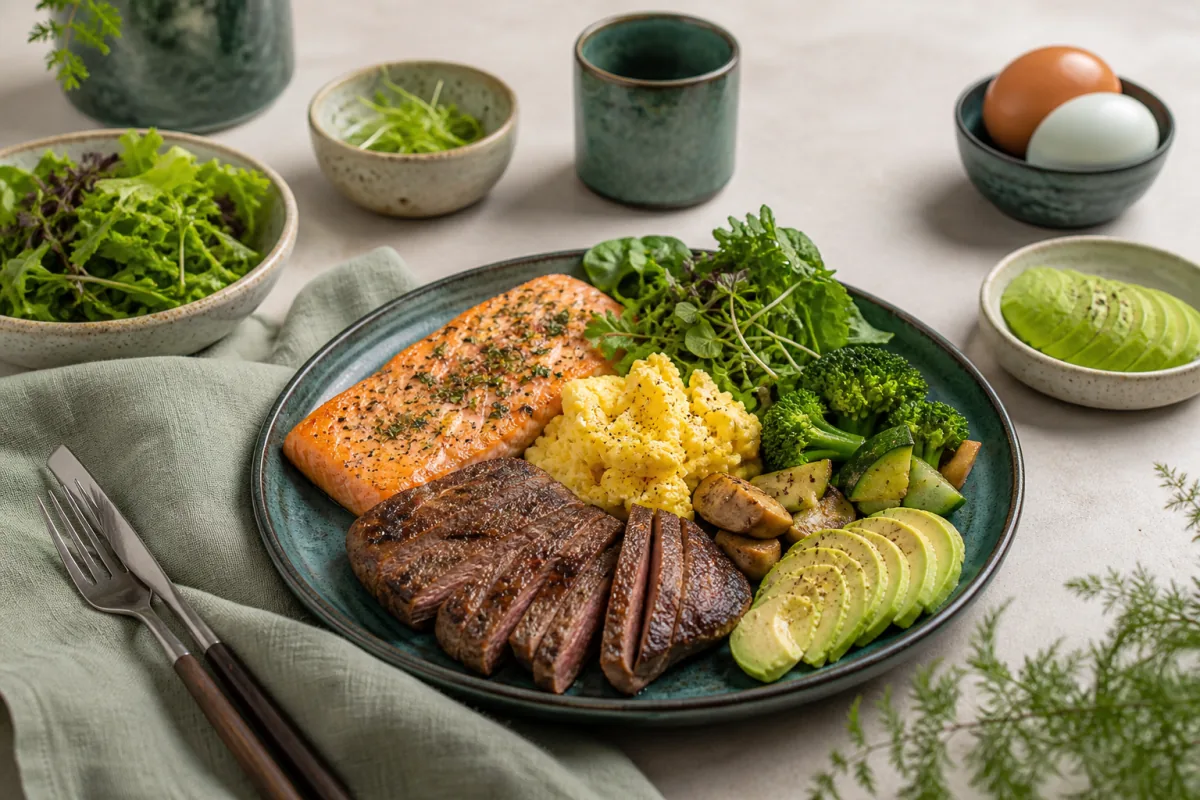

Low-carb, before it was famous
Cardiologist Dr. Robert Atkins published Dr. Atkins' Diet Revolution in 1972, arguing that cutting carbohydrates — not fat — was the key to weight loss. It was controversial for decades, then vindicated in part as low-carb research matured.
Atkins runs in four phases: Induction (very low carb, ~20g a day), Balancing, Pre-Maintenance and Lifetime Maintenance — each one adding carbohydrate back until you reach the level you can maintain without regaining. That "find your tolerance" structure is genuinely useful.
The honest notes: short-term weight loss is real and often fast, but by one to two years it tends to converge with other diets. And early Atkins was infamous for unlimited saturated fat — modern Atkins, and certainly our version, steers toward lean protein and healthy fats. For a roti-and-rice kitchen, the early phases are the hard part.
"The valuable idea in Atkins isn't 'carbs are evil' — it's 'find the carb level that works for your body.' We use the phases to teach that, then build a livable plate around it."Phases as a teaching tool
What the research shows
Real short-term results, an honest long-term picture, one fat caveat.
Short-term weight loss
In trials, low-carb diets like Atkins produce faster early weight loss than low-fat diets — often with better short-term blood-sugar and triglyceride numbers.
It converges over time
By a year or two, weight results tend to even out with other sensible diets. The early edge is real but doesn't always last — adherence matters more than the macronutrient split.
The phased structure
Atkins's best idea is the staged reintroduction — it teaches you your personal carb tolerance rather than imposing a permanent ban, which makes maintenance more realistic.
Fat quality & fibre
Classic Atkins allowed unlimited saturated fat; we favour lean protein and healthy fats instead. And early phases cut fruit, grains and legumes — so fibre needs attention.
Three things Atkins does
Lowers insulin
Cutting carbs lowers blood sugar and insulin, nudging the body toward burning fat — one contributor to the early weight loss (much of which is water and glycogen).
Protein & fat satiety
Meals built on protein and fat are filling, which tends to reduce overall intake without calorie counting.
Finds your carb level
The phased add-back reveals how many carbs you can eat while keeping your goals — a personalised, maintainable target.
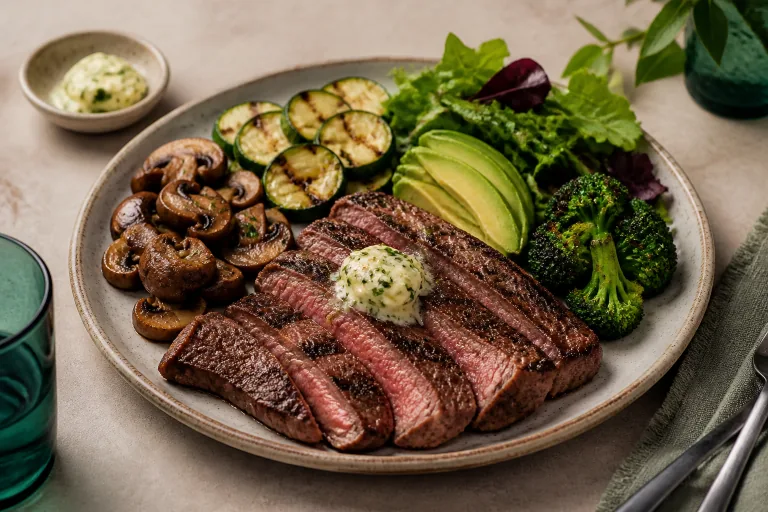
The Atkins plate
Protein and healthy fats lead; carbohydrates return in stages.
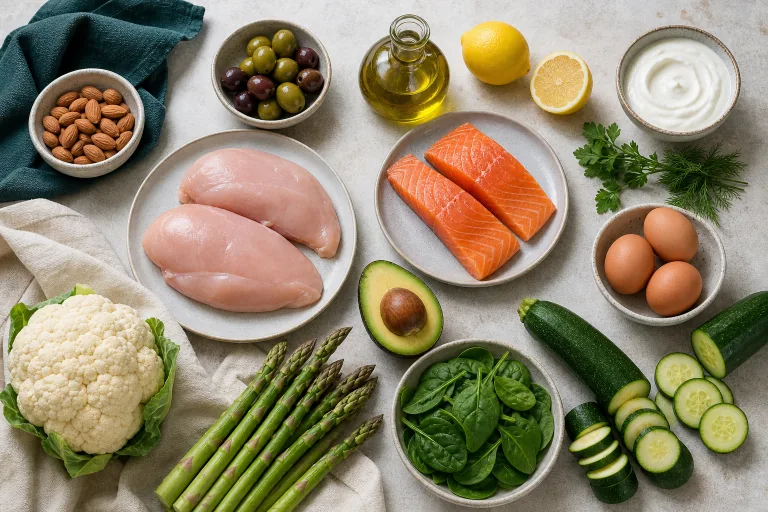
An Atkins day, desi-style
An early-phase example — protein-rich, low-carb, still full of masala.
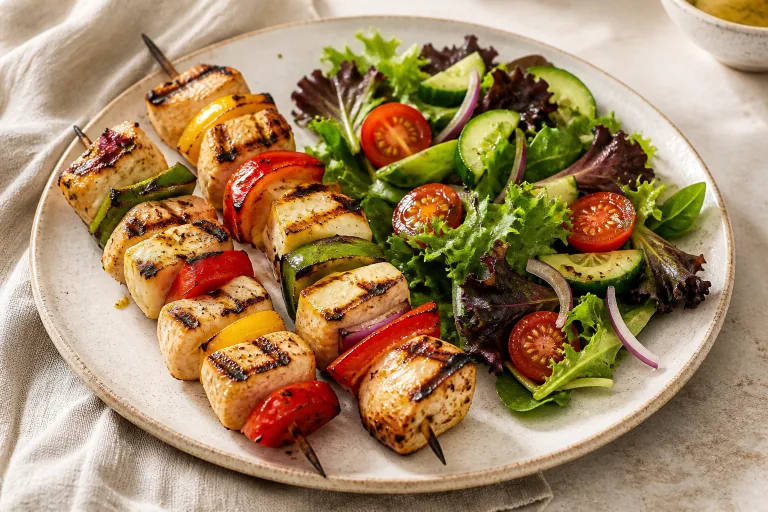
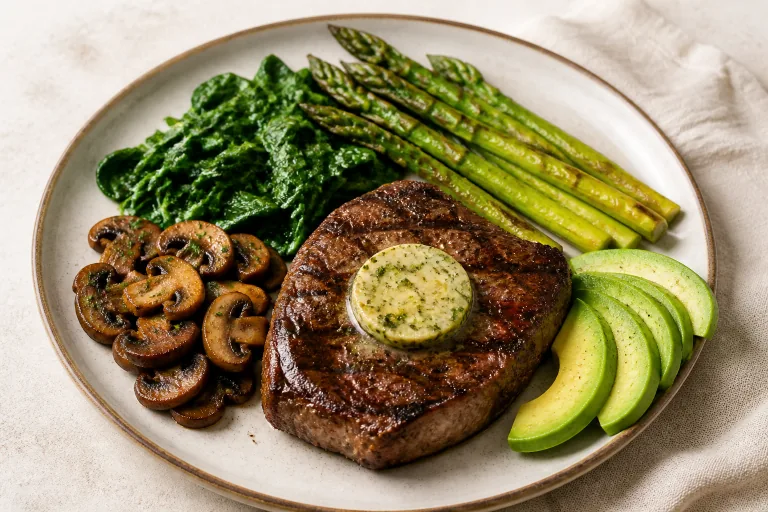
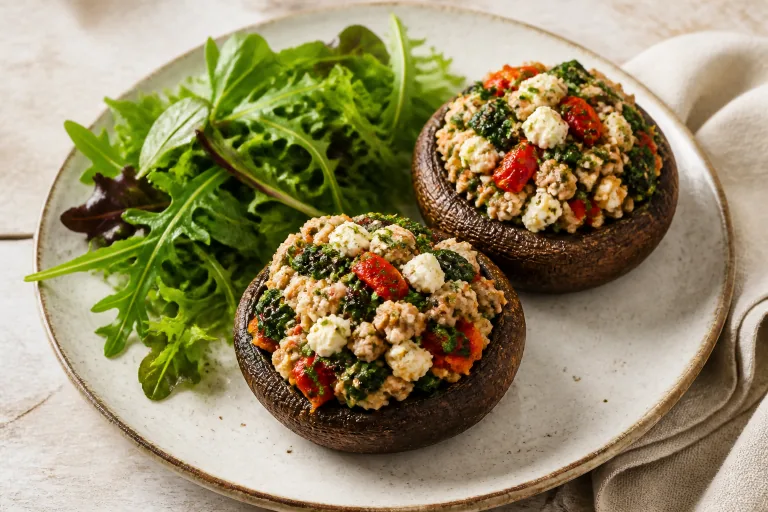
Four low-carb desi recipes
Protein-forward, masala-rich, light on the starch. Maryam keeps the fats healthy and fibre up.
Who this is for
A fit if you…
- Want a structured low-carb plan with a clear path back to carbs
- Are focused on weight or blood-sugar control
- Can reduce roti and rice for a while to find your tolerance
- Prefer "find what works for me" over a permanent rulebook
Reconsider if you…
- Have kidney disease — high protein needs medical clearance
- Are pregnant or breastfeeding
- Would fill the "fat" allowance with ghee, cream and fatty meat (saturated-fat risk)
- Struggle without grains — early phases cut fibre and can cause constipation
The diet is the start. You are the rest.
We keep Atkins's smart idea and leave behind its dated excesses.
We use the phases to teach
The goal isn't to cut roti forever — it's to find the carb level your body handles well, then build a plate you can live on at that level.
We keep the fats healthy
Lean protein, fish, olive oil and nuts — not unlimited ghee, cream and fatty meat. Low-carb done with good fats, not the old version.
We protect your fibre
Early low-carb can mean low fibre and constipation. We load up low-carb vegetables and bring back legumes as soon as your phase allows.
The honest answers
They're cousins. Both cut carbs, but keto stays very low-carb to maintain ketosis, while Atkins deliberately adds carbs back in phases to find your tolerance. Atkins is generally more flexible over time.
No — that's the whole point of the phases. Roti, rice and dal are cut hard only at the start, then reintroduced to the level you can eat while keeping your results. For most people that's "less," not "never."
A balanced, healthy-fat version with reintroduced vegetables and legumes can be sustainable. The risks come from the old "unlimited bacon and butter" version — high saturated fat and low fibre. We don't build it that way.
Only if we plan for it. Early phases are low in fibre, so we lean hard on low-carb vegetables, nuts and seeds, and reintroduce legumes as soon as your tolerance allows — fibre is one of the first things we watch.
Lower-carb eating can improve blood sugar — but if you take medication, especially insulin, cutting carbs sharply can drop your sugar too far. This must be done with your doctor; we coordinate so your medication and carbs change together safely.
That's the fair criticism of classic Atkins. We sidestep it by favouring lean protein, fish, olive oil and nuts over ghee, cream and fatty cuts — low-carb with heart-friendly fats.
Where this comes from
- BookOrigins. Robert C. Atkins, MD, Dr. Atkins' Diet Revolution (1972) and later editions.
- RCTsWeight loss. Low-carb weight-loss trials (e.g. the A TO Z study) — faster early loss, convergence over 1–2 years. Gardner 2007 A TO Z (JAMA) ↗
- TrialsMetabolic. Evidence that low-carb eating improves short-term blood sugar and triglycerides. Bueno 2013 (Br J Nutr) ↗
- ReviewsCautions. Reviews on saturated-fat quality and fibre adequacy in low-carbohydrate diets.
Compiled by Nidari Nutrition, June 2026. Pending formal clinical review by Maryam Shabbir, DN. Educational reference — not a substitute for individual medical advice.
Curious about low-carb?
Fifteen minutes with a dietitian. We'll use Atkins's phased idea to find your real carb tolerance, keep the fats heart-friendly, protect your fibre, and coordinate with your doctor if you're on medication.