The Ketogenic Diet
Cut carbohydrates low enough for long enough and the body switches fuel — from glucose to fat-derived ketones. A genuine medical therapy for epilepsy, a powerful blood-sugar tool, and one of the harder diets to live on. We approach it carefully — roti and rice are not given up lightly.


A diet born in a hospital
Keto did not begin as a weight-loss trend. In 1921, Dr. Russell Wilder at the Mayo Clinic designed it to mimic the effects of fasting — long known to calm seizures — without the starvation. By forcing the body into ketosis, it controlled epilepsy in children who didn't respond to any drug.
For decades it lived quietly in neurology wards. Then, late in the 20th century, the wider world rediscovered low-carbohydrate eating for weight and blood sugar, and keto became one of the most searched diets on earth.
That history matters: keto's strongest evidence is still for epilepsy. For weight and metabolic health it works for many — but it is demanding, and for some people (and some medications) it requires real medical care.
"Ketosis is a tool, not a personality. We use it deliberately, for a reason, for a defined stretch of time — and we plan the exit as carefully as the entry."How Nidari uses keto
What the research actually shows
Genuinely strong in one place, promising in others, and honestly contested in a few — here's the real picture.
Drug-resistant epilepsy
In children whose seizures don't respond to medication, the ketogenic diet reliably reduces seizure frequency — often by half or more. This is keto's original and best-proven use, delivered in hospitals worldwide.
Type-2 diabetes & blood sugar
A supervised low-carb/keto program produced large drops in HbA1c and let many participants reduce or stop diabetes medication within one year — with close medical monitoring (with results sustained at two years in follow-up).
Weight loss
Keto usually produces faster early weight loss than low-fat diets, but by twelve months the difference largely disappears — adherence, not magic, decides the outcome.
Cholesterol & the long term
In some people LDL cholesterol rises on keto, and long-term cardiovascular data is limited. This is exactly why we monitor labs and rarely treat keto as a forever diet.
Three things it does in the body
It switches the fuel
With carbs very low, the liver turns fat into ketones — an alternative fuel the brain and muscles can run on. This metabolic switch is what calms seizures and is the diet's defining feature.
It quiets insulin
Few carbohydrates means little blood-sugar rise and little insulin. For insulin resistance, PCOS and type-2 diabetes, that rest can sharply improve control — under supervision when medications are involved.
It blunts appetite
Fat and protein are filling, and ketones themselves reduce hunger. Many people simply eat less without counting — the main reason early weight loss is fast.
What stays — and what goes
Carbohydrate is the lever. Roughly under 50g a day keeps most people in ketosis.

A day in ketosis
Halal, desi-adjusted, and built so you're not hungry.




Four halal keto recipes
Desi flavours, no carbs. Maryam builds your full week — and your exit plan.



Who this is for
A fit if you…
- Have epilepsy and your neurologist supports it (the proven use)
- Have stubborn insulin resistance, PCOS or type-2 diabetes — and can be monitored
- Have tried gentler approaches and want a structured metabolic reset
- Are ready to genuinely step back from roti, rice and sugar for a while
Not now if you…
- Are pregnant or breastfeeding
- Take insulin or sulfonylureas without medical supervision (hypo risk)
- Have kidney disease or a history of disordered eating
- Can't picture life without daily roti and rice — sustainability will beat you
The diet is the start. You are the rest.
Keto done carelessly is miserable and sometimes unsafe. Done with a dietitian, it's a precise tool.
We make it desi & halal
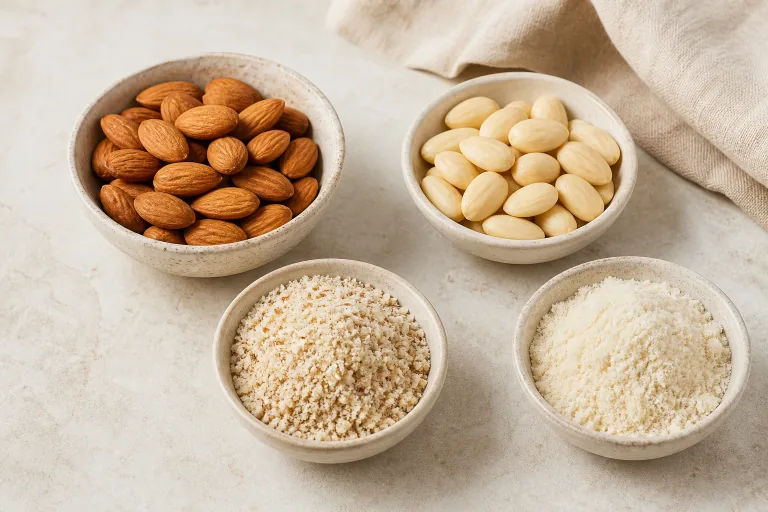
Cauliflower rice, almond-flour roti, paneer, keema and tikka — the flavours stay halal and familiar, so you're not living on plain chicken and sadness.
We watch your labs
If you take diabetes or blood-pressure medication, doses often need to come down — we coordinate so you don't go hypo. We track cholesterol and adjust if LDL climbs.
We plan the exit
Keto is usually a chapter, not the whole book. We define how long, what it's for, and how you transition back to a sustainable Mediterranean-style base without rebounding.
The honest answers
No — and "forever" is rarely the plan. Keto is usually a defined chapter to reset blood sugar or break a plateau. Afterwards we reintroduce smart carbs (wholemeal roti, brown rice) in portions. Long term, most clients land on a Mediterranean base, not strict keto.
For most healthy adults, short-to-medium term, yes — with attention to fibre, electrolytes and labs. It is not for pregnancy, and it needs medical supervision if you take insulin or certain diabetes/BP medicines, because doses often must drop. That supervision is exactly what we provide.
The first week, as you lose water and salt, you can feel tired, headachy or crampy. It's usually fixed with more salt, water and magnesium — and it passes. We coach you through it so you don't quit on day three.
Low-carb eating genuinely helps the insulin resistance behind many PCOS cases. But strict keto is hard to sustain, so we usually use a moderate low-carb plan — the core of our PCOS Metabolic Protocol — which gets most of the benefit with far less restriction.
Keto and fasting pair naturally — both lower insulin. Many people find fasting easier in ketosis because hunger is blunted. During Ramadan we adapt carefully so suhoor and iftar keep you fuelled and hydrated.
It varies a lot. Many people see triglycerides fall and HDL rise; some see LDL climb. That's why we check rather than assume — and if LDL rises meaningfully, we adjust the fats or move you off keto. Numbers, not faith.
Where this comes from
- HistoryOrigins. Wilder RM. The effects of ketonemia on the course of epilepsy. Mayo Clinic Bulletin, 1921 — the first clinical ketogenic diet.
- Systematic reviewEpilepsy. Cochrane systematic reviews of ketogenic diets for drug-resistant epilepsy; International League Against Epilepsy clinical guidance. Martin-McGill 2020 (Cochrane) ↗
- Clinical trialType-2 diabetes. Hallberg SJ, et al. Effectiveness and Safety of a Novel Care Model… at 2 Years. Diabetes Therapy 2018;9:583–612 (Virta Health). Hallberg 2018 (Diabetes Ther) ↗
- Meta-analysesWeight loss. Pooled randomized comparisons of low-carbohydrate vs low-fat diets — faster early loss, converging by ~12 months. Tobias 2015 (Lancet D&E) ↗
- ReviewsLipids & safety. Reviews of LDL/lipoprotein response to ketogenic diets; wide inter-individual variation — monitoring advised.
Compiled by Nidari Nutrition, June 2026. Pending formal clinical review by Maryam Shabbir, DN. Educational reference — not a substitute for individual medical advice. Do not start keto on diabetes or blood-pressure medication without your clinician.
Ready to discuss keto?
Fifteen minutes with a dietitian. We'll tell you honestly whether keto is right for you — and if it is, we'll do it safely, halal, and with an exit plan. If it isn't, we'll point you somewhere better.