The Dukan Diet
A four-phase French plan that starts with almost pure lean protein and adds foods back in stages. Fast early results — but it's restrictive, short on long-term evidence, and flagged by nutrition bodies as too extreme. We rarely recommend the strict version; the structured-reintroduction idea can be adapted into something far gentler.
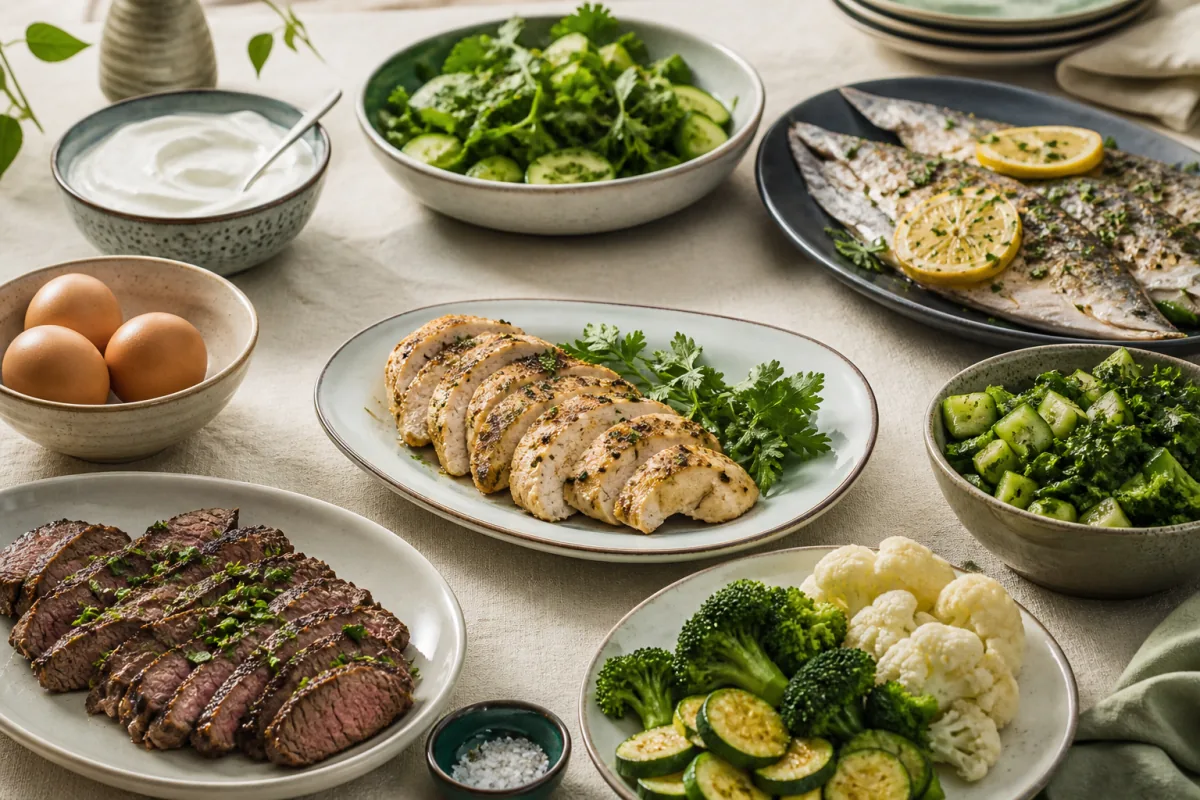

Protein first, in four phases
French physician Dr. Pierre Dukan published his plan in 2000, and it became a global phenomenon in the 2000s. It runs in four escalating phases: Attack (almost pure lean protein), Cruise (alternating protein-only and protein-with-vegetables), Consolidation, and Stabilization — with a spoonful of oat bran every day throughout.
The honest read: the high-protein approach produces fast early weight loss (much of it water), and protein is genuinely satiating. But Dukan is very restrictive, has little long-term evidence, and has been criticised by nutrition organisations as unbalanced — high regain risk, low variety, and hard on the kidneys for some.
For a desi kitchen the Attack phase is brutal — no dal, no roti, no rice, almost no vegetables. We almost never use it as written. What's worth keeping is the protein-satiety idea, folded into a balanced, livable plan.
"Dukan's strict phases deliver a fast scale-drop and a fast rebound. We take the one good idea — protein keeps you full — and leave the extreme version on the shelf."One good idea, handled gently
What the research shows
A fast start, a thin evidence base, and real expert concern.
Fast initial loss
The protein-heavy, low-carb start does produce rapid early weight loss — though a good share is water, and the pace rarely lasts.
Protein satiety
The one well-supported idea: protein is the most filling nutrient, so a high-protein plan curbs appetite. This part is worth borrowing.
Little long-term data
There's scant long-term evidence for Dukan, and review panels of dietitians consistently rank it among the poorest diets for balance and sustainability.
Restrictive & rebound-prone
Very low variety, high regain, possible constipation, and a heavy protein load that can strain the kidneys in susceptible people. Not for everyone.
Three things Dukan does
Maximises protein
An almost all-protein start is intensely filling, sharply cutting how much you eat — the engine of the early drop.
Cuts carbs & fat
Removing nearly all carbohydrate and fat slashes calories and sheds water weight quickly in the first phase.
Gives a structure
Clear phases and a daily oat-bran ritual give some people a sense of control — the part we can keep without the extremes.
The Dukan plate
Lean protein dominates; vegetables and other foods return only in later phases.
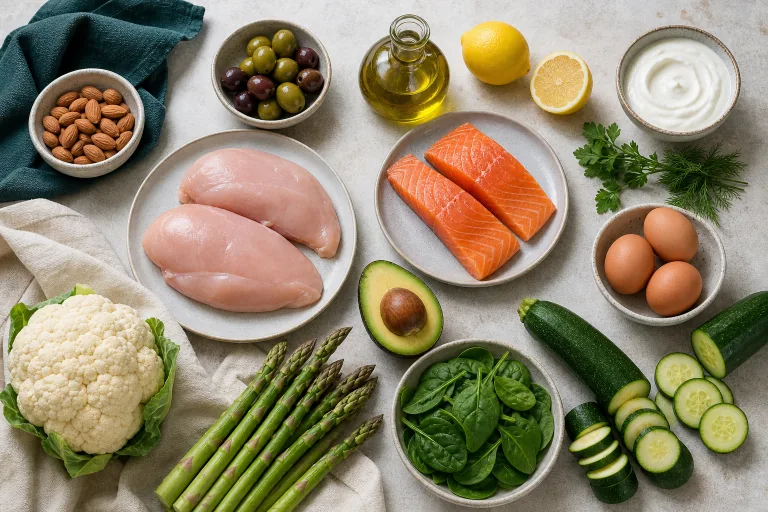
A Dukan day, desi-style
A Cruise-phase example — lean protein and vegetables, oat bran daily.
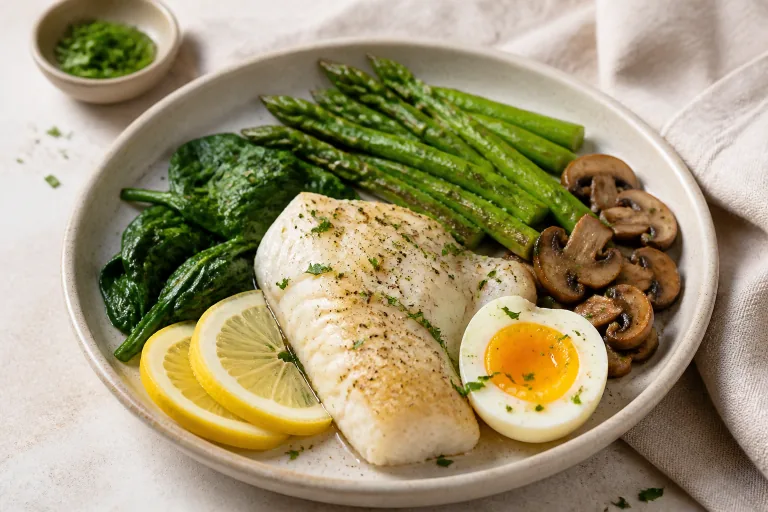
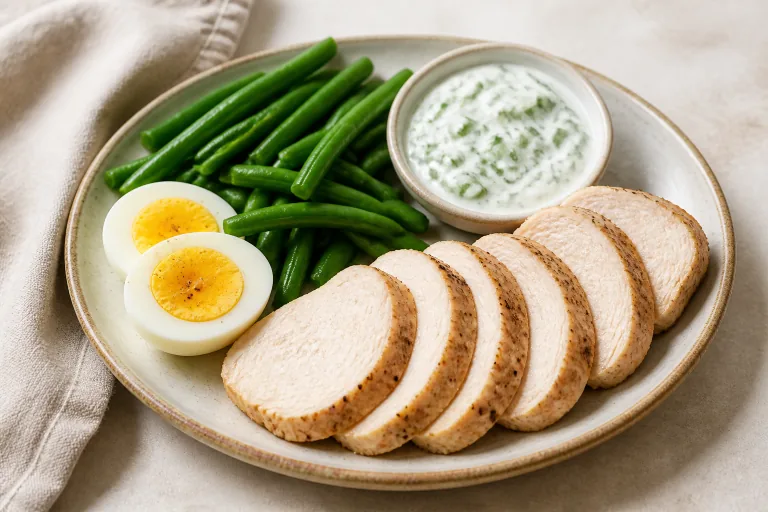
Four Dukan-friendly recipes
Lean and protein-forward. Maryam keeps fibre and balance in — and rarely uses the strict phase.
Who this is for
Perhaps if you…
- Want a structured, fast-result high-protein plan and know it's short-term
- Are drawn to clear phases and rules
- Have tried gentler approaches and want a defined reset
Reconsider if you…
- Have any kidney concern — the protein load needs medical clearance
- Are pregnant or breastfeeding
- Rely on dal, roti and rice (the early phases cut them entirely)
- Want sustainable, evidence-based, balanced eating — this is none of those long-term
The diet is the start. You are the rest.
We're honest: this is one we usually soften considerably.
We skip the extreme phase
The pure-protein Attack phase isn't something we recommend as written. We keep protein high within a balanced plate that includes vegetables, dal and whole grains.
We protect kidneys & fibre
Very high protein and very low fibre are the real risks. We right-size the protein, keep fibre up, and check that it's safe for your kidneys.
We aim for no rebound
Crash plans bounce back. We build the protein-forward idea into something sustainable so the weight you lose actually stays off.
The honest answers
For a short period in a healthy person it's usually tolerated, but it's very restrictive, and the high protein load can be a problem for anyone with kidney issues. It's not recommended in pregnancy, and nutrition bodies consistently rate it poorly for balance. We'd usually suggest a gentler high-protein approach.
It's the diet's one consistent source of fibre, included to help with fullness and digestion when carbohydrates are otherwise stripped out. It's a small, sensible part of an otherwise extreme plan.
The early loss is fast, but long-term evidence is thin and regain is common once the strict phases end. Like most crash approaches, the scale rebounds unless the underlying habits change — which is what we focus on instead.
On strict Dukan, barely — beyond the daily oat bran, fibre is very low in the early phases, which often causes constipation. This is one of the reasons we keep vegetables and legumes in rather than following it as written.
It's very hard — Dukan leans heavily on lean meat and fish, and its early phases exclude the legumes vegetarians rely on. For a vegetarian wanting more protein, we'd build a balanced higher-protein plant plan instead.
Where this comes from
- BookOrigins. Pierre Dukan, MD, The Dukan Diet (2000).
- ResearchProtein & satiety. Evidence that high-protein intake increases fullness and supports short-term weight loss. Halton & Hu 2004 (JACN) ↗
- RankingsExpert critique. Dietitian review panels rating Dukan poorly for balance, sustainability and long-term safety.
- NoteRisks. Concerns over restriction, fibre adequacy, kidney load in susceptible people, and weight regain. Protein & renal fn 2014 ↗
Compiled by Nidari Nutrition, June 2026. Pending formal clinical review by Maryam Shabbir, DN. Educational reference — not a substitute for individual medical advice.
Tempted by a fast reset?
Fifteen minutes with a dietitian. We'll be honest about Dukan's downsides, keep the one good idea — protein keeps you full — and build you a balanced, protein-forward plan that won't bounce straight back.