The Galveston Diet
Built by an OB-GYN for perimenopause and menopause — when the old rules stop working. It combines a daily fasting window, anti-inflammatory foods, and a shift toward protein and healthy fats. The evidence is still emerging, but the physiology it targets is real.
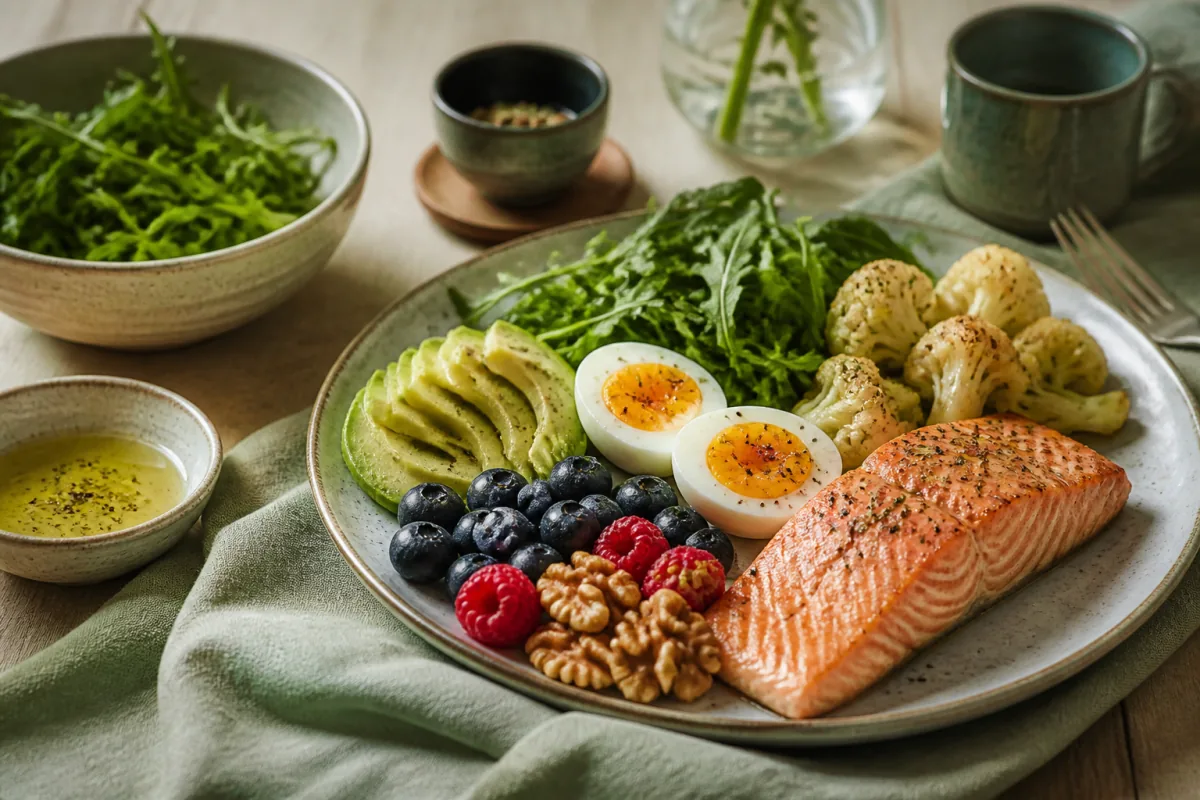

A doctor's answer to midlife
The Galveston Diet was created in the late 2010s by Dr. Mary Claire Haver, an OB-GYN in Galveston, Texas, out of a frustration many women share: in perimenopause and menopause, the eating and exercise that always worked suddenly don't, and weight settles stubbornly around the middle.
Her answer rests on three pillars: a daily intermittent-fasting window (usually 16:8), anti-inflammatory foods, and a fuel refocus — more protein and healthy fats, fewer refined carbs.
We'll be honest about the evidence. Each pillar is individually reasonable and supported, but the branded program itself hasn't been tested in large trials — so we treat it as a sensible, physiology-informed framework, and we're careful about the fasting piece, which isn't safe for everyone.
"Midlife genuinely changes how a woman's body handles food — that part is real. The Galveston approach is a reasonable response to it, and we adapt it to your health, your medications and your faith."Honest about midlife
What the research shows
Reasonable parts, an emerging whole, and one real safety line.
The pieces are supported
Time-restricted eating and anti-inflammatory diets each have moderate evidence for weight and metabolic health. Galveston combines established ideas, even if the bundle is new.
Menopause really changes things
Falling estrogen shifts fat toward the abdomen and worsens insulin sensitivity — so the midlife weight problem the diet targets is genuine, not imagined.
Protein matters more now
Higher protein helps preserve muscle (which declines with age and protects metabolism) and improves fullness — one of Galveston's better-grounded emphases.
No large trial of the program
There's no large randomised trial of the Galveston Diet itself, and fasting isn't safe for everyone. We use it as a framework, not a proven prescription — and we screen for safety first.
Three things Galveston does
A daily eating window
Time-restricted eating can lower overall intake and steady insulin — when it's safe and sustainable for the individual.
Calms inflammation
Menopause is a pro-inflammatory state; foods rich in omega-3s, colour and fibre push the other way.
Protects muscle
Shifting fuel toward protein and healthy fat helps hold on to muscle, which keeps metabolism and strength up through midlife.
The Galveston plate
Protein-forward, anti-inflammatory, low in refined carbs — eaten within your window.
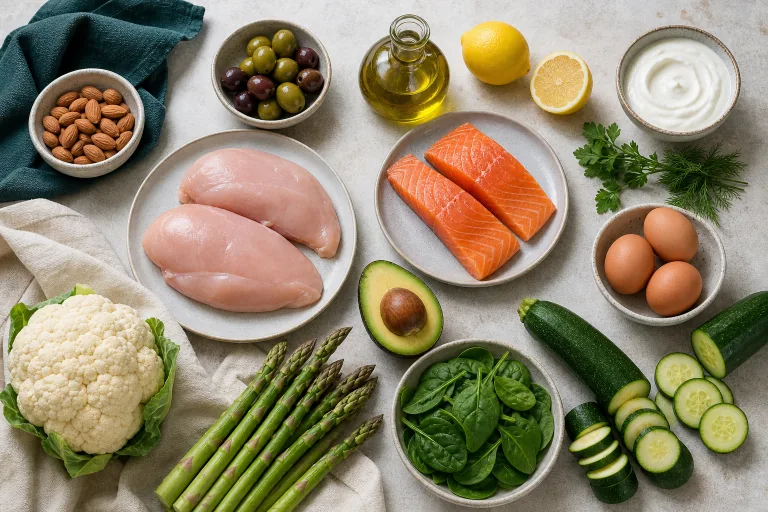
A Galveston day, desi-style
An example 10am–6pm window — your window and meals are set to your life and safety.
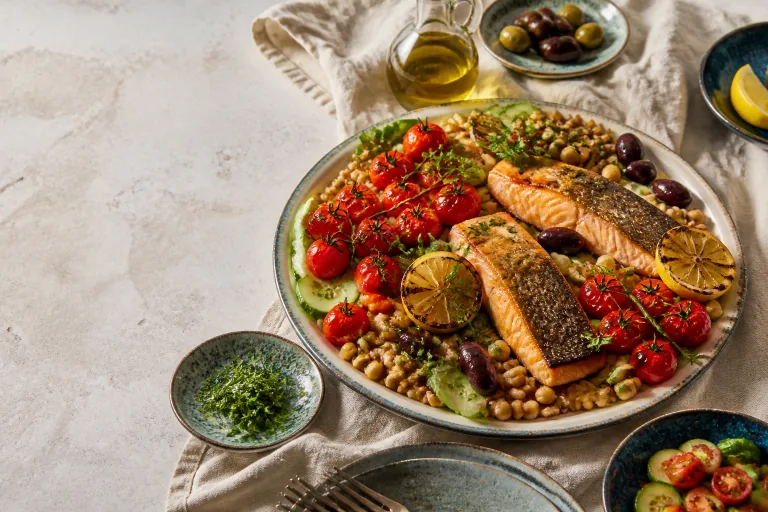
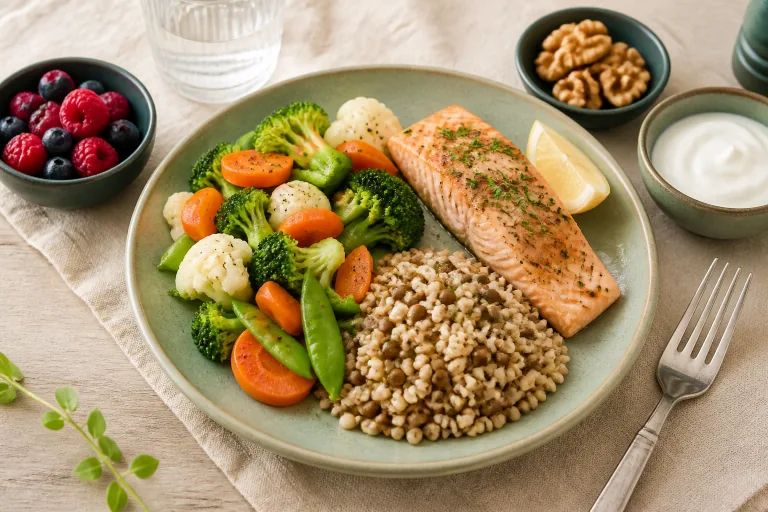
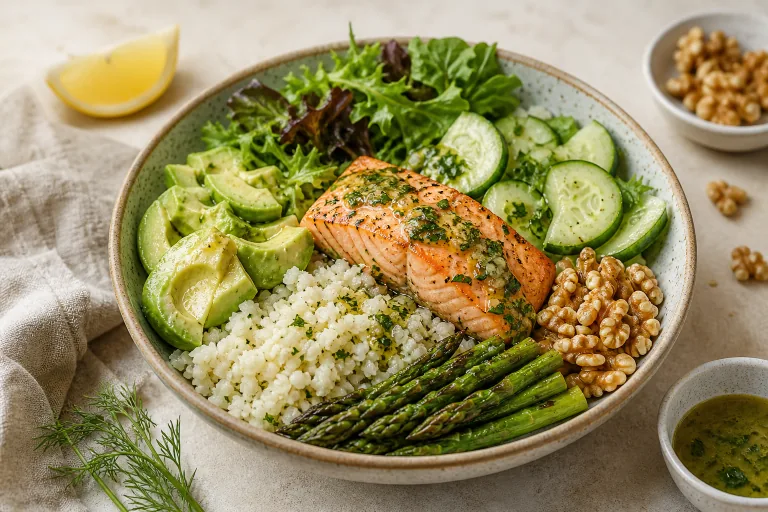
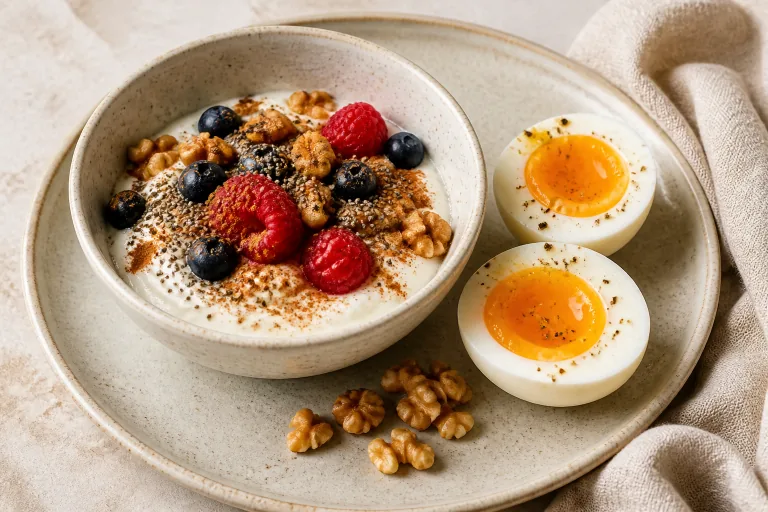
Four protein-forward, anti-inflammatory recipes
Built for the midlife plate. Maryam sets your window safely and keeps protein high.
Who this is for
A good fit if you…
- Are in perimenopause or menopause and frustrated by new midsection weight
- Want structure and a protein-forward, anti-inflammatory way of eating
- Are comfortable with — and medically cleared for — a daily eating window
- Have tried generic "eat less" advice without results
Don't fast if you…
- Are pregnant or breastfeeding
- Have diabetes or take blood-sugar / blood-pressure medication (fasting needs medical supervision)
- Have a history of disordered eating — fasting windows can be a trigger
- Find fasting leaves you depleted, dizzy or bingeing later
The diet is the start. You are the rest.
Midlife is individual. We keep what helps and remove what isn't safe for you.
We screen the fasting first
Before any eating window, we check your medications, blood sugar and history. If fasting isn't safe or right for you, we keep the anti-inflammatory, protein-forward food and drop the window entirely.
We build desi protein
Eggs, chicken, fish, dal, paneer and yogurt anchor every meal — protein-forward eating that still tastes like home, not like a Western meal plan.
We use your masala dabba
Turmeric, ginger and garlic are anti-inflammatory staples you already own — we lean on them while trimming sugar and refined carbs.
The honest answers
Fasting is one of three pillars, but not the whole story — the anti-inflammatory foods and the protein-and-fat refocus matter just as much, and arguably more. You can follow the food philosophy and skip the fasting entirely.
The physiology it targets is real — estrogen decline does shift fat to the middle and affect insulin. The individual tools (protein, fewer refined carbs, possibly a fasting window) can help. But there's no large trial of the branded program, so we set honest expectations.
Not for everyone. If you're pregnant or breastfeeding, diabetic, on certain medications, or have a history of disordered eating, fasting can be unsafe — and we won't include it without your doctor's involvement. The food half works on its own.
More than most midlife women currently eat. We aim for a real protein source at every meal to protect muscle and keep you full — using desi staples like dal, eggs, chicken, fish, paneer and yogurt rather than supplements.
Ramadan already provides a fasting structure, and the anti-inflammatory, protein-forward eating fits it well — we adapt the plan to suhoor and iftar. On HRT, the diet is generally compatible, but we coordinate with your doctor rather than assume.
The low-refined-carb, anti-inflammatory approach overlaps a lot with PCOS care. If hormones are your main concern, we'd often start from our PCOS protocol and borrow Galveston's protein-forward ideas.
Where this comes from
- BookThe program. Mary Claire Haver, MD, The Galveston Diet (2023) — intermittent fasting, anti-inflammatory nutrition, fuel refocus.
- ReviewsThe pillars. Moderate-evidence reviews of time-restricted eating and anti-inflammatory diets for weight and metabolic health. TRE meta-analysis (Nutrients) ↗
- EndocrinologyMenopause physiology. Research on estrogen decline, central adiposity and insulin sensitivity in midlife women. Davis 2012 (Climacteric) ↗
- ProteinMuscle in midlife. Evidence that higher protein supports muscle preservation and satiety with age. Bauer 2013 PROT-AGE ↗
Compiled by Nidari Nutrition, June 2026. Pending formal clinical review by Maryam Shabbir, DN. Educational reference — not a substitute for individual medical advice. Do not begin a fasting routine without checking with your doctor.
Navigating midlife changes?
Fifteen minutes with a dietitian. We'll check whether a fasting window is safe for you, build a protein-forward, anti-inflammatory plate around desi food, and fit it to your medications and your life.