The Specific Carbohydrate Diet
A therapeutic diet for inflammatory bowel disease that removes complex carbohydrates and allows only simple, easily-absorbed ones. The evidence is emerging — some encouraging studies, especially in children with Crohn's — but it's restrictive and best run alongside your gastroenterologist and a dietitian.
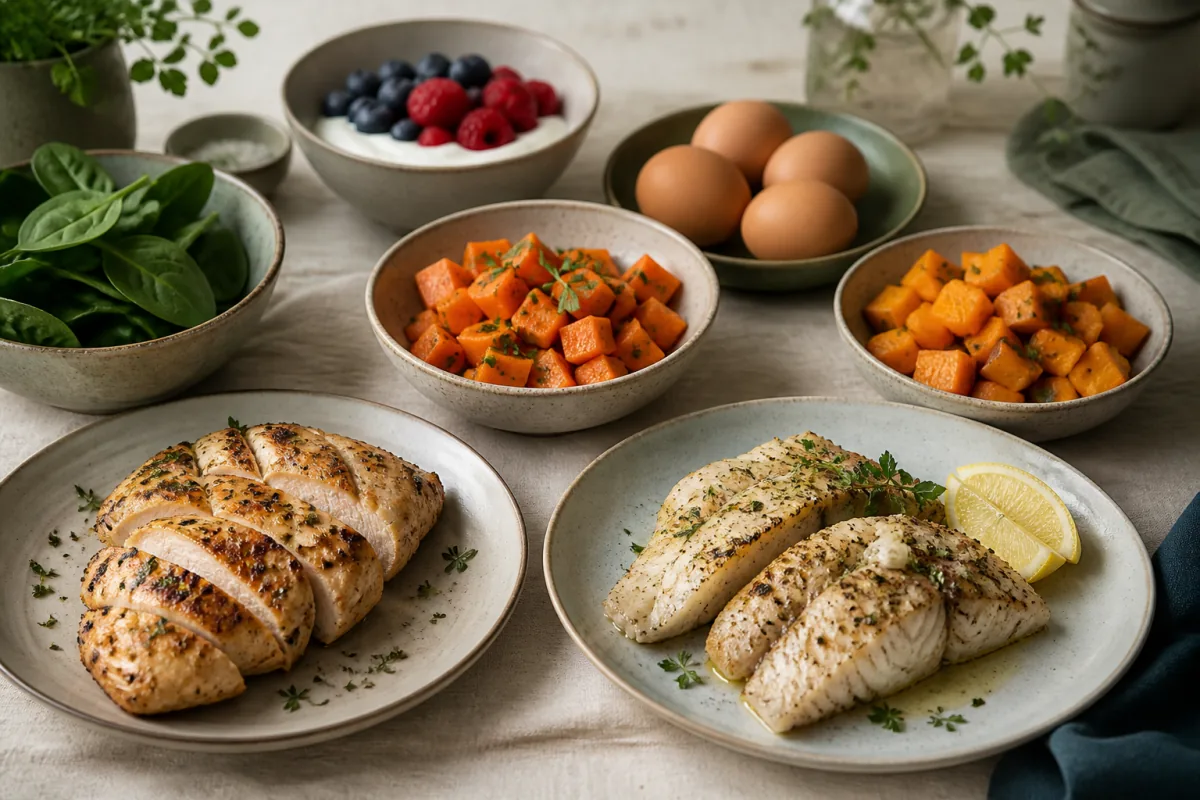
An old idea, revived for IBD
Dr. Sidney Haas developed the Specific Carbohydrate Diet in the 1920s — originally for celiac disease, before gluten was understood. Decades later, biochemist Elaine Gottschall revived it in her 1994 book Breaking the Vicious Cycle, after it helped her own daughter's colitis, and aimed it at inflammatory bowel disease and other digestive disorders.
The theory: complex carbohydrates that aren't fully absorbed feed harmful gut bacteria, fuelling inflammation. So SCD allows only single-sugar (monosaccharide) carbohydrates the gut absorbs easily — and removes grains, starches, lactose and refined sugar.
The honest read: the evidence is growing but still limited — there are encouraging studies, especially in paediatric Crohn's disease, but no large trials, and it's a demanding, homemade-heavy diet. We treat it as one supervised option among several for IBD, never a replacement for your medication.
"SCD is one of the more promising dietary tools for IBD, but it's early science and a hard diet to run alone. We do it with your GI doctor, and we watch your nutrition closely."Promising, supervised
What the research shows
Encouraging early signals — not yet proof.
Crohn's & colitis signals
Several studies — notably in children with Crohn's disease — report symptom improvement and even reduced inflammation on SCD. Genuinely encouraging, if still early.
The carb-and-bacteria idea
The premise — that poorly-absorbed carbs feed problem bacteria — is partly plausible and overlaps modern microbiome science, though SCD's specific rules are simpler than the biology.
No large trials yet
Most support is small studies and strong anecdote. SCD is promising but unproven as a standard treatment — and recent research often compares it favourably-but-similarly to other IBD diets.
Demanding & nutrient-tricky
No grains, starches or lactose means a lot of homemade cooking and real attention to fibre and nutrients. It needs a dietitian, and it sits alongside — never instead of — medical care.
Three things SCD does
Removes complex carbs
Grains, starches and refined sugar come out — the carbohydrates the theory says feed troublesome gut bacteria.
Allows simple ones
Only single-sugar carbohydrates — from certain fruits, honey and well-cooked vegetables — that the gut absorbs easily.
Soothes with simple food
Long-cooked vegetables, homemade yogurt and broths are gentle on an inflamed gut and easier to digest.
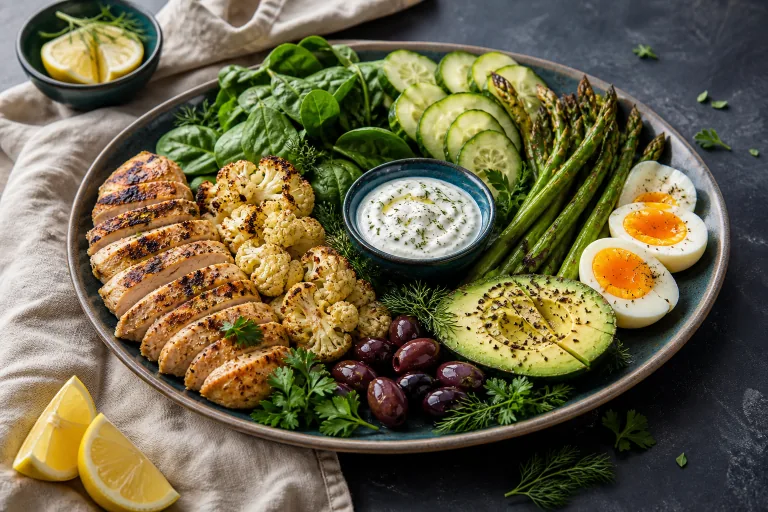
The SCD plate
Simple, homemade, single-sugar foods — and a hard line on grains and starches.
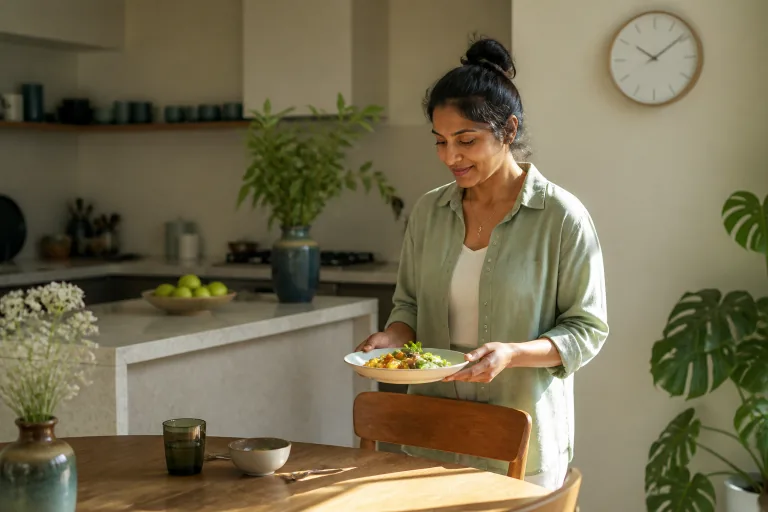
An SCD day, desi-style
Homemade and simple — note the absence of rice, roti and most dal.
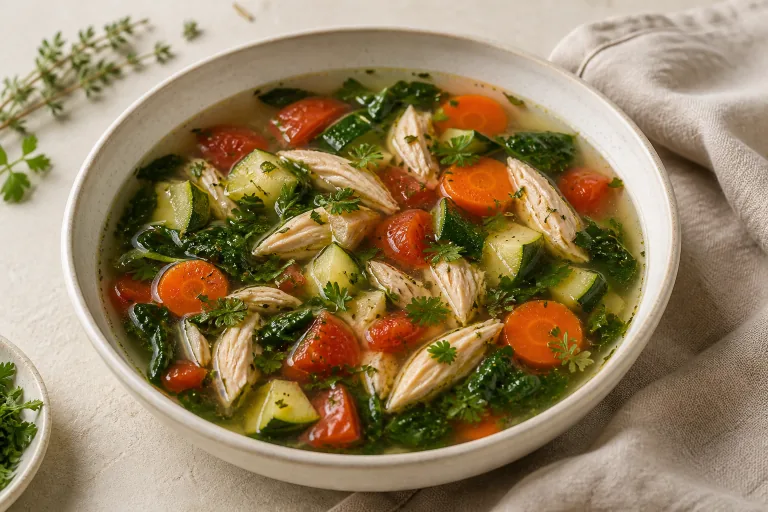


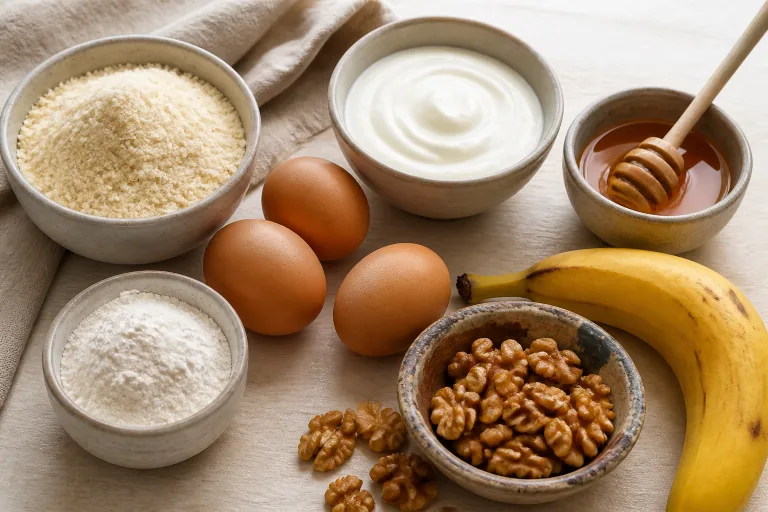
Four SCD-friendly recipes
Homemade and simple. Maryam runs it with your GI doctor and guards your nutrition.
Who this is for
A fit if you…
- Have IBD (Crohn's or ulcerative colitis) and want a dietary tool alongside your medication
- Are willing to cook from scratch and stay strict
- Have a GI doctor and dietitian guiding you
- Want to try a diet with at least some IBD evidence behind it
Be careful if you…
- Hope to replace your IBD medication — SCD works with treatment, never instead of it
- Can't commit to a lot of homemade cooking
- Are underweight or have a history of disordered eating (it's very restrictive)
- Need rice, roti and dal as staples — the strict phase removes them
The diet is the start. You are the rest.
SCD is demanding and clinical — we make it safe and as livable as possible.
We run it with your doctor
SCD sits alongside IBD treatment, never instead of it. We coordinate with your gastroenterologist and track your symptoms together.
We guard your nutrition
Cutting grains, starches and lactose creates real gaps. We keep fibre, calcium and calories adequate and supplement where needed.
We adapt desi food
Within SCD's rules, we keep flavour alive — spiced meats, soft vegetable curries, homemade yogurt — so the strict phase still tastes like home.
The honest answers
Allowed: meat, fish, eggs, most well-cooked vegetables, specific fruits, homemade 24-hour yogurt, nuts and nut flours, honey. Not allowed: all grains (rice, roti, wheat), starches like potato, lactose, refined sugar and processed foods.
No — there's no dietary cure for IBD. Some people get real symptom relief, and studies (especially in children with Crohn's) are encouraging, but SCD is a supportive tool used alongside medical treatment, not a replacement.
Emerging. There are promising small studies and case series, but no large trials yet, and recent research often finds it works similarly to other structured IBD diets. We're honest that it's early science.
Absolutely not. SCD complements IBD medication; stopping treatment can be dangerous. Any dietary change happens with your gastroenterologist fully in the loop.
Rice, roti and other grains and starches are out during the diet. Certain well-prepared legumes (some lentils and beans) are allowed in later stages, but chickpeas and many others aren't — so the desi staples need real rethinking, which is exactly where we help.
Not necessarily. Many people use it intensively while symptomatic and liberalise as they improve, guided by their response. We aim for the least-restrictive version that keeps your gut settled.
Where this comes from
- BookOrigins. Dr. Sidney Haas (1920s); Elaine Gottschall, Breaking the Vicious Cycle (1994).
- StudiesIBD. Paediatric Crohn's studies and case series reporting symptom and inflammation improvement on SCD. Cohen 2014 (JPGN) ↗
- ComparisonsVersus other diets. Trials comparing SCD with other structured IBD diets — similar benefit, modest evidence. Lewis 2021 DINE-CD ↗
- GuidanceSupervision. Dietetic guidance on nutritional adequacy and supervision for restrictive IBD diets. Suskind 2018 SCD review ↗
Compiled by Nidari Nutrition, June 2026. Pending formal clinical review by Maryam Shabbir, DN. Educational reference — not a substitute for individual medical advice. For IBD, work with your gastroenterologist.
Managing IBD?
Fifteen minutes with a dietitian. If SCD is right for you, we'll run it alongside your gastroenterologist, guard your fibre and nutrients, and keep the food as familiar and flavourful as the rules allow.