The Vegan Diet
No meat, fish, dairy or eggs — the strictest plant-based way of eating, rooted in ethics and increasingly chosen for the heart. Much of a desi kitchen is already vegan — dal, chana, vegetable curries — which makes the food easy. The nutrition is where planning matters, and B12 is non-negotiable.
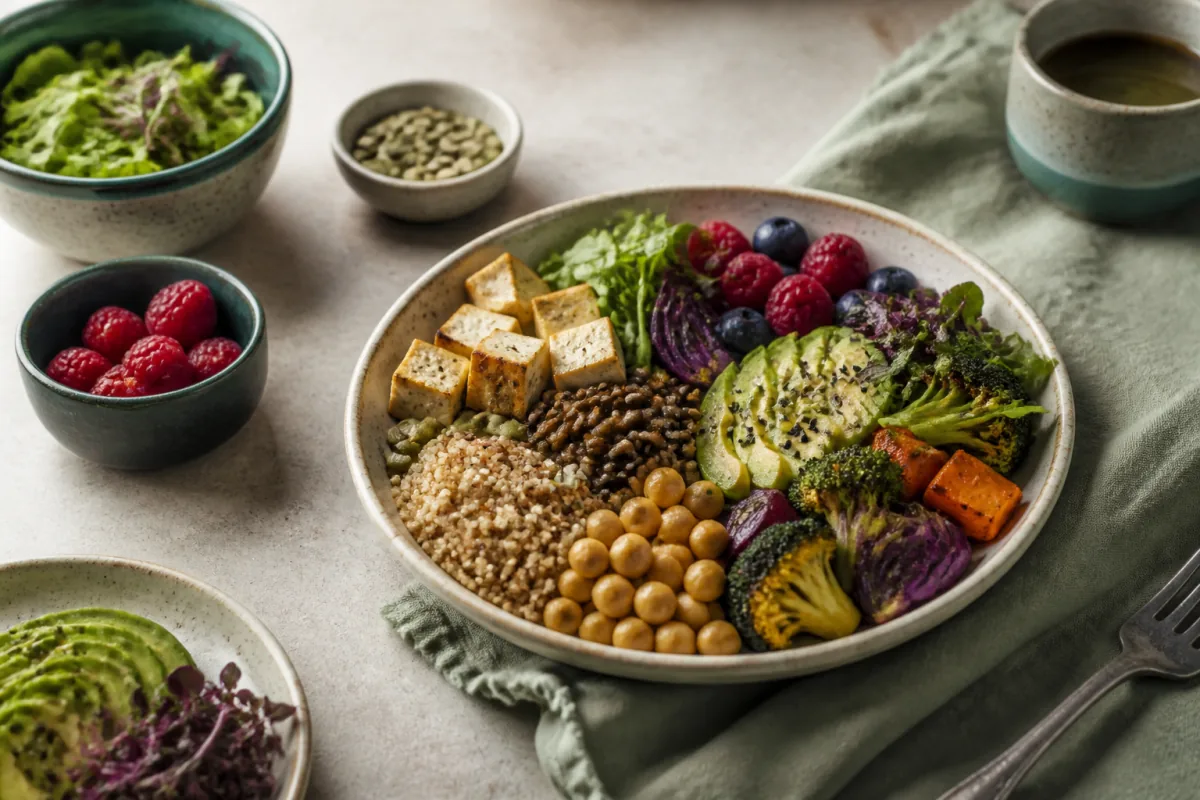
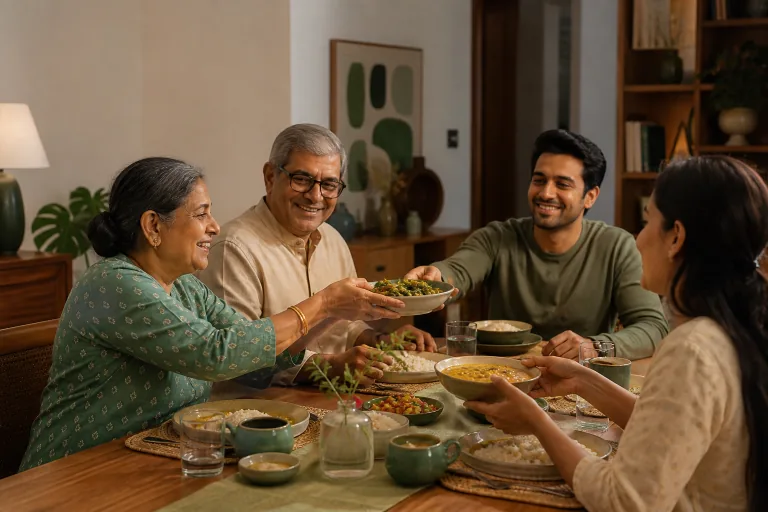
A word coined in 1944, a practice far older
The term vegan was coined in 1944 by Donald Watson and a small group in Leicester, England, who founded The Vegan Society to name a life that used no animal products at all. The idea itself is ancient — many in the dharmic traditions of South Asia have eaten this way for millennia.
Today people choose vegan for ethics, the environment, and health. The health evidence is genuinely encouraging for the heart — but it comes with one firm condition: a vegan diet must be planned, because a few nutrients (above all vitamin B12) simply aren't reliably available from plants.
For our community the food is the easy part. Chana, dal, sabzi, vegetable pulao, baingan, aloo, fruit — a huge share of the desi table is already vegan and already halal. What we add is the nutrition scaffolding so it nourishes you fully.
"Going vegan in a desi kitchen is mostly natural. The work isn't the recipes — it's protecting B12, iron, omega-3 and protein so the diet builds you up rather than quietly wearing you down."Vegan, done responsibly
What the research shows
Promising for the heart — and honest about what to plan for.
Heart & cholesterol
Vegans tend to have lower LDL cholesterol, blood pressure and BMI, and large cohorts link plant-based eating to lower ischaemic heart-disease risk.
The stroke nuance
The same EPIC-Oxford study that found less heart disease in vegetarians and vegans also saw a slightly higher rate of haemorrhagic stroke. We present the whole picture, not just the flattering half.
Weight & blood sugar
In controlled trials, low-fat vegan diets have produced weight loss and improved insulin sensitivity — relevant given how common type-2 diabetes is in our families.
B12 is non-negotiable
Plants do not make vitamin B12. Every vegan needs a reliable source — a supplement or fortified foods — or risks nerve and blood problems. Iron, omega-3, iodine, calcium, vitamin D, zinc and protein also need attention.
Three things a vegan plate does
Removes all animal saturated fat
No meat, dairy or eggs means no animal saturated fat or dietary cholesterol — a big lever on LDL, the cholesterol that drives heart disease.
Fibre, everywhere
A diet built on legumes, vegetables, whole grains and fruit is naturally fibre-rich — feeding the gut, steadying blood sugar and keeping you full.
Lower energy density
Whole plant foods deliver volume and nutrients for fewer calories, which is part of why plant-based eaters tend to carry less weight.
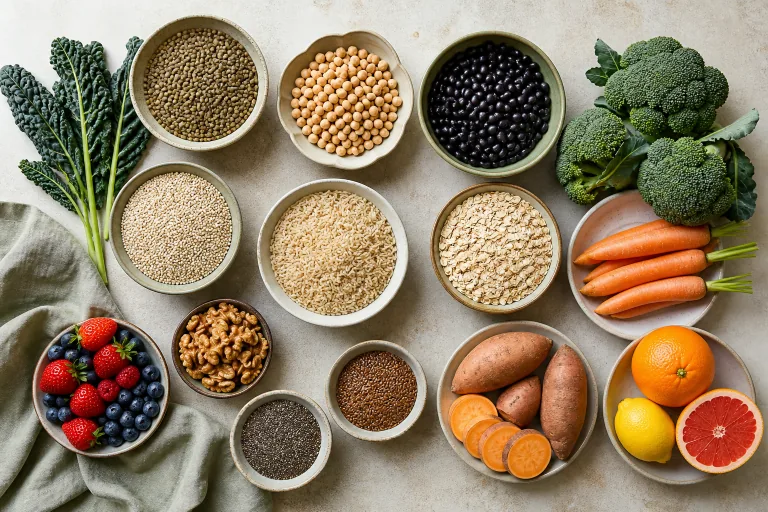
The well-planned vegan plate
Built from whole plant foods — with the few non-negotiables made explicit.
A vegan day, desi-style
Entirely halal, protein-balanced, and built from food you already cook.
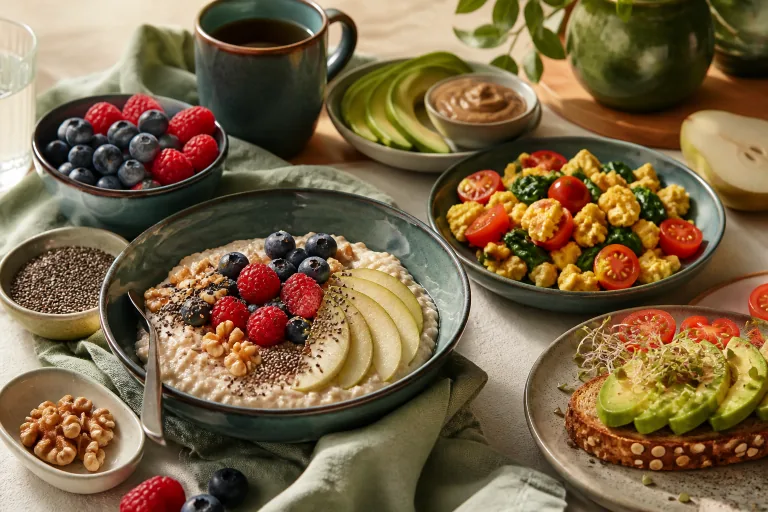
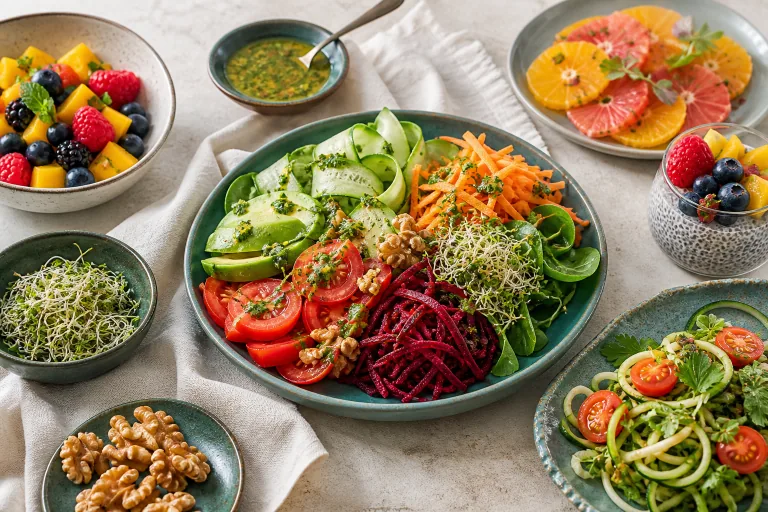
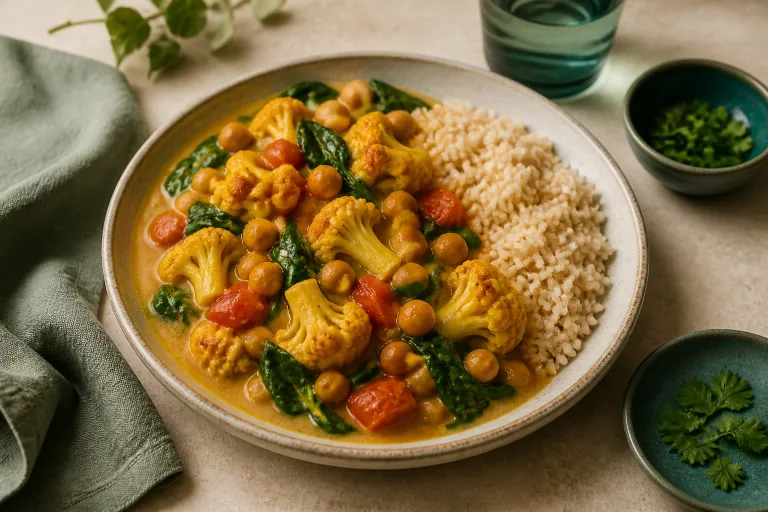
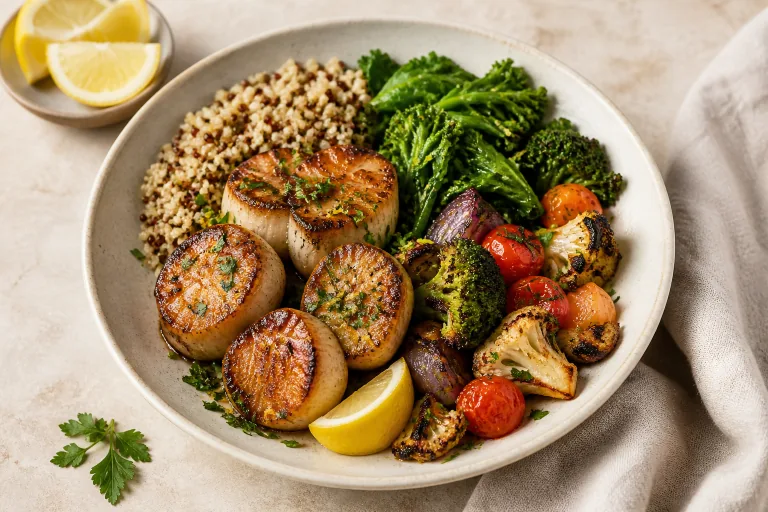
Four protein-rich vegan recipes
Plant-based doesn't mean low-protein. Maryam secures your B12, iron and omega-3 alongside.
Who this is for
A great fit if you…
- Choose plant-based for faith, ethics or the environment
- Are lactose-intolerant or feel better without dairy
- Want a strong, fibre-rich heart-and-cholesterol diet
- Already cook a lot of dal, chana and vegetable curries
Plan carefully if you…
- Are pregnant, breastfeeding, or have growing children or teens (B12, iron, omega-3, protein needs all rise)
- Have iron-deficiency anaemia — common in women and needs active management
- Have a restrictive or disordered relationship with food
- Won't take a B12 source reliably — that makes vegan unsafe over time
The diet is the start. You are the rest.
The recipes are easy in a desi kitchen. Doing vegan safely is our job.
We lock in B12 & omega-3
The two nutrients vegans most often miss. We set you up with a reliable B12 source and daily ALA from flax, chia or walnuts — and discuss algal omega-3 where it's warranted.
We anchor your protein & iron
Every meal gets a real plant-protein anchor — dal, chana, soya, tofu — and we pair iron-rich foods with vitamin C so your body actually absorbs them.
We avoid the vegan-junk trap
Vegan can quietly become chips, white bread and fried snacks. We keep your plate whole-food, so the heart and weight benefits genuinely show up.
The honest answers
Yes, with planning. Dal, chana, rajma, soya, tofu and tempeh are all protein-dense, and desi cooking is full of them. We make sure every meal carries a protein anchor so you're never running on roti and vegetables alone.
Yes — this is the one we don't bend on. Plants don't make B12, and deficiency can quietly damage nerves and blood. A regular supplement or reliably fortified foods is essential for every vegan. We check your level and advise rather than guess.
It can be, but it needs careful planning and medical supervision — B12, iron, omega-3, iodine, vitamin D and protein needs all rise. This is exactly when you should be working with your doctor and a dietitian, not improvising. We coordinate around your care.
Ground flaxseed, chia and walnuts supply ALA, the plant omega-3 — a daily spoonful counts. Because the body converts ALA to the active forms (EPA/DHA) inefficiently, we may also suggest an algal omega-3 supplement, which is plant-based.
Well-planned vegan eating is linked to lower LDL cholesterol, blood pressure and heart-disease risk. We'll be honest that one large study also saw a slightly higher stroke rate — which is partly why we keep your B12, omega-3 and overall balance tight rather than treating "vegan" as automatically healthy.
Less than you'd think — dal, chana, rice, roti, seasonal sabzi and soya are among the cheapest, most familiar foods there are. The pricey "vegan products" are optional; we build your plan on the staples your kitchen already runs on.
Where this comes from
- CohortHeart & stroke. EPIC-Oxford (BMJ, 2019) — lower ischaemic heart disease but slightly higher haemorrhagic stroke in vegetarians and vegans; Adventist Health Study-2. Tong 2019 (EPIC-Oxford) ↗
- TrialsWeight & glucose. Randomised trials of low-fat vegan / plant-based diets showing weight loss and improved insulin sensitivity. Kahleova 2022 (DMS) ↗
- Position statementAdequacy & B12. Dietetic association positions on well-planned vegan diets — emphasising B12, iron, omega-3, iodine, calcium, vitamin D, zinc and protein. AND 2016 (Veg Diets) ↗
- AnalysesQuality matters. Research distinguishing "healthful" (whole-food) from "unhealthful" (refined) plant-based diets and their opposite effects. Satija 2017 (JACC) ↗
Compiled by Nidari Nutrition, June 2026. Pending formal clinical review by Maryam Shabbir, DN. Educational reference — not a substitute for individual medical advice.
Ready to do vegan right?
Fifteen minutes with a dietitian. We'll make your vegan plate protein-rich, B12-and-omega-3-secure, and built from the dal, chana and sabzi you already love — not vegan junk food.