The Autoimmune Protocol
A stricter paleo-style elimination that removes common immune triggers — grains, legumes, dairy, eggs, nightshades, nuts and seeds — then reintroduces them one at a time. Small studies show symptom improvement in some autoimmune conditions. It's emerging, promising and very restrictive — and the reintroduction is the entire point.
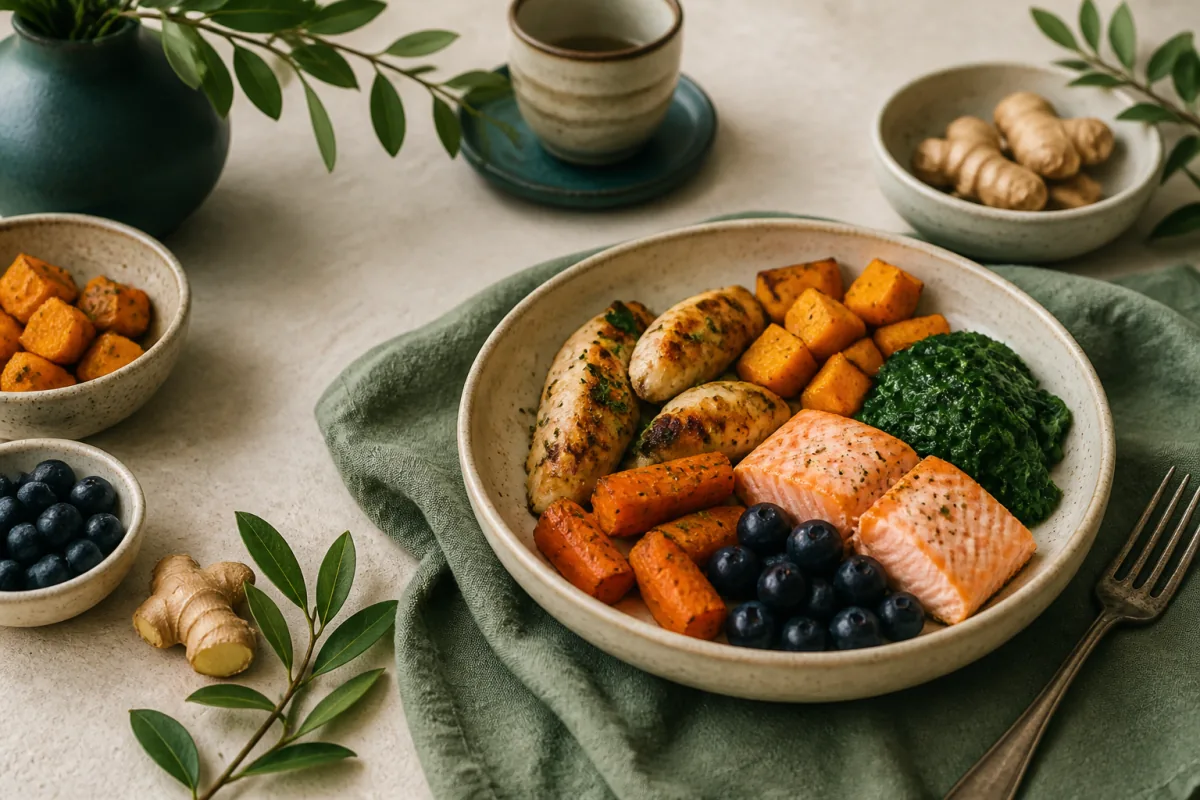

Paleo, taken further
The Autoimmune Protocol grew out of the paleo movement and was popularised in the 2010s, notably by researcher Sarah Ballantyne. The idea: people with autoimmune conditions may react to certain foods, so AIP removes the usual paleo exclusions plus additional common triggers — eggs, nightshades (tomato, potato, peppers, aubergine), nuts and seeds — for a strict elimination, then reintroduces them methodically.
The honest read: this is the most evidence-backed of the strict elimination diets in this corner of the atlas. Small studies in conditions like inflammatory bowel disease and Hashimoto's thyroiditis report real symptom and quality-of-life improvements. But the studies are small and short, there are no large trials, and the elimination phase is genuinely demanding.
For a desi kitchen there's a specific hurdle: no nightshades means no tomato, no chilli, no potato — the backbone of much of our cooking. That's exactly the kind of puzzle a dietitian solves, and the reintroduction usually brings many of them back.
"AIP's value isn't the elimination — it's the reintroduction. Done properly, it tells you which foods actually affect your autoimmune symptoms, so you can stop guessing and eat as freely as possible."The reintroduction is the point
What the research shows
The most promising of the strict eliminations — but still early.
Symptom improvement
Small studies in inflammatory bowel disease and Hashimoto's thyroiditis report meaningful symptom and quality-of-life gains on AIP — a genuine, encouraging signal.
It's an elimination protocol
AIP uses the well-established elimination-and-reintroduction method — its purpose is to identify your personal triggers, not to be a permanent diet.
Small & short so far
The studies are small, short and uncontrolled; there are no large trials. AIP is promising for autoimmune symptoms, not proven, and it sits alongside medical care.
Demanding & nutrient-tricky
Removing so many groups at once is hard and can create nutrient gaps. It needs a dietitian, a real reintroduction plan, and it must not replace your specialist's treatment.
The two phases
Eliminate
Remove grains, legumes, dairy, eggs, nightshades, nuts and seeds for several weeks, eating nutrient-dense whole foods and broth, to reach a calm baseline.
Reintroduce
Add foods back one at a time, watching your autoimmune symptoms — this is where you learn what actually affects you.
Personalise
Keep out only your real triggers and bring everything else back, ending with the widest diet that keeps your symptoms settled.
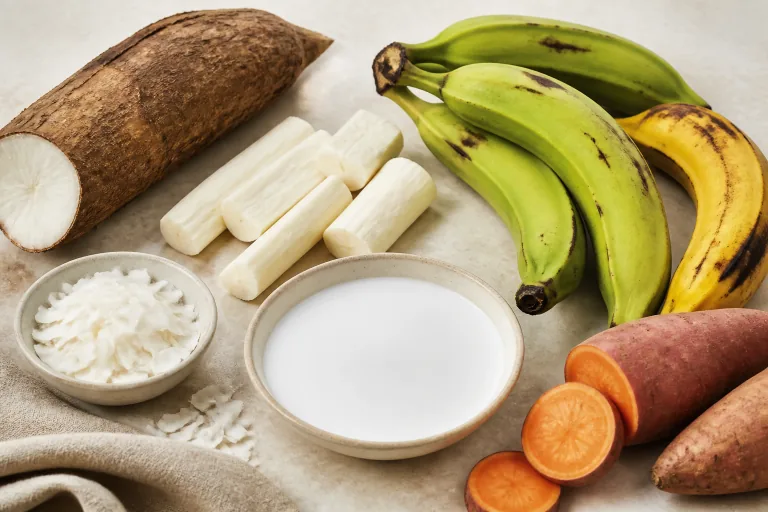
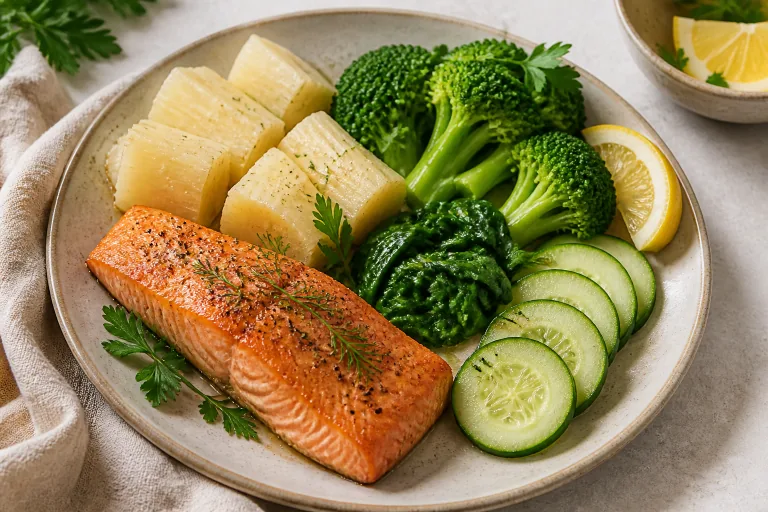
The AIP plate
Nutrient-dense whole foods — minus a long list of common triggers.
An AIP day, desi-style
The desi challenge made manageable — flavour from non-nightshade spices.
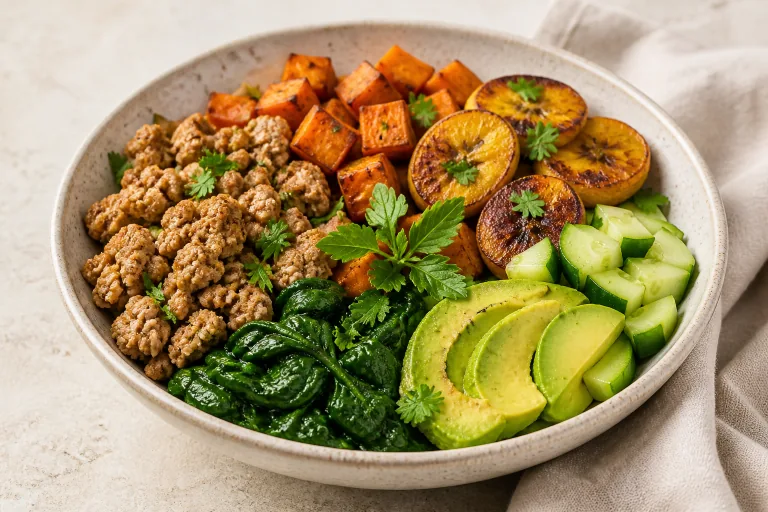
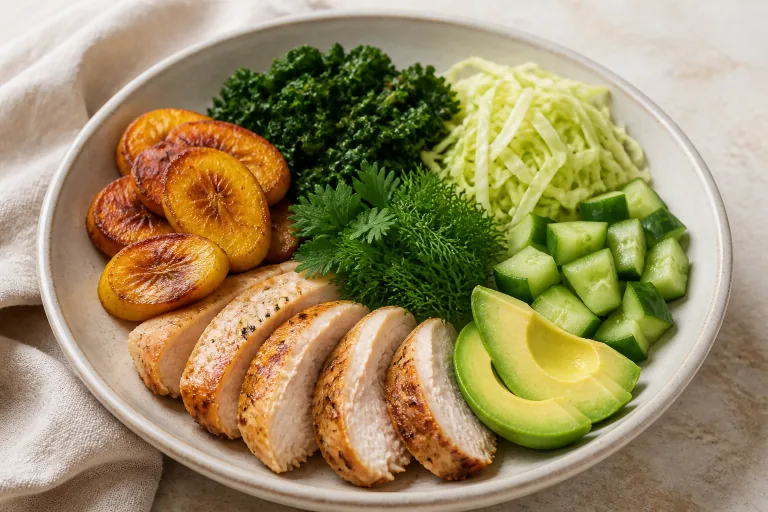
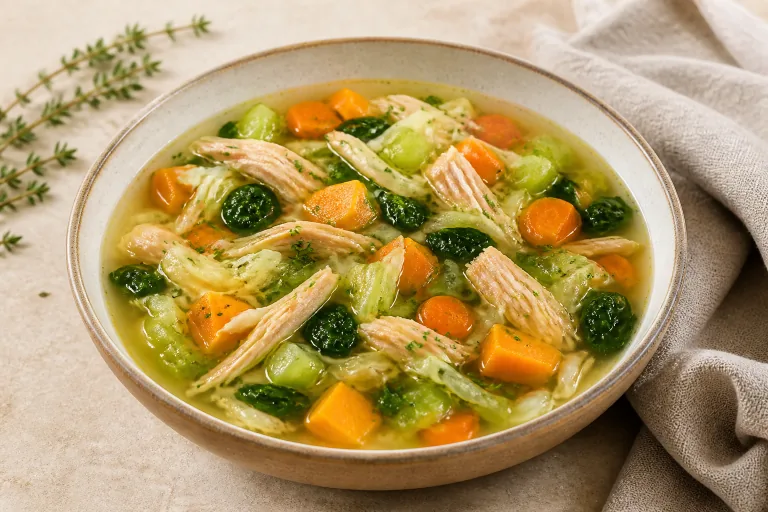
Four AIP-compliant recipes
Flavour without nightshades, eggs or seeds. Maryam runs the reintroduction and guards nutrition.
Who this is for
A fit if you…
- Have a diagnosed autoimmune condition and want a dietary tool alongside treatment
- Are willing to do a strict elimination and a real reintroduction
- Have a dietitian and your specialist guiding you
- Want the most evidence-backed of the strict elimination diets
Be careful if you…
- Hope to replace your medication — AIP works with your specialist's care, never instead
- Won't do the reintroduction (then you've just restricted hard for nothing)
- Have a history of disordered eating (very restrictive)
- Can't imagine cooking without tomato, chilli or potato long-term — though most come back at reintroduction
The diet is the start. You are the rest.
AIP is strict and clinical — we make it safe, flavourful and worth finishing.
We run the reintroduction
Most people stall in elimination. We guide the structured add-back — the part that actually tells you which foods affect your symptoms, so you can widen your diet.
We solve the no-nightshade puzzle
No tomato, chilli or potato is hard for desi food. We lean on turmeric, ginger, garlic and herbs so the elimination phase still tastes like home.
We protect your nutrition
Removing so many groups risks gaps. We keep calories, minerals and variety up, and coordinate with your specialist throughout.
The honest answers
In the elimination phase: grains, legumes, dairy, eggs, nightshades (tomato, potato, peppers, aubergine), nuts, seeds (including seed spices like cumin), and processed food. It's a long list — but most foods are reintroduced and many come back.
No — there's no dietary cure for autoimmune conditions. AIP may reduce symptoms for some people, and early studies are encouraging, but it's a supportive tool used alongside your specialist's treatment, not a replacement.
Nightshades (tomato, potato, peppers, aubergine) contain compounds some people with autoimmune conditions seem to react to. The evidence is mixed, which is exactly why they're removed and then tested — if they don't bother you, they come back.
Emerging and the best among the strict eliminations here — small pilot studies in IBD and Hashimoto's show real symptom improvement. But they're small and short, so we treat AIP as promising, not proven.
For the elimination weeks, yes — turmeric, ginger, garlic, fresh herbs and warming whole spices (non-seed) carry a lot of flavour. It's an adjustment, but it's temporary, and your nightshades are usually among the things you test first.
No — that's the key. The strict elimination is short; the goal is the reintroduction and a personalised long-term diet that's as wide as possible while keeping your symptoms calm.
Where this comes from
- PopularizerOrigins. AIP grew from the paleo movement; popularised by Sarah Ballantyne, PhD, in the 2010s.
- Pilot studiesIBD. Small studies of AIP in inflammatory bowel disease reporting symptom and quality-of-life improvement. Konijeti 2017 (IBD) ↗
- Pilot studiesHashimoto's. Early research on AIP in Hashimoto's thyroiditis showing symptom benefit. Abbott 2019 (Cureus) ↗
- GuidanceMethod & safety. Elimination-and-reintroduction methodology and dietetic guidance on nutritional adequacy.
Compiled by Nidari Nutrition, June 2026. Pending formal clinical review by Maryam Shabbir, DN. Educational reference — not a substitute for individual medical advice. Work with your specialist for autoimmune conditions.
Living with an autoimmune condition?
Fifteen minutes with a dietitian. If AIP is worth a try, we'll run the elimination and the all-important reintroduction, keep flavour alive without nightshades, protect your nutrition, and coordinate with your specialist.