The Ayurvedic Diet
A 3,000-year-old system from the Indian subcontinent that personalises food to your constitution, your digestion and the time of year. Much of it is ancestral wisdom your own grandmother practised — haldi for healing, ginger for digestion, warm cooked food. We keep what modern science supports and hold the rest lightly.
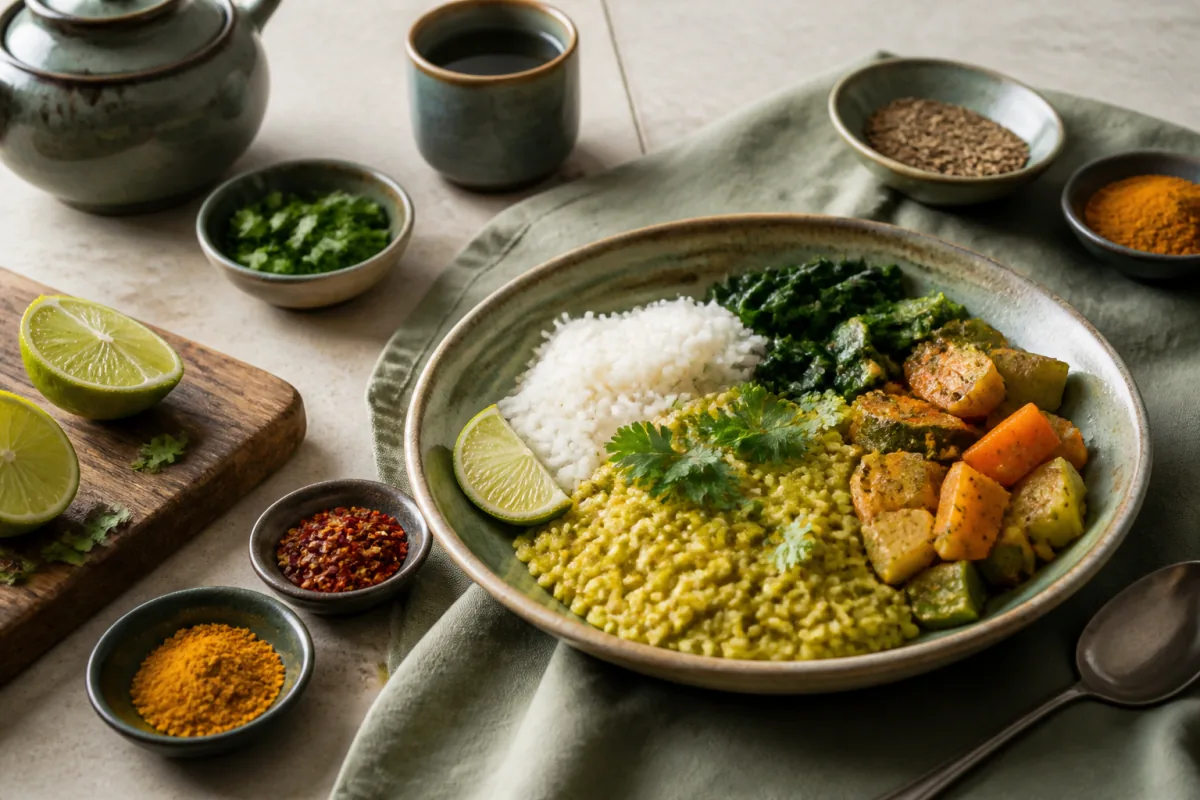

Food as medicine, for millennia
Ayurveda — "the science of life" — is one of the world's oldest systems of healing, set down in the classical Indian texts of Charaka and Sushruta around two thousand years ago and practised across the subcontinent ever since. Diet sits at its very centre: food is the first medicine.
Its framework is personalisation. Each person has a constitution (dosha — vata, pitta or kapha), a digestive fire (agni), and a need to eat in tune with the seasons. Meals should carry all six tastes, be freshly cooked, warm, and eaten mindfully.
Modern science hasn't validated the whole dosha system in clinical trials — and we won't pretend it has. But many of Ayurveda's habits — warm cooked vegetables, lentils, anti-inflammatory spices, a regular eating rhythm, mindful eating — line up neatly with good nutrition. We keep those, respectfully, and leave the unproven claims as cultural heritage rather than medical fact.
"You don't need to believe the metaphysics to benefit from the kitchen. Kitchari, haldi, ginger, warm and unhurried meals — that's ancestral wisdom modern science is comfortable with."Keeping what holds up
Honest about what's proven
We rate Ayurveda "emerging" — the components have support, the whole system is not clinically proven.
Anti-inflammatory spices
Turmeric (curcumin), ginger and other Ayurvedic spices show real anti-inflammatory signals in studies — promising, though the dramatic "cure-all" claims go well beyond the evidence.
A plant-forward base
Ayurveda's everyday plate — lentils, vegetables, whole grains, modest dairy, little meat — is exactly the kind of plant-forward eating with strong evidence for heart and metabolic health.
Mindful, rhythmic eating
Eating slowly, at regular times, freshly cooked and without distraction — core Ayurvedic etiquette — is independently linked to better digestion, satiety and weight control.
The dosha system
Matching food to vata/pitta/kapha types hasn't been validated in rigorous trials. We treat doshas as a useful cultural lens, not medical fact — and never let them override clinical needs.
Three Ayurvedic ideas worth keeping
Digestion first
Warm, cooked, well-spiced food is gentler on the gut than cold and raw — and Ayurveda's focus on agni (digestive fire) is really just an old name for eating in a way your stomach handles well.
Spices as everyday medicine
Turmeric, ginger, cumin, fenugreek, black pepper — used daily, in food, not megadosed in capsules. Flavour and a genuine anti-inflammatory bonus.
Rhythm & mindfulness
Regular meal times, a lighter dinner, eating slowly and without a screen. Simple, ancient, and backed by modern research on satiety and weight.
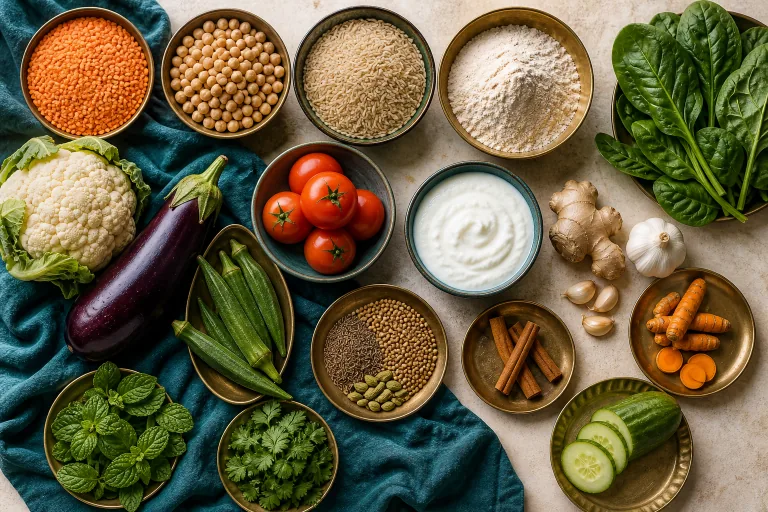
The Ayurvedic kitchen
Fresh, warm, plant-forward, spiced — and almost entirely vegetarian.
An Ayurvedic day
Warm, freshly cooked, lighter as the day goes on — the traditional rhythm.
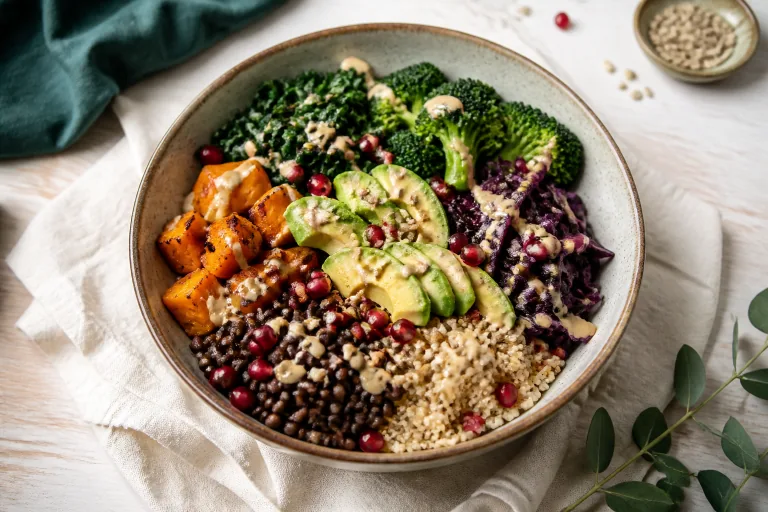
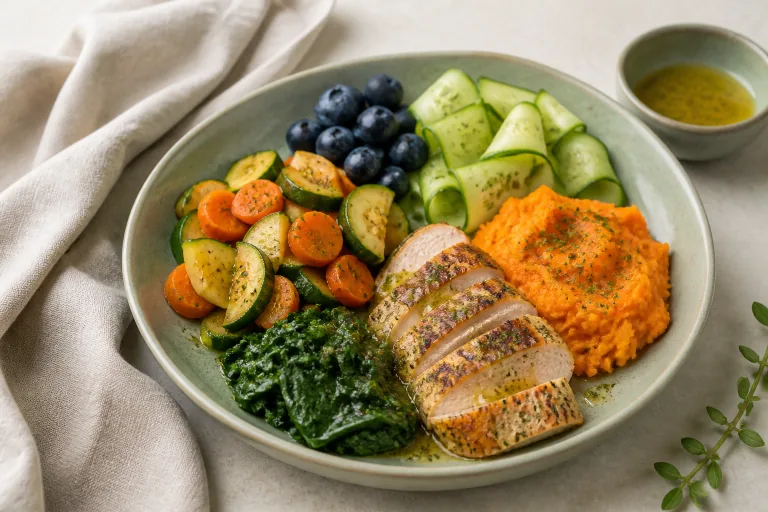
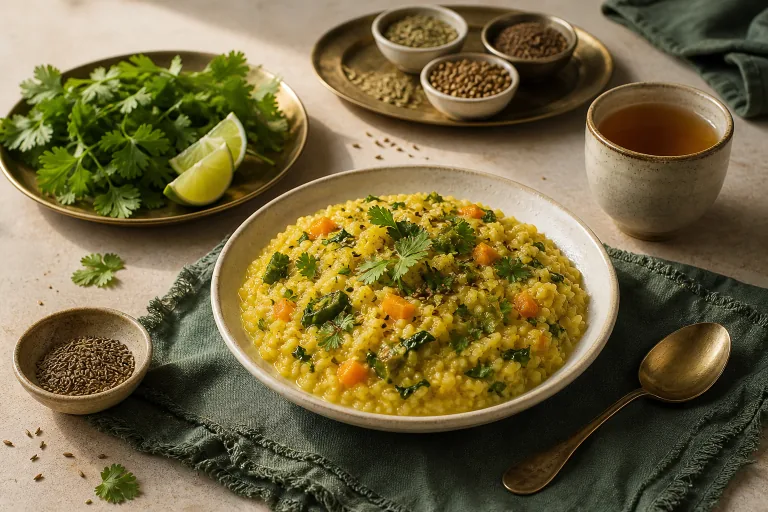
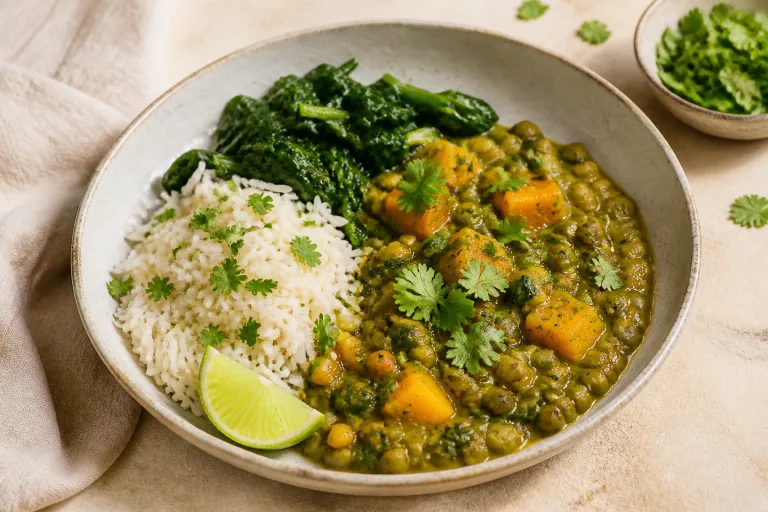
Four Ayurvedic-inspired recipes
Gentle, warming and spiced — adapted to be balanced and halal. Maryam keeps the nutrition sound.
Who this is for
A lovely fit if you…
- Are drawn to heritage, holistic, food-as-medicine eating
- Struggle with bloating or sluggish digestion
- Want a gentle, warming, mostly-vegetarian rhythm
- Already cook with haldi, ginger and cumin and want to lean in
Not on its own if you…
- Have a serious condition (diabetes, kidney, heart) needing evidence-based clinical care
- Are being offered Ayurvedic supplements/herbs as a cure — some are unregulated or unsafe
- Want a plan with proven outcomes rather than tradition
The tradition is the start. You are the rest.
We honour the heritage and add modern nutrition — so it nourishes as well as it comforts.
We keep the wisdom
The kitchari, the spices, the warm cooked food, the lighter dinner, the mindful rhythm — the parts of Ayurveda that genuinely help, we build your week around.
We add the numbers
We make sure the protein, iron, B12 and calories actually add up — the things a purely traditional plan can miss — and we keep ghee modest, not lavish.
We stay halal & safe
Everything stays halal, and we avoid unregulated Ayurvedic herbal supplements (some carry real risks). Food and habits — yes. Mystery capsules — no.
The honest answers
Partly. Several of its habits — plant-forward eating, anti-inflammatory spices, mindful and rhythmic meals — line up with solid nutrition science. The full dosha system and many herbal claims have not been proven in rigorous trials. We're honest about the line and keep what holds up.
No. You can get nearly all the benefit from the food and the rhythm without subscribing to vata/pitta/kapha. We treat doshas as a cultural lens that can make eating feel meaningful — never as a rule that overrides your actual health needs.
A little ghee is fine and flavourful, and Ayurveda always meant a small amount. The harm comes from the quantities modern cooking uses. We keep it modest and balance it with olive oil where it suits.
The research on curcumin (turmeric's active compound) is genuinely promising for inflammation — but it's poorly absorbed unless paired with black pepper and a little fat, and it's a helpful food, not a cure. Use it daily in cooking; don't expect miracles from a capsule.
A few days of kitchari is gentle, nourishing and can feel restorative — there's no harm in that. But your body already detoxes itself via the liver and kidneys; kitchari doesn't "cleanse toxins," it just gives your digestion an easy, wholesome break. Enjoy it for what it honestly is.
Often, yes — warm cooked food, digestive spices, buttermilk and a lighter dinner genuinely suit sensitive guts. If bloating is persistent, though, we'd also check for specific triggers (the low-FODMAP approach) rather than rely on tradition alone.
Where this comes from
- Classical textOrigins. The Charaka Samhita and Sushruta Samhita — the foundational Ayurvedic texts (c. 400 BCE–200 CE), with diet at the centre of treatment.
- ReviewsSpices. Reviews of curcumin (turmeric) and ginger bioactivity — promising anti-inflammatory signals; absorption enhanced by black pepper and fat. Karimi 2025 (Food Sci Nutr) ↗
- BehaviourMindful & rhythmic eating. Research linking slower, regular, distraction-free meals to better satiety and weight outcomes. Warren 2017 (Nutr Res Rev) ↗
- CautionSupplements. Reports of contamination (e.g., heavy metals) in some unregulated Ayurvedic herbal products — food and habits, not mystery capsules. Saper 2004 (JAMA) ↗
Compiled by Nidari Nutrition, June 2026. Pending formal clinical review by Maryam Shabbir, DN. Educational reference — not a substitute for individual medical advice. Ayurvedic herbal supplements can be unregulated; consult a clinician before use.
Ready to eat the old wisdom, well?
Fifteen minutes with a dietitian. We'll keep the kitchari, the spices and the gentle rhythm your family always knew — and make sure the nutrition genuinely adds up. Heritage, made sound.