The Carnivore Diet
An all-animal-foods diet — meat, fish, eggs, sometimes dairy, and zero plants. It has passionate followers and dramatic anecdotes, but almost no long-term research, no fibre and known nutrient gaps. We catalog it honestly, approach it cautiously, and usually help you find a safer way to get what you're really after.

The most extreme elimination
The carnivore diet — animal foods only, zero plants — surged online in the late 2010s, championed by figures like Shawn Baker and spread through striking personal testimonials. Its logic is essentially maximal elimination: remove every possible plant trigger and processed food, and see what happens.
Here's the honest mechanism behind the testimonials: because it removes everything potentially irritating, some people with food sensitivities or autoimmune symptoms feel better in the short term — but that's the elimination effect, not proof that meat is uniquely healing. A guided elimination can achieve the same insight far more safely.
We catalog carnivore for completeness and treat it with real caution. There's essentially no long-term research, it has no fibre and clear nutrient gaps (vitamin C, plant compounds), and it raises saturated-fat, heart and gut-microbiome questions. If you're drawn to it, we'll look for the safer version of what you're seeking.
"When someone feels better on carnivore, it's almost always because they removed something that was bothering them — not because plants are the enemy. We can find that trigger without giving up dal, vegetables and fibre for life."Honest about the testimonials
What the research shows
Mostly anecdote, real risks, and a safer path to the same goal.
Almost no real research
There are no long-term trials of the carnivore diet — the support is largely anecdote and self-report surveys. We won't dress that up as science.
It's the elimination
Short-term improvements usually come from removing trigger and processed foods — the same benefit a guided elimination gives, without the extremity.
Nutrient & fibre gaps
No fibre, no vitamin C from food, no plant compounds — plus a heavy saturated-fat load. Real concerns for the gut, heart and long-term health.
There's a safer route
If you're chasing symptom relief, a structured, supervised elimination (like AIP or Low-FODMAP) finds your triggers without the risks of an all-meat diet.
Three things carnivore does
Removes everything
By cutting all plants and processed food at once, it eliminates any dietary trigger — which can quiet symptoms short-term.
Very high satiety
An all-protein-and-fat diet is intensely filling and near-zero-carb, so people often eat less and lose weight at first.
Simple (too simple)
No counting, no choices — appealing in its simplicity, but at the cost of fibre, variety and long-term nutrition.
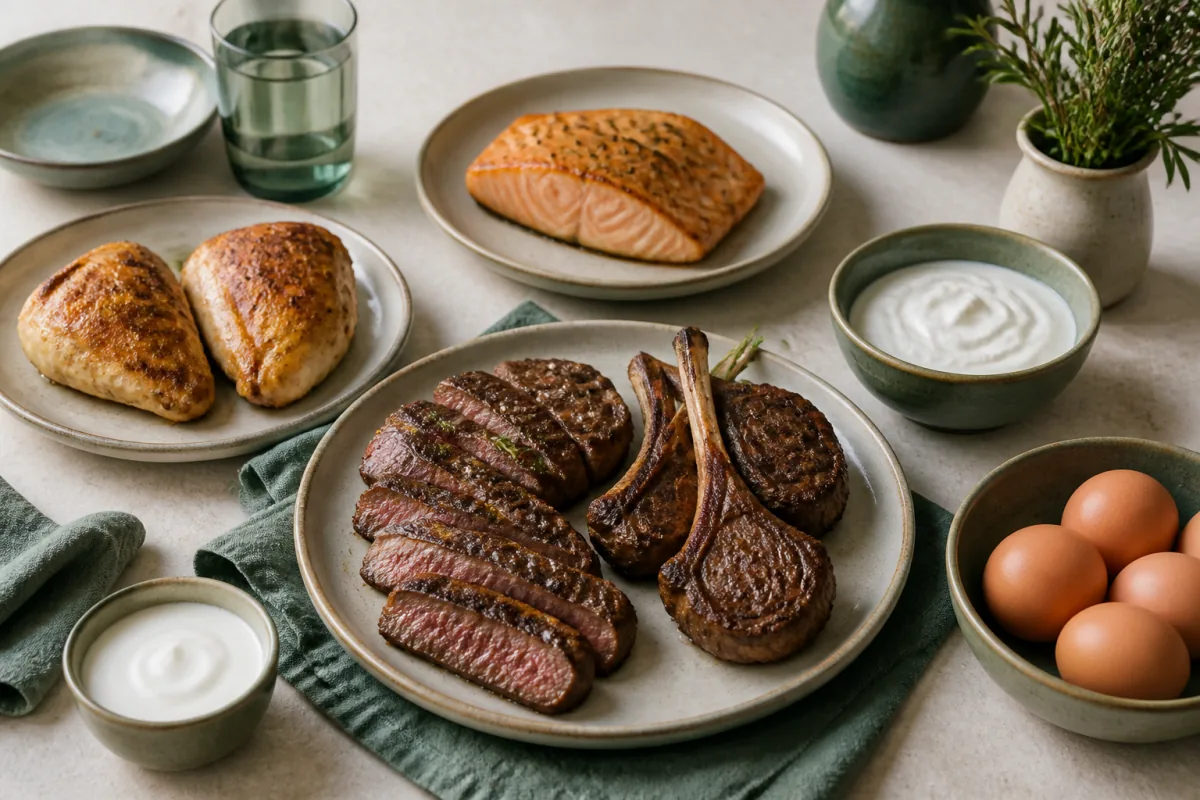
The carnivore plate
Animal foods only — which is exactly the problem.
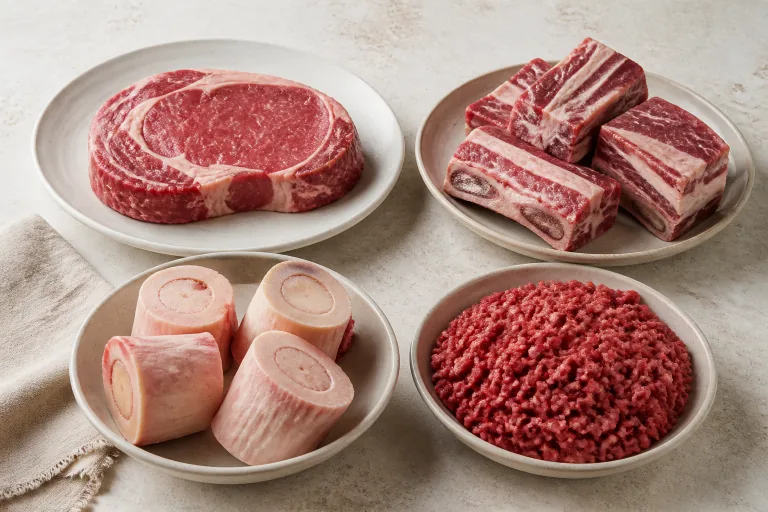
A carnivore day
Shown honestly — note how little variety, and no plants at all.

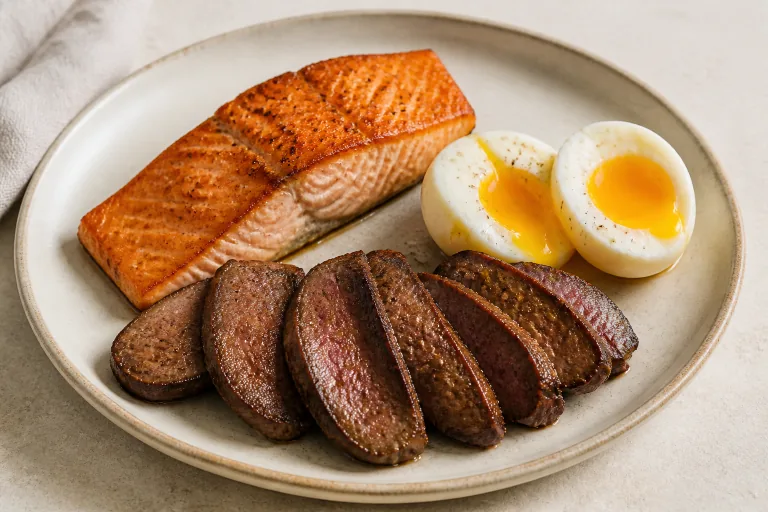
Four simple animal-food recipes
Kept basic and halal. Maryam would rather build you a safer guided plan — but here it is honestly.
Who this is for
Maybe if you…
- Have a severe autoimmune or gut condition and have exhausted other options
- Want to discuss a short, supervised elimination — not a forever diet
- Will do it with medical and dietetic oversight, not alone
Strongly reconsider if you…
- Want general health or weight loss — the risks outweigh any short-term gain
- Have heart, cholesterol or kidney concerns (high saturated fat and protein)
- Are pregnant, breastfeeding, or have a history of disordered eating
- Value fibre, gut health and the protective compounds only plants provide
The diet is the start. You are the rest.
Our honest job here is to find the safer version of what you're chasing.
We ask what you're after
Symptom relief? Weight loss? Simplicity? Each has a safer route. We diagnose the real goal before reaching for the most extreme tool.
We use a guided elimination
If a food is bothering you, a structured, supervised elimination-and-reintroduction finds it — without cutting fibre and plants for life.
We protect your health
If you do trial it, never unsupervised: we watch fibre, vitamin C, the saturated-fat load and your heart and kidney markers, and keep it short.
The honest answers
We can't call it safe for general use. There's no long-term research, no fibre, missing nutrients, and a high saturated-fat load that raises heart concerns. Any trial should be short and medically supervised — and for most people, we'd advise against it.
Usually because they removed something that was bothering them — a processed food, or a plant they're sensitive to. That's the elimination effect. The lesson isn't "plants are bad," it's "let's find your specific trigger" — which we can do far more safely.
This is a core problem. Carnivore has zero fibre (constipation, less diverse gut bacteria) and lacks vitamin C and the protective compounds found only in plants. Over time these gaps matter.
Some people report relief, but that's the elimination effect, and there's no solid evidence carnivore beats a proper guided elimination. For autoimmune symptoms we'd run a structured AIP-style protocol instead — same goal, far safer.
The meat can be halal-sourced, yes. But "halal" speaks to permissibility, not health — and a diet of only meat raises the nutritional and safety concerns above regardless of sourcing.
Almost always. If you want symptom relief, a guided elimination; if you want simplicity or weight loss, a balanced lower-carb or whole-food plan. Tell us what draws you to carnivore and we'll find the version that doesn't cost you your gut health.
Where this comes from
- PopularizersOrigins. Popularised in the late 2010s by figures including Shawn Baker; largely a social-media movement.
- Evidence noteAnecdote-level. Support is mainly self-report surveys and testimonials; no controlled long-term trials exist. Lennerz 2021 (Curr Dev Nutr) ↗
- MethodElimination effect. Established elimination-diet science explaining short-term symptom relief from removing triggers. Smith 2020 (JAOA) ↗
- ConcernsRisks. Nutritional-adequacy (fibre, vitamin C), saturated-fat and cardiovascular, and gut-microbiome concerns. Sacks 2017 AHA (Circulation) ↗
Compiled by Nidari Nutrition, June 2026. Pending formal clinical review by Maryam Shabbir, DN. Educational reference — not a substitute for individual medical advice. We do not recommend an all-meat diet without medical supervision.
Curious about carnivore?
Fifteen minutes with a dietitian. Tell us what's drawing you to it — symptom relief, simplicity, weight — and we'll find a safer, evidence-based way to get you there without giving up fibre, plants and gut health.