The MIND Diet
A blend of the two best-evidenced heart diets — Mediterranean and DASH — tilted toward the brain, with leafy greens and berries at the centre. Observational studies link it to slower cognitive decline. For families caring for aging parents, it's gentle, familiar, and easy to keep.
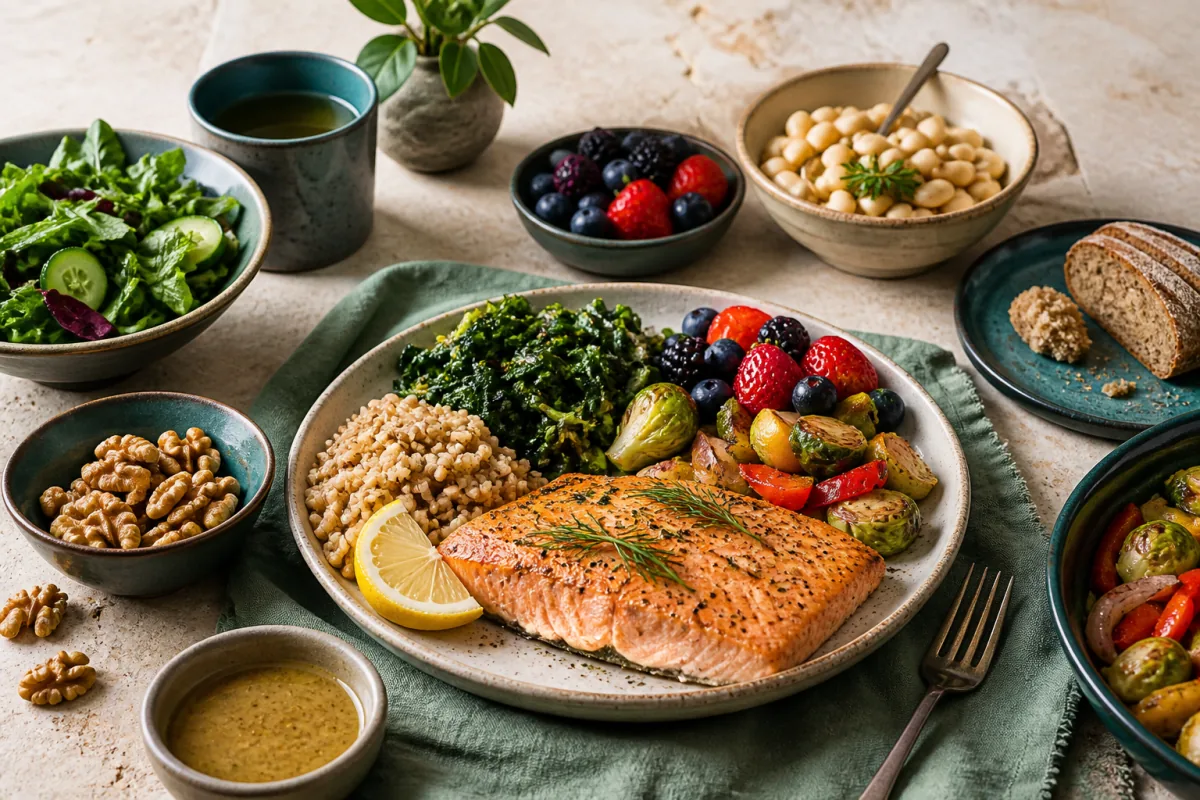
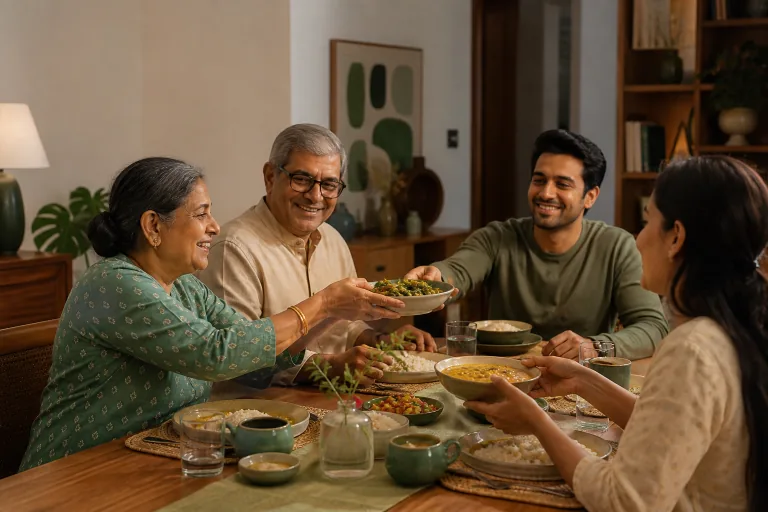
Two great diets, aimed at the brain
MIND — Mediterranean-DASH Intervention for Neurodegenerative Delay — was developed by epidemiologist Martha Clare Morris at Rush University in 2015. The idea was elegant: take the two diets with the strongest evidence for the heart and blood pressure, and weight them toward the foods most linked to brain health.
That meant putting leafy green vegetables and berries front and centre, alongside nuts, olive oil, fish and beans — and limiting butter, fried food, pastries and red meat.
Here's the honest framing: the encouraging results so far come mostly from observational studies, which can't prove cause and effect, and a 2023 randomised trial found only modest, largely non-significant differences over three years. So we treat MIND as a sensible, low-risk, heart-and-brain-friendly way to eat — not a guaranteed shield against dementia.
"There's no diet that's proven to prevent dementia. But a plate built on greens, berries, fish and olive oil is good for your heart and your blood vessels — and what's good for the heart tends to be good for the brain."Honest about the brain
What the research shows
Promising and low-risk — with a clear line between observation and proof.
Slower cognitive decline
In the original cohort studies, closer adherence to MIND was associated with slower cognitive decline and lower Alzheimer's risk — even with moderate, imperfect adherence.
The randomised-trial caveat
A 2023 randomised trial of MIND versus a control diet found only small, largely non-significant cognitive differences over three years. The observational signal is stronger than the trial — so we don't overpromise.
Built on proven diets
Whatever the brain verdict, MIND inherits the strong heart-and-blood-pressure evidence of the Mediterranean and DASH diets it's built from — so it's a safe, beneficial way to eat regardless.
Greens & berries stand out
The two signature foods have the most support: leafy greens (folate, vitamin K, lutein) and berries (flavonoids) are individually linked to better cognitive ageing.
Three things MIND does
Loads up on leafy greens
Folate, vitamin K and lutein from saag and palak are the nutrients most consistently tied to a slower-ageing brain — MIND asks for them most days.
Adds berry flavonoids
Berries are rich in anthocyanins, plant compounds linked to better memory in older adults — the one fruit MIND singles out.
Protects the blood vessels
By cutting saturated fat and refined food, MIND supports the same vascular health that protects the heart — and the brain is a deeply vascular organ.
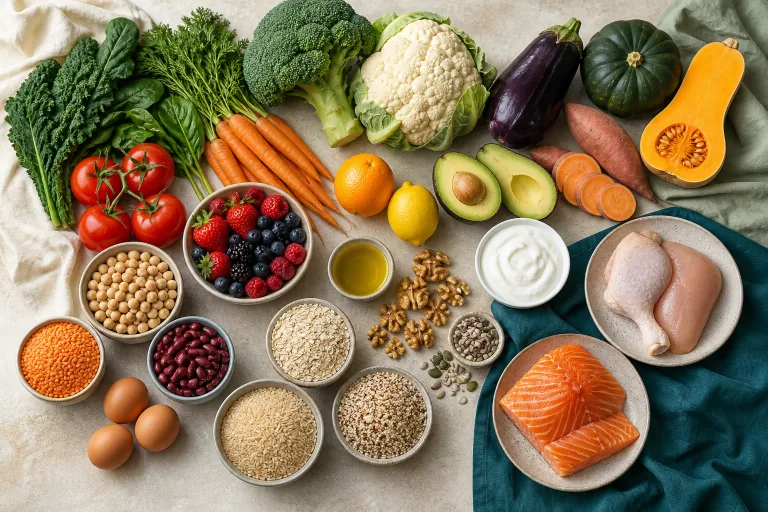
The MIND plate
Ten foods to favour, four to limit — desi greens make the hardest target the easiest.
A MIND day, desi-style
Greens and berries woven into food your family already cooks.
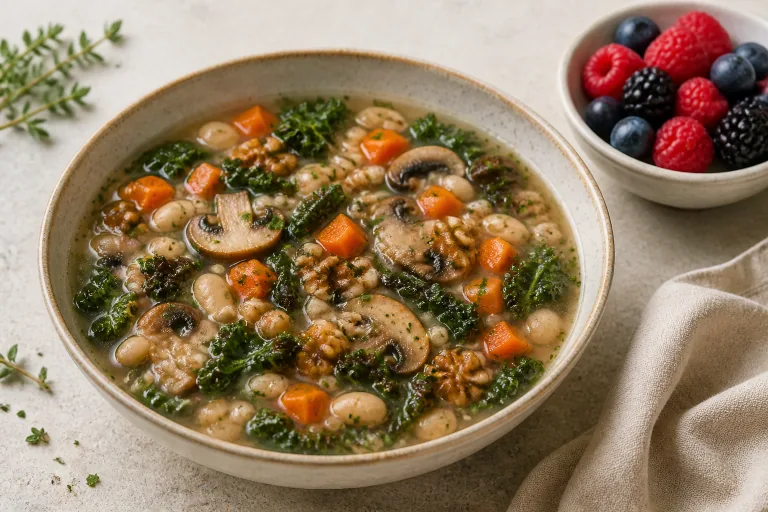
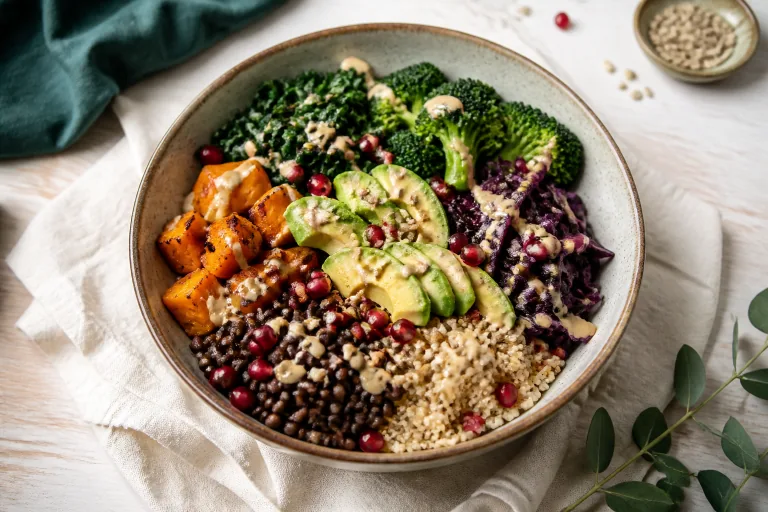
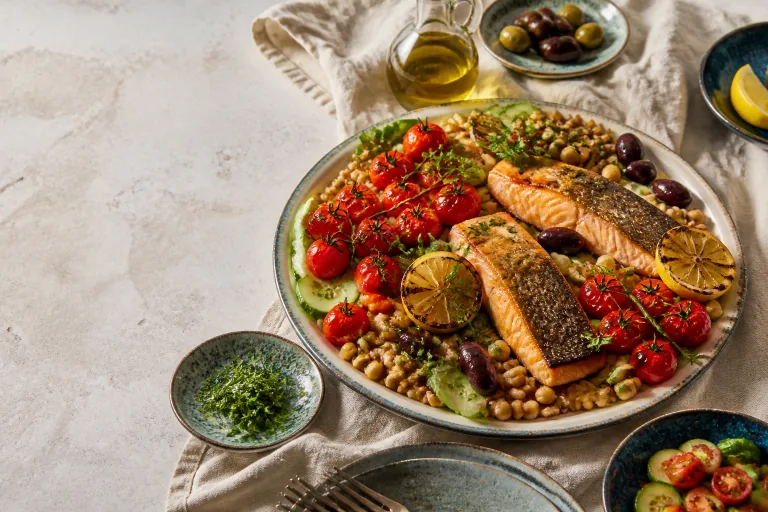
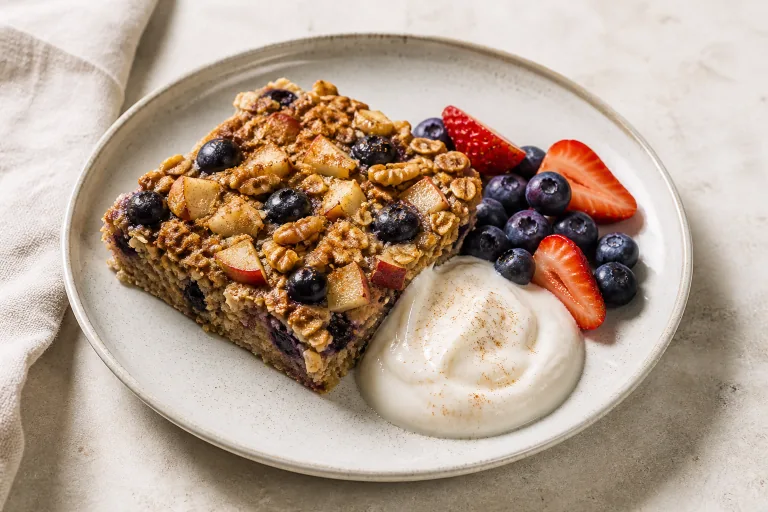
Four brain-friendly recipes
Greens, berries, fish and olive oil — desi-style. Maryam tunes it to your family's health.
Who this is for
A great fit if you…
- Have a family history of dementia and want a sensible, low-risk way to eat
- Are caring for, or cooking for, aging parents
- Already love saag, dal and fish — you're most of the way there
- Want one diet that's good for the heart and the brain together
Keep in mind that…
- No diet is proven to prevent dementia — MIND lowers risk factors, it isn't a guarantee
- The benefit comes from years of consistency, not a few weeks
- Berries can be pricey and seasonal — frozen berries work perfectly and cost less
The diet is the start. You are the rest.
The desi kitchen makes MIND's hardest targets — greens — the easy part.
We build around desi greens
Saag, palak, methi and sarson hit MIND's leafy-green target effortlessly. We rotate them through your week so "greens most days" is genuinely doable.
We make berries affordable
Fresh berries are pricey in much of the year — we lean on frozen, which keep their nutrients and cost a fraction, so the brain foods stay in your basket.
We fit it to the family
If you're cooking for parents with diabetes or blood pressure, we align MIND with those needs so one pot works for the whole household.
The honest answers
No diet can promise that, and we won't pretend otherwise. Observational studies link MIND to slower cognitive decline, but a randomised trial showed only small effects. What it reliably does is lower heart-disease and blood-pressure risk — and a healthy vascular system supports a healthy brain.
It's a hybrid of both, with two extra emphases: leafy greens and berries, the foods most linked to brain ageing. If you're already doing Mediterranean or DASH, you're most of the way to MIND.
All the desi favourites — palak, methi, sarson, bathua, and lettuce and spinach salads. The research used leafy greens broadly, so your saag absolutely counts. Aim for them most days.
Not at all. Frozen berries retain their flavonoids and cost much less — they're perfect blended into yogurt or oats. Don't let price keep berries off the plate.
Yes — that's its strongest, most certain benefit. Because it's built from the Mediterranean and DASH diets, MIND lowers cardiovascular risk and blood pressure even setting the brain question aside.
Usually yes, with portioning of the grains and fruit. We align MIND with diabetes-friendly carb amounts so one family meal works for everyone — that's exactly the kind of tailoring we do.
Where this comes from
- CohortCognitive decline. Morris et al., "MIND diet associated with reduced incidence of Alzheimer's disease," Alzheimer's & Dementia, 2015. Morris 2015 (Alz & Dem) ↗
- RCTThe trial caveat. Barnes et al., MIND diet randomised controlled trial, New England Journal of Medicine, 2023 — modest, largely non-significant cognitive effect. Barnes 2023 (NEJM) ↗
- TrialsThe foundations. PREDIMED (Mediterranean) and DASH trials — strong cardiovascular and blood-pressure evidence MIND inherits. PREDIMED 2018 (NEJM) ↗
- ComponentsGreens & berries. Studies linking leafy-green and berry intake to slower cognitive ageing. Morris 2018 (Neurology) ↗
Compiled by Nidari Nutrition, June 2026. Pending formal clinical review by Maryam Shabbir, DN. Educational reference — not a substitute for individual medical advice.
Eating for a sharper future?
Fifteen minutes with a dietitian. We'll build MIND around the saag, dal and fish your family already eats — and tune it for any blood-pressure or diabetes needs at the same table.