The Raw Food Diet
Predominantly raw, unprocessed plant foods, nothing heated above about 48°C. The "more produce, less processed" message is genuinely good — but the core claim, that cooking destroys vital enzymes, is a myth, and a raw diet makes calories and protein hard to reach. We keep the produce and leave the dogma.
An old idea with a modern myth
Raw foodism traces to early-1900s European naturopathy — Swiss physician Maximilian Bircher-Benner (inventor of muesli) believed uncooked plant food carried a special vitality. The later raw-vegan movement built on it. The premise: heating food above roughly 48°C destroys the enzymes and nutrients that make it healthy.
The honest read: the produce-forward, low-processed core is healthy — more raw fruit, vegetables, nuts and sprouts is good for almost anyone. But the central theory is a myth. Food enzymes are denatured by your stomach acid anyway, and your body makes its own digestive enzymes. Cooking destroys some nutrients but increases others (lycopene, beta-carotene), improves digestibility, and kills harmful microbes.
And there's a practical catch: an all-raw diet makes it hard to get enough calories and protein, and risks B12, iron and omega-3 gaps. We keep raw food's best instinct — eat more fresh produce — and reject the part that asks you to give up cooked dal and vegetables.
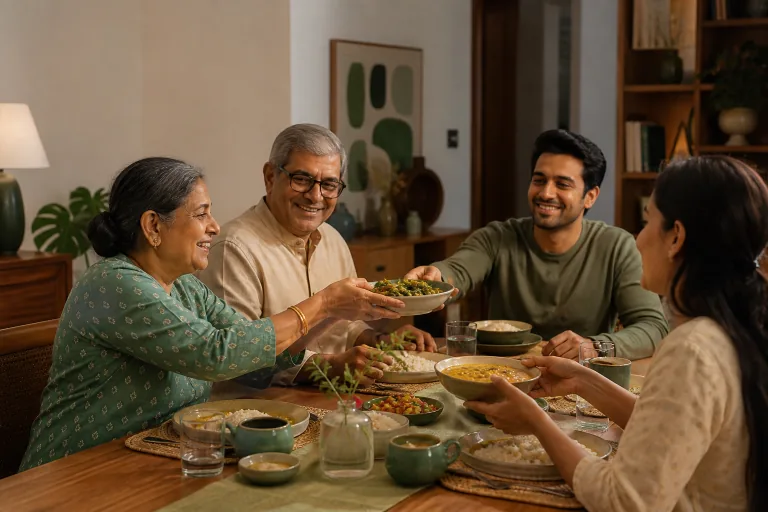
"More raw produce? Wonderful. The idea that cooking 'kills' your food? A myth — your stomach denatures those enzymes, and cooked dal is too valuable to give up."Keep the produce, lose the dogma
What the research shows
A healthy core wrapped around a debunked theory.
More fruit & vegetables helps
The genuine benefit: raw diets are very high in fruit, vegetables and fibre, low in processed food — a pattern linked to better health for almost everyone.
The enzyme theory is wrong
Food enzymes are denatured by stomach acid and don't aid your digestion; your body makes its own. "Cooking destroys vital enzymes" is not a real reason to eat raw.
Cooking isn't the enemy
Cooking increases some nutrients (lycopene in tomatoes, beta-carotene), improves digestibility and protein absorption, and makes food safe. Raw isn't automatically superior.
Calories, protein & weight
All-raw diets make it hard to get enough calories and protein — studies link strict raw diets to low body weight and risks of B12, iron and omega-3 deficiency. Not for pregnancy or children.
Three things raw food does
Floods you with produce
Eating mostly raw fruit and vegetables means lots of fibre, vitamins and antioxidants — the genuine, healthy part.
Very low energy density
Raw produce is bulky and low-calorie, so people often eat fewer calories and lose weight — sometimes too much.
Cuts out processed food
By definition there's no packaged, fried or refined food — a real benefit, though you don't need to go fully raw to get it.
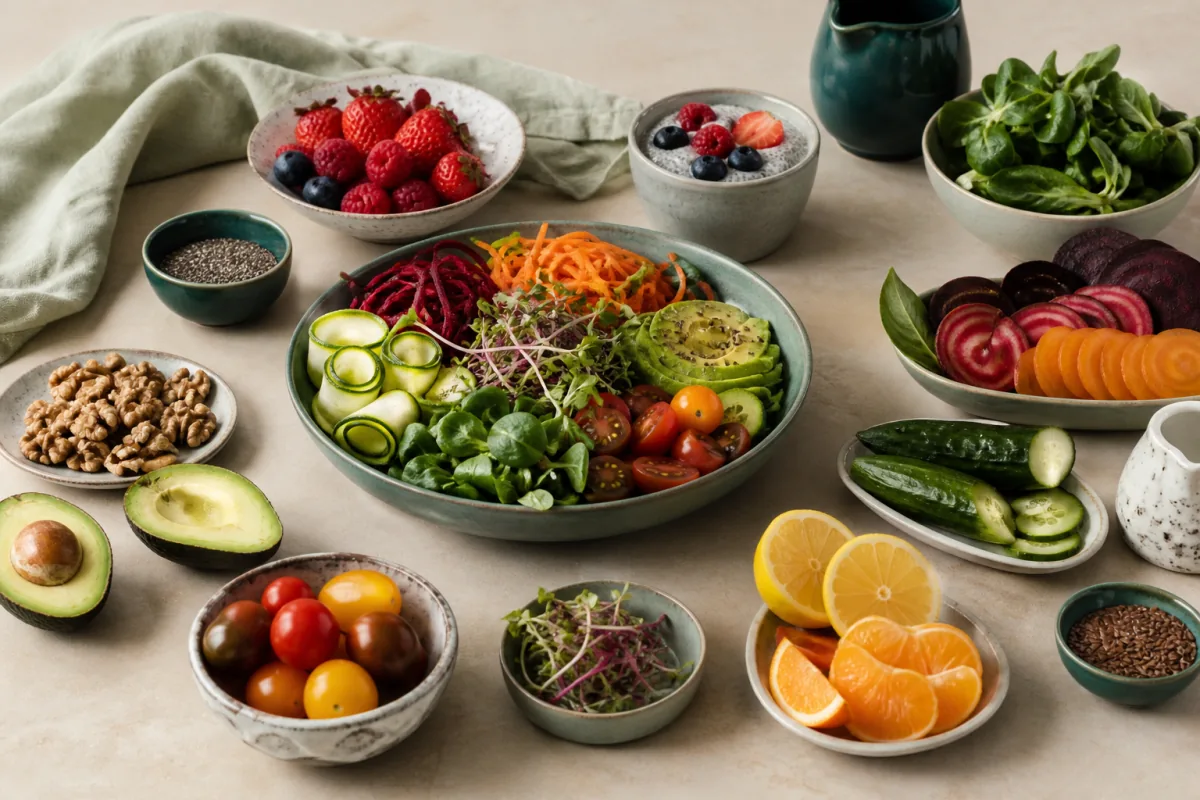
The raw food plate
Uncooked, plant-based — prepared by blending, sprouting and (gentle) dehydrating.
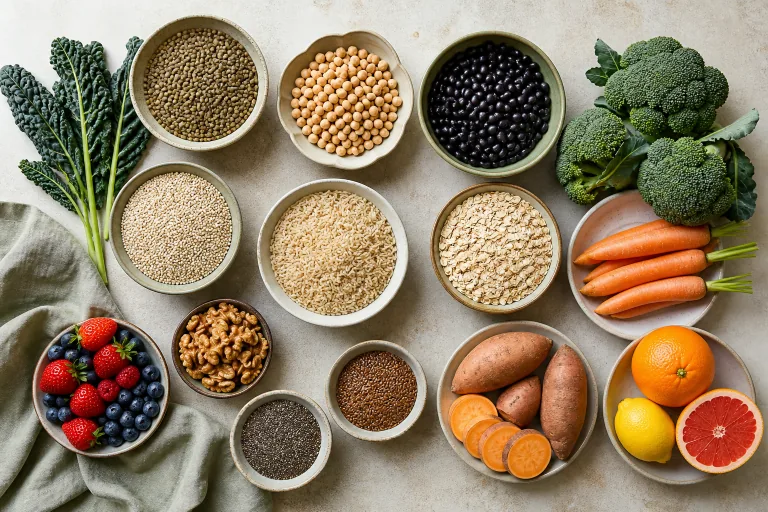
A raw day, desi-style
Where desi raw traditions shine — and where we'd add cooked food back.
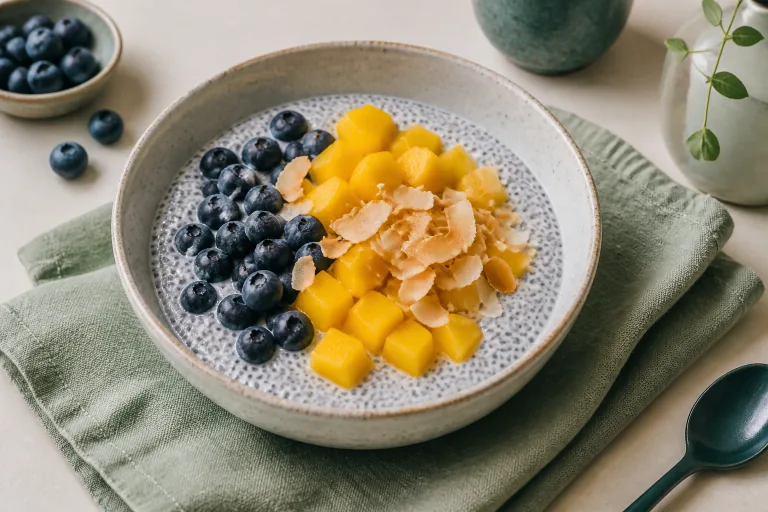
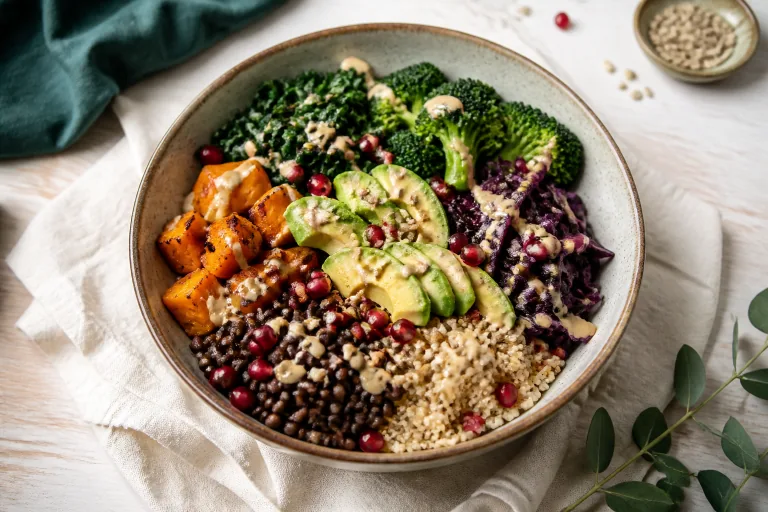
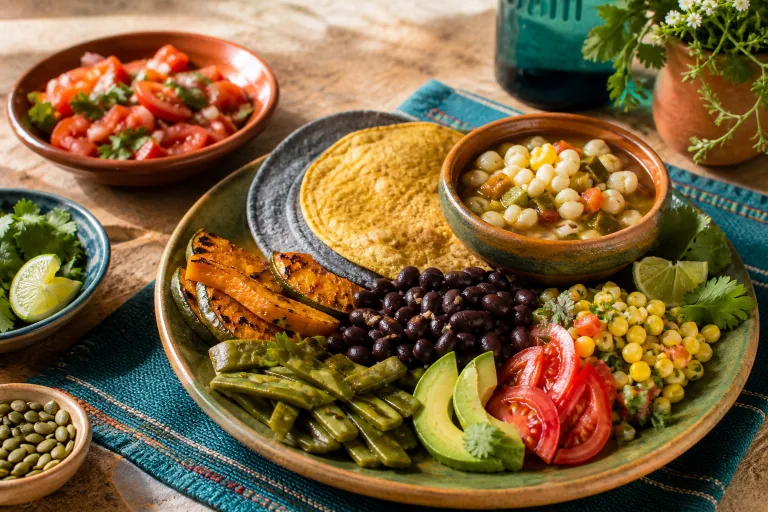
Four mostly-raw recipes
The desi raw dishes worth keeping. Maryam guards your calories, protein and B12.
Who this is for
A fit if you…
- Want to eat far more fresh fruit, vegetables and salads
- Love smoothies, sprouts and crudités
- Want a short, produce-heavy reset (not necessarily 100% raw)
- Are otherwise healthy and not underweight
Reconsider if you…
- Are pregnant, breastfeeding, or feeding children (calorie and nutrient needs are too high)
- Are underweight or struggle to eat enough — raw makes this worse
- Believe the enzyme claims — they're a myth, not a reason
- Would give up cooked dal and vegetables, which are too nutritious to lose
The diet is the start. You are the rest.
We take the good half of raw food and quietly fix the rest.
We add more raw produce
Smoothies, sprout chaats, big salads — we build in the genuine benefit of more fresh fruit and vegetables, desi-style.
We keep cooked food
Cooked dal, vegetables and whole grains stay — for protein, iron and the nutrients cooking actually unlocks. No enzyme dogma here.
We guard calories & B12
If you do go very raw, we make sure you get enough energy and protein and a reliable B12 source — the real risks of an all-raw plate.
The honest answers
This is the central myth. Food enzymes are broken down by your stomach acid and don't help you digest — and your body makes its own. Cooking destroys some vitamins (like vitamin C) but increases others and improves protein and mineral absorption. It's a trade-off, not destruction.
More raw produce is healthy — but a 100% raw diet isn't automatically better, and brings real downsides. The smart move is "more fresh fruit and vegetables," not "nothing cooked ever."
That's the hard part. Raw diets are bulky and low-calorie, so it's easy to under-eat — strict raw diets are linked to low body weight. Sprouts, soaked nuts, seeds, avocado and oils help, but it takes real planning, which is where we come in.
We'd avoid it. Cooking kills harmful bacteria and parasites; raw animal foods carry genuine food-safety risk. A raw diet is best kept plant-based, and even then with care.
It usually causes weight loss because it's so low in calories — sometimes more than is healthy. If weight is your goal, a balanced, filling approach like Volumetrics gets you there more safely, with cooked food included.
Yes — a raw vegan diet provides no reliable B12, exactly like any vegan plan. A supplement is essential, along with attention to iron and omega-3.
Where this comes from
- HistoryOrigins. Early-1900s naturopathy (Maximilian Bircher-Benner, Zürich) and the later raw-vegan movement.
- PhysiologyEnzyme myth. Basic digestive physiology — food enzymes are denatured by stomach acid; the body produces its own. StatPearls: Digestion ↗
- NutritionCooking & nutrients. Research showing cooking increases bioavailability of some nutrients (lycopene, beta-carotene) and improves digestibility. Gartner 1997 (AJCN) ↗
- AdequacyBody weight & nutrients. Studies linking strict raw diets to low body weight and risk of B12, iron and omega-3 deficiency. Koebnick 1999 (Giessen) ↗
Compiled by Nidari Nutrition, June 2026. Pending formal clinical review by Maryam Shabbir, DN. Educational reference — not a substitute for individual medical advice. Not suitable during pregnancy, breastfeeding or for children.
Drawn to eating raw?
Fifteen minutes with a dietitian. We'll build in much more fresh produce — smoothies, sprout chaats, big salads — keep the cooked dal and vegetables your body needs, and protect your calories, protein and B12.