The Volumetrics Diet
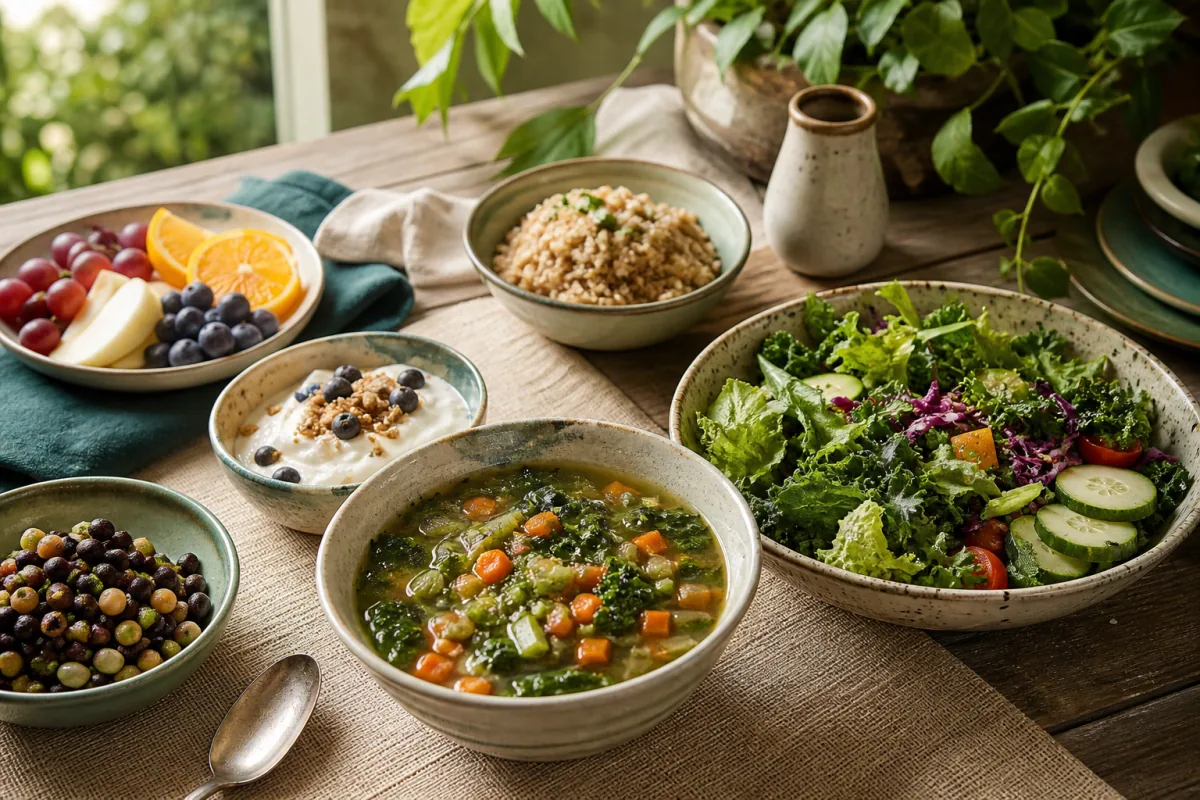
A research-grounded approach built on one idea: foods rich in water and fibre let you eat large, satisfying portions for few calories. You're rarely hungry, because you eat more food, not less. And it's a natural fit for desi cooking — shorba, sabzi and dal are low-energy-density by nature.
Built on real science
Volumetrics comes from Dr. Barbara Rolls at Penn State, drawing on decades of her laboratory's research into energy density — the number of calories in a given weight of food. It's one of the more genuinely evidence-based ideas in the popular-diet world.
The insight: people tend to eat a fairly consistent weight of food each day, regardless of its calories. So if you fill your plate with low-energy-density foods — high in water and fibre, like vegetables, fruit, broth soups and beans — you eat a satisfying volume while taking in fewer calories. Hunger rarely drives the plan.
For us it's almost effortless. Shorba, sabzi, dal, salad, fruit — the everyday foundation of South Asian eating — are already low-energy-density. We just put them at the centre and manage the calorie-dense extras.
"You don't lose weight by eating less food on Volumetrics — you lose it by eating the right food. A big bowl of vegetable shorba fills you for almost nothing."More food, fewer calories
What the research shows
One of the better-grounded weight approaches in the atlas.
Energy density & fullness
Decades of controlled feeding studies show people eat a similar weight of food — so lower-energy-density meals mean fewer calories at the same fullness.
Soup & salad first
Starting a meal with a broth soup or salad reliably reduces total calories eaten — a simple, tested trick that fits the desi habit of shorba before dinner.
Sustainable loss
Because it works with appetite rather than against it, Volumetrics tends to be easier to sustain than restriction-based diets — and modest, lasting weight loss follows.
It's a principle, not a cage
Results depend on actually centring low-density foods and watching the calorie-dense extras (oil, ghee, nuts, sweets). It's a smart habit, not a strict rulebook.
Three things Volumetrics does
Fills you for fewer calories
Water and fibre add weight and volume without calories, so a big, satisfying plate can still be light.
Beats hunger
You eat to fullness, so the willpower battle that sinks most diets barely shows up.
Crowds out the dense stuff
Filling up on vegetables, soup and fruit naturally leaves less room for fried and sugary calorie-dense foods.
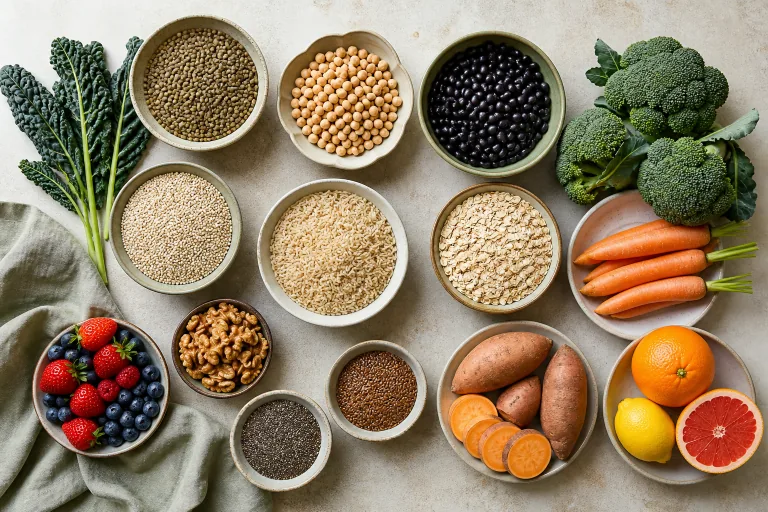
The Volumetrics plate
Low-energy-density foods lead; calorie-dense ones play a small supporting role.
A Volumetrics day, desi-style
Big, filling, low-calorie plates — with shorba leading the way.
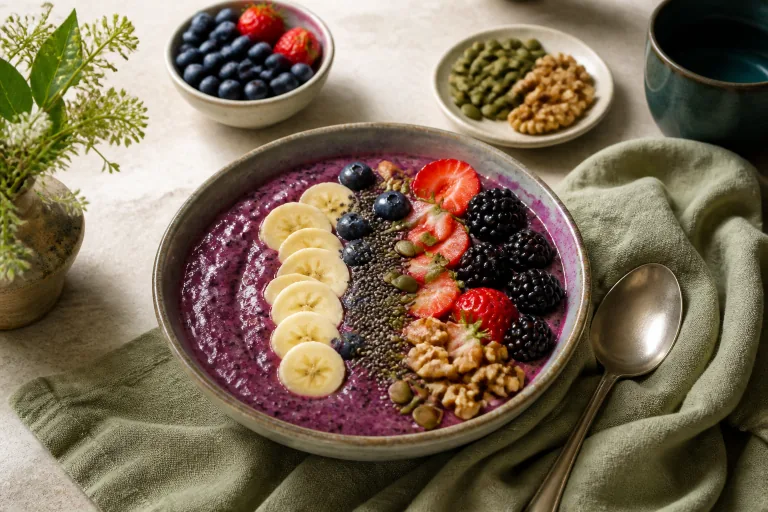
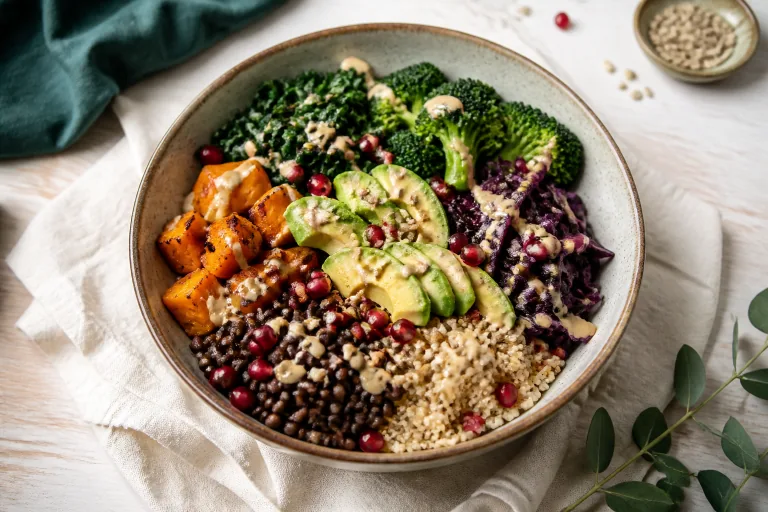
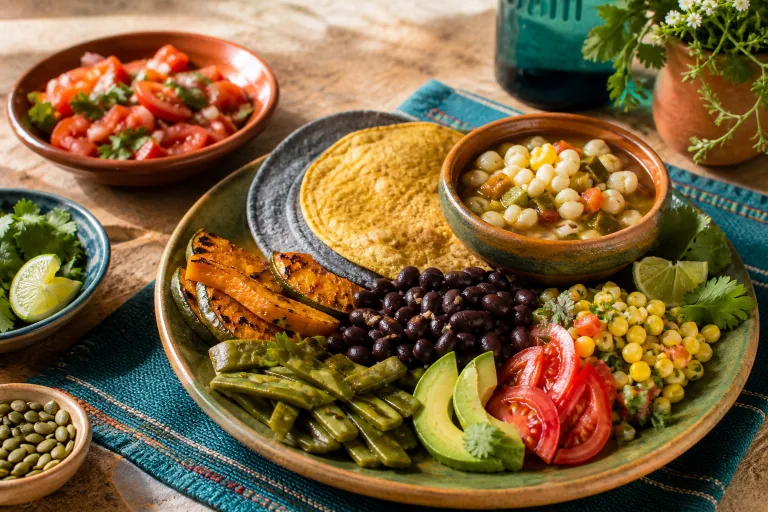
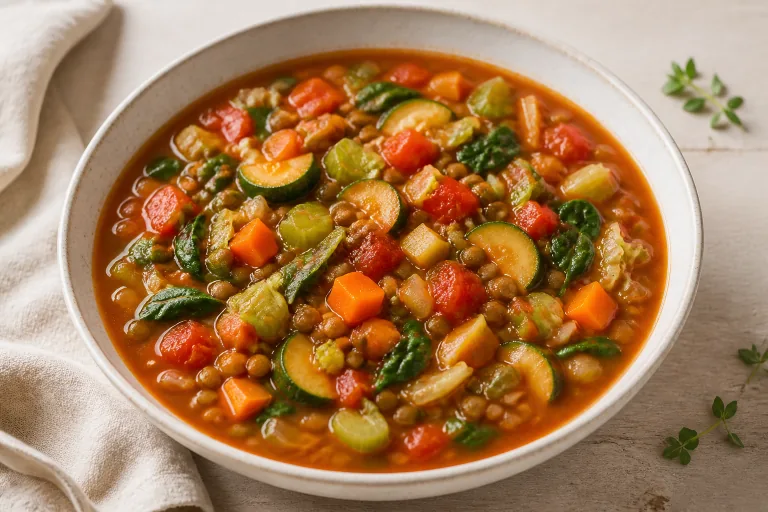
Four low-density, high-volume recipes
Filling, light, and fully desi. Maryam keeps protein adequate and the dense extras in check.
Who this is for
A great fit if you…
- Want to lose weight without feeling hungry or deprived
- Love soups, sabzi, dal and salad — you're already most of the way there
- Have struggled with portion-restriction diets
- Want a simple principle, not a counting system
Mind the extras if you…
- Cook with a lot of oil, ghee or cream — these are calorie-dense and sneak in fast
- Snack heavily on nuts, mithai or fried foods (small amounts only)
- Forget protein — high volume still needs a protein anchor to satisfy
The diet is the start. You are the rest.
Desi food is already built for this — we just tilt the balance.
We centre shorba & sabzi
A vegetable soup before meals and vegetables as half the plate — the two changes that do most of the work, both already familiar.
We manage the dense extras
Oil, ghee, cream, nuts and sweets are where the calories hide. We don't ban them — we right-size them so your big plates stay light.
We keep protein in
Volume fills the stomach; protein keeps you full for hours. We make sure dal, yogurt, eggs or lean meat anchor each meal.
The honest answers
It's how many calories are packed into a given weight of food. Vegetables and soups are low-density (lots of food, few calories); oil, nuts and sweets are high-density (little food, many calories). Volumetrics simply tilts your plate toward the low-density end.
Yes — that's the whole point, and it's well-supported. If you swap calorie-dense foods for water- and fibre-rich ones, you can eat a bigger volume of food while taking in fewer calories, and stay full.
No. Volumetrics is about food choices, not counting. Fill up on soups, vegetables, fruit and legumes, keep the dense extras small, and the calories take care of themselves.
Not bad — just calorie-dense, so they count fast. A drizzle of oil and a small handful of nuts are healthy; a heavy hand with ghee or a big bowl of nuts can quietly undo the volume strategy. Portion is everything here.
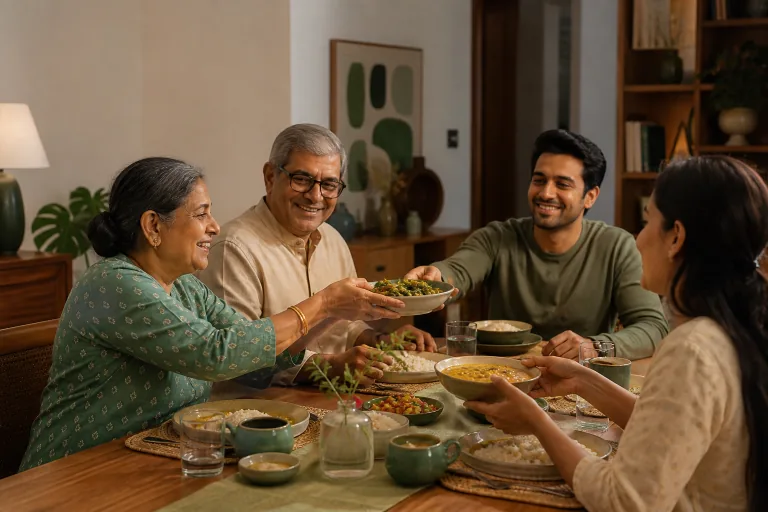
Very — it's just hearty, vegetable-forward home cooking. The same pot of shorba, dal and sabzi feeds everyone, and there's nothing "diet-y" about a big, satisfying plate of real food.
It's one of the more sustainable approaches, precisely because you're not fighting hunger. The habit — soup or salad first, vegetables as the base, dense extras small — is easy to keep for years, not weeks.
Where this comes from
- BookOrigins. Barbara Rolls, PhD, Volumetrics (2000) and later editions, from Penn State research. Rolls 2017 (Nutr Bull) ↗
- Lab studiesEnergy density. Rolls laboratory feeding studies showing people eat a consistent weight of food, so density drives calorie intake. Ello-Martin 2007 (AJCN) ↗
- TrialsPre-loads. Studies showing a soup or salad before a meal reduces total calories eaten. Flood & Rolls 2007 ↗
- WeightSustainability. Weight-management research on low-energy-density diets and satiety. Robinson 2022 meta-analysis ↗
Compiled by Nidari Nutrition, June 2026. Pending formal clinical review by Maryam Shabbir, DN. Educational reference — not a substitute for individual medical advice.
Want to eat more and lose weight?
Fifteen minutes with a dietitian. We'll put shorba, sabzi and dal at the centre, right-size the oil and ghee, keep protein steady — and build big, satisfying plates that quietly hold fewer calories.