Whole-Food Plant-Based
Plants in their whole form, with added oil and refined food kept to a minimum. It goes a step beyond vegan — and it carries some of the most striking evidence in nutrition for heart and blood-sugar health. The food is familiar; the hard habit is the oil.
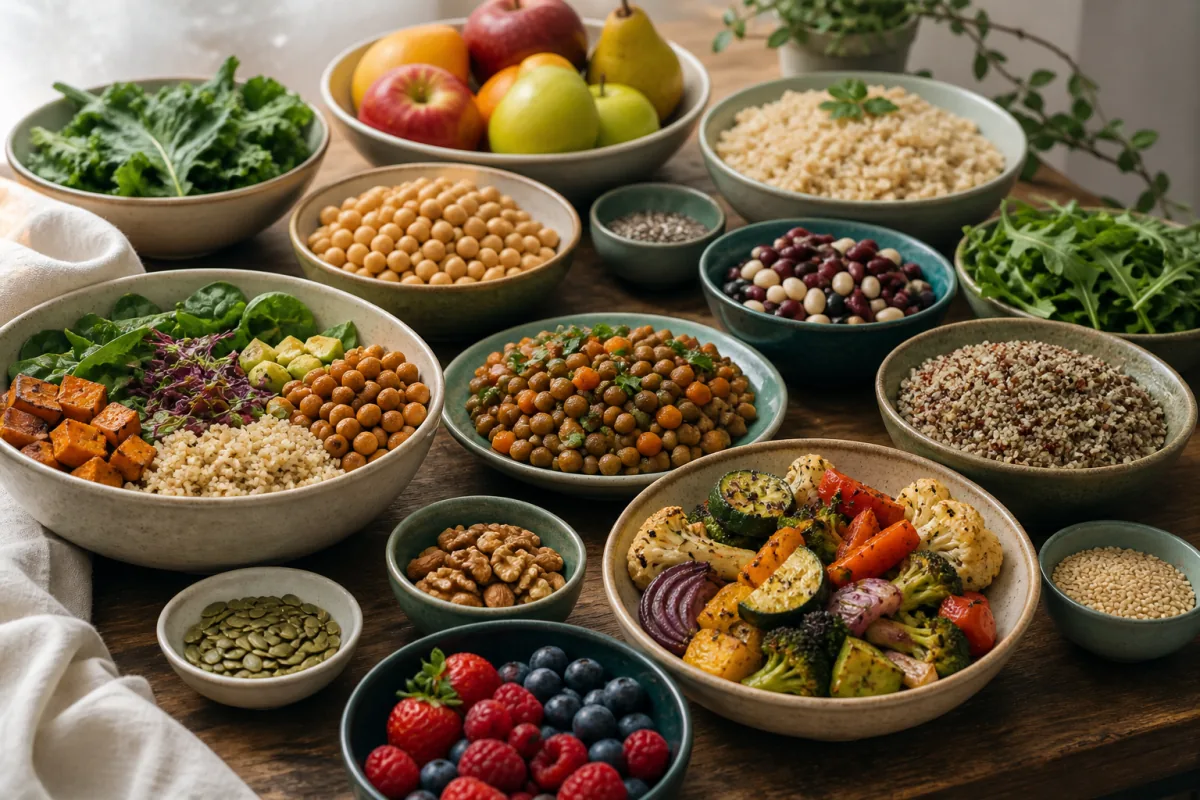

Born in the clinic, not the cookbook
Whole-Food Plant-Based eating was shaped by physicians and researchers — T. Colin Campbell at Cornell and cardiologist Caldwell Esselstyn at the Cleveland Clinic — who were less interested in a label than in a question: could food alone move serious disease? Their answer leaned hard toward whole plants and away from oil and processed food.
It shares vegan's no-animal-products rule but adds two more: minimise added oils and minimise refined and processed food. That makes it stricter than vegan — and it's why its evidence for the heart is among the most discussed in nutrition.
For a desi kitchen the ingredients are familiar — dal, sabzi, roti, brown rice, fruit. The real change is technique: cooking with less oil and ghee. We'll be honest that this is the hardest habit to shift, and we shift it gradually.
"The food on a WFPB plate is the food your grandmother cooked. The difference is the tablespoon of oil that became a quarter-cup — and we walk that back slowly, not overnight."Whole food, less oil
What the research shows
Strong signals for the heart — with an honest line on what's proven and what isn't.
Reversing heart disease
Dean Ornish's randomised trial paired a very-low-fat plant-based diet with exercise and stress care and showed measurable regression of coronary artery narrowing — one of the few diets shown to reverse, not just slow, heart disease.
The Esselstyn cohort
Esselstyn reported that motivated heart patients on an oil-free plant diet had very few further cardiac events. Striking — but we note honestly it was a selected, uncontrolled case series, not a randomised trial.
Blood sugar & weight
Whole-food plant-based diets have improved weight, LDL cholesterol and blood-sugar control in controlled trials — meaningful for the diabetes so common in our families.
Oil & B12
The benefit is clearest for whole-food plant-based eating overall; the case for zero oil specifically is weaker than its advocates suggest. And like any vegan diet, it requires a B12 source — plants don't provide it.
Three things this plate does
Strips out refined calories
No animal fat, little added oil and minimal refined flour or sugar removes the most calorie-dense, least-filling foods — so you eat well and naturally less.
Fibre that moves numbers
A wall of fibre from whole grains, legumes and vegetables lowers LDL cholesterol and smooths blood sugar — the mechanisms behind the trial results.
Nutrient density
Whole plants pack vitamins, minerals and protective compounds per calorie — the opposite of the refined, oily foods they replace.
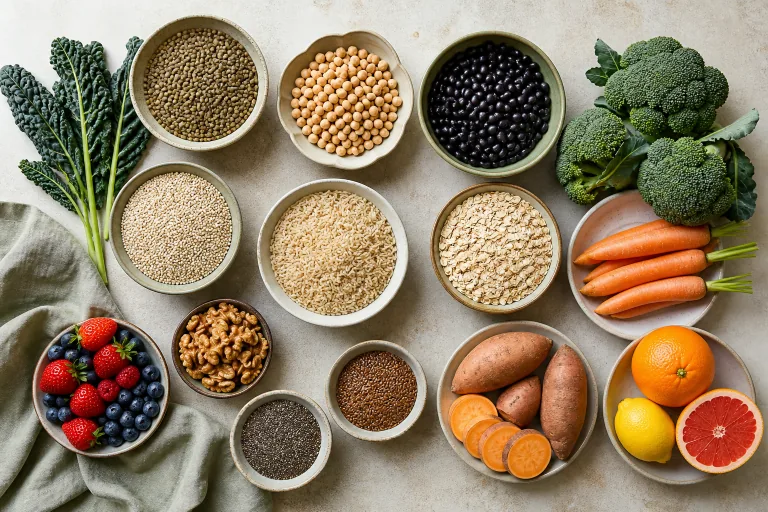
The whole-food plant-based plate
Whole plants, generous portions — with oil and refined food dialled right down.
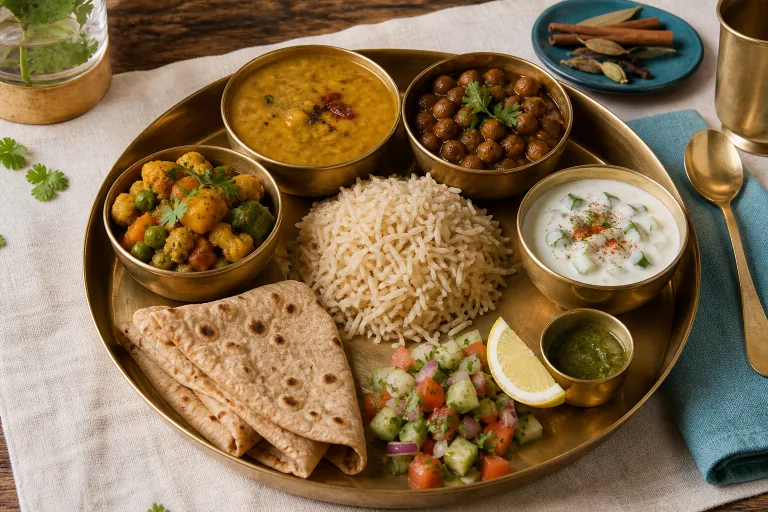
A WFPB day, desi-style
The same dishes you know — cooked with technique that needs little or no oil.
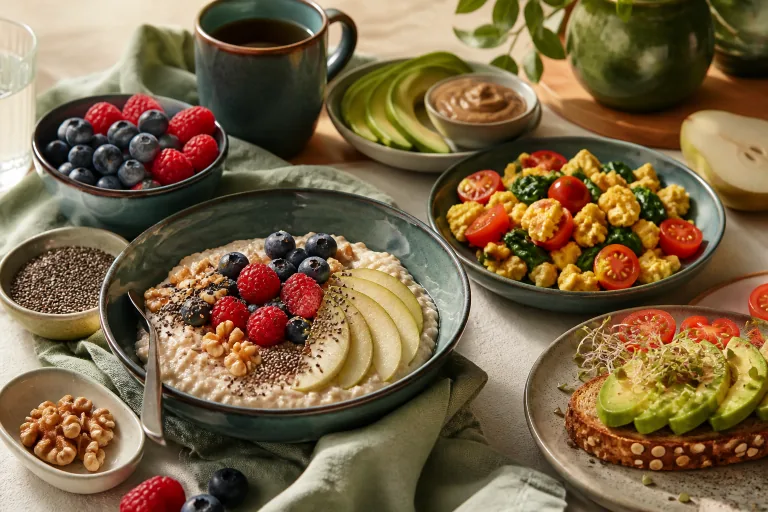
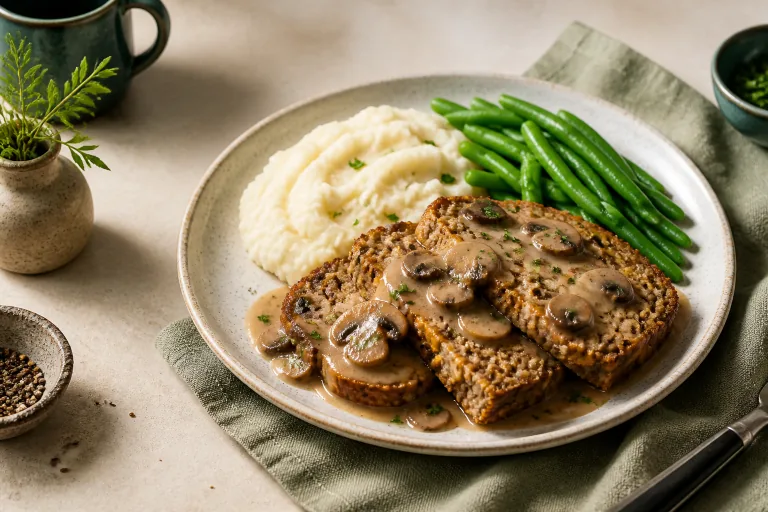
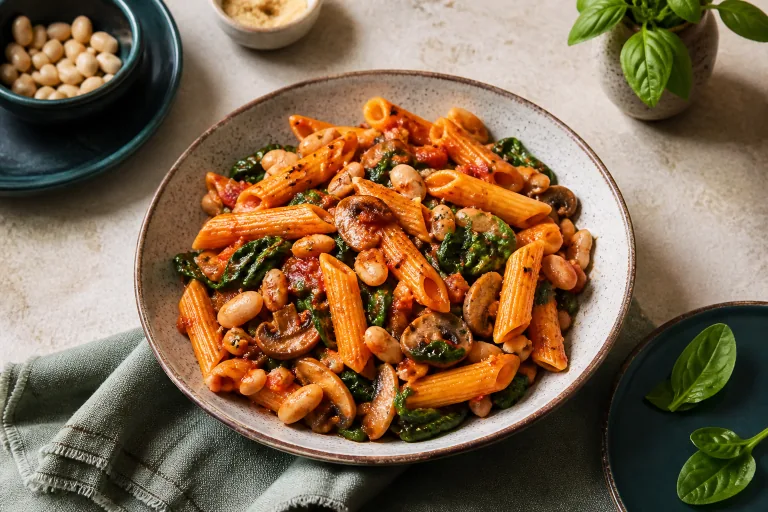
Four whole-food, oil-light recipes
Proof that desi food works with far less oil. Maryam keeps protein, B12 and calories on track.
Who this is for
A great fit if you…
- Have heart disease, high cholesterol or type-2 diabetes and want the most diet-driven approach
- Are motivated and willing to change how you cook, not just what you buy
- Already eat mostly plants and want to take it further
- Like home cooking and don't mind a learning curve
Plan carefully if you…
- Need a B12 source in place — non-negotiable, as with any vegan diet
- Are underweight, very active, or feeding children (very low fat can make calories hard to reach)
- Eat out often or have little time to cook
- Find all-or-nothing rules discouraging — a gradual version may stick better
The diet is the start. You are the rest.
WFPB is powerful and demanding. We make it livable inside a real desi kitchen.
We walk back the oil gradually
Going oil-free overnight rarely lasts. We teach water-sautéing and dry tempering and reduce oil step by step, so the change holds instead of snapping back.
We protect B12 & calories
A B12 source is set from day one, and we make sure a very-low-fat plate still meets your energy and protein needs — especially if you're active or feeding a family.
We aim for sustainable, not perfect
If the strict version won't last for you, we keep most of the benefit with a gentler whole-food plant-based plate you'll actually maintain.
The honest answers
For many people, yes — and we'll say so. The strongest evidence is for whole-food plant-based eating overall; the case for zero oil specifically is weaker. We often reduce oil substantially rather than to zero, which captures most of the benefit and is far easier to keep up.
Both avoid all animal products. WFPB adds two rules: minimise added oils and minimise refined and processed food. So a vegan could eat chips and white bread; WFPB deliberately wouldn't. It's the stricter, more clinical cousin.
In the Ornish trial, an intensive plant-based lifestyle did show regression of artery narrowing — but as part of a package with exercise and stress management, in motivated patients. It's genuinely promising, not magic, and it belongs alongside your cardiologist's care, never instead of it.
Protein, yes — dal, chana, soya and whole grains carry it. Calories can be the trickier part, because very-low-fat food is filling. If you're active, underweight or feeding children, we deliberately build in enough energy with nuts, seeds and starchy whole foods.
Yes. WFPB is plant-based, so the same rule applies as for vegan: plants don't make B12, and a supplement or reliably fortified foods is essential. We set this up from the start.
With technique. Onions and masala can be water-sautéed; tadka spices can be dry-roasted; the oven and a good non-stick pan do a lot. The flavours come from spice, not fat — which is good news, because desi cooking has spice in abundance.
Where this comes from
- RCTHeart-disease regression. Ornish et al., Lifestyle Heart Trial (Lancet, 1990) — coronary regression on an intensive low-fat plant-based lifestyle program. Ornish 1990 (Lancet) ↗
- Case seriesCardiac events. Esselstyn et al., plant-based nutrition in coronary patients — promising but uncontrolled, selected cohort. Esselstyn 2014 (J Fam Pract) ↗
- TrialsDiabetes & weight. Randomised trials of low-fat plant-based diets improving glycaemic control, weight and LDL. Mishra 2013 GEICO RCT ↗
- Position statementAdequacy & B12. Academy of Nutrition and Dietetics (2016), Position on Vegetarian Diets (PMID 27886704) — well-planned plant-based eating is adequate when B12, omega-3, iodine, calcium, vitamin D and energy are covered. AND 2016 Vegetarian Diets ↗
Compiled by Nidari Nutrition, June 2026. Pending formal clinical review by Maryam Shabbir, DN. Educational reference — not a substitute for individual medical advice.
Ready for the whole-food version?
Fifteen minutes with a dietitian. We'll set the B12, protect your energy and protein, and walk back the oil at a pace you can actually keep — using the dal, sabzi and grains you already cook.