The Zone Diet
Eat carbs, protein and fat in a fixed 40/30/30 ratio at every meal to steady blood sugar and insulin. The balanced-plate idea is genuinely useful — protein, smart carbs and fat together. The rigid math, and the bold anti-inflammation claims, are where we part ways.


A ratio for every meal
Biochemist Dr. Barry Sears introduced The Zone in 1995. The premise: keep every meal at 40% carbohydrate, 30% protein, 30% fat, and you keep insulin and a set of hormones (eicosanoids) in a favourable "zone" that controls hunger and, Sears argued, inflammation.
The honest read splits cleanly in two. The balanced-plate principle — pairing protein and fat with smart carbohydrate at every meal — is sound, steadies blood sugar, and keeps you full. That part works. The specific 40/30/30 math, and the strong claims about controlling inflammation through it, are weakly supported.
So we keep the useful half. A desi thali — dal, sabzi, a little rice or roti, yogurt — is already a balanced plate. We build that balance in deliberately, without asking you to weigh "blocks" at every meal.
"The good idea in The Zone is 'never eat carbs naked' — always pair them with protein and fat. We teach that as a habit, not as arithmetic."Balance without the math
What the research shows
A sound core idea wrapped in some over-claims.
Balanced meals help
Pairing carbohydrate with protein and fat blunts the blood-sugar rise and improves fullness — the genuinely useful principle at the heart of The Zone.
40/30/30 isn't magic
There's no strong evidence the exact 40/30/30 ratio beats other balanced approaches. The benefit comes from balance and food quality, not the precise numbers.
The inflammation theory
The claim that 40/30/30 controls inflammation through hormone balance is not well validated. We catalog it honestly rather than repeat the marketing.
Comparable results
For weight, The Zone performs about the same as other sensible diets — results track adherence, not the ratio. The structure helps some people stay consistent.
Three things balance does
Steadies blood sugar
Protein and fat alongside carbohydrate slow digestion, so glucose rises gently instead of spiking — easier on insulin.
Keeps you full
Protein is the most satiating nutrient; a balanced plate curbs the hunger that drives snacking and overeating.
Builds a habit
"Protein and fat with every carb" is a simple rule that survives real life far better than weighing food into blocks.
The balanced plate
A protein, a smart carb and a good fat at every meal.

A Zone day, desi-style
Every plate carries a protein, a smart carb and a good fat — no weighing required.

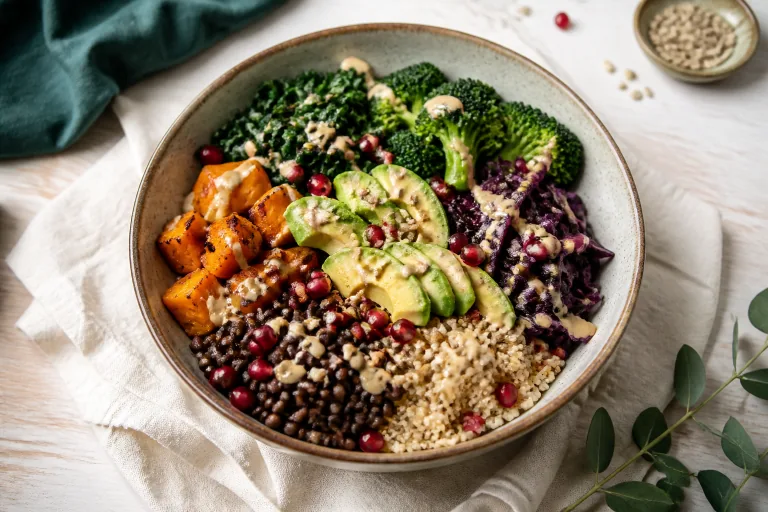
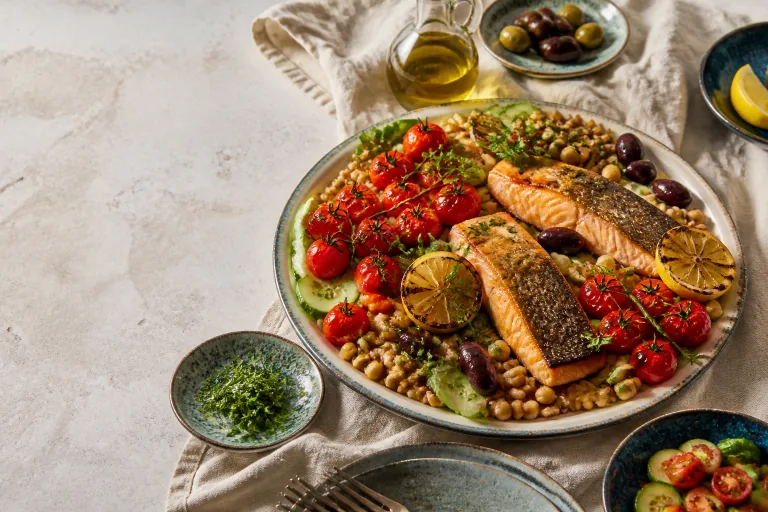

Four balanced-plate recipes
Protein, smart carbs and good fats together. Maryam handles the balance so you don't count.
Who this is for
A fit if you…
- Tend to eat carb-heavy meals and want to steady your energy and blood sugar
- Like a simple guiding principle for building a plate
- Are managing weight or insulin and want protein at every meal
- Want structure without a strict elimination
Skip the hype if you…
- Are drawn in by the inflammation claims — those are weakly supported
- Would find weighing food into 40/30/30 "blocks" stressful (most people do)
- Need a therapeutic diet for a specific condition — start from a condition page instead
The diet is the start. You are the rest.
We take the good idea and leave the calculator behind.
Balance without math
Instead of weighing blocks, we teach the habit: a protein, a smart carb and a good fat on every plate. A thali already does most of the work.
Protein at every meal
We make sure dal, eggs, chicken, fish, paneer or yogurt anchor each meal — the part of The Zone that genuinely steadies appetite and sugar.
We set honest expectations
We won't sell you the inflammation story. We use the balanced plate for steadier energy and weight, and point you to condition-specific plans where they fit.
The honest answers
It's the share of calories from carbohydrate (40%), protein (30%) and fat (30%) that The Zone wants at every meal. The idea is balance; the exact numbers matter far less than simply not eating carbs alone.
The original program does, and most people find it exhausting. We don't. We teach the balanced-plate habit instead, which gets you the real benefit without weighing or arithmetic.
That's the diet's biggest claim and its weakest. The hormonal "eicosanoid balance" theory isn't well validated. If inflammation is your goal, our Anti-Inflammatory page is the more honest, evidence-based place to look.
No — it's much more balanced. Keto pushes carbs very low; The Zone keeps a substantial 40% carbohydrate. It's closer to a "balanced plate with protein at every meal" than a low-carb diet.
The balanced-plate principle helps steady blood sugar, which is useful. But if you have diabetes we'd build from our Diabetes and Glycemic-Index guidance and borrow the balance idea, rather than following The Zone's ratios.
Yes — at 40% of calories, carbohydrate is still the largest share. This isn't a low-carb diet; it's a balanced one. You'll have roti, rice and dal, just paired with protein and fat rather than eaten alone.
Where this comes from
- BookOrigins. Barry Sears, PhD, The Zone (1995).
- ResearchBalanced meals. Studies on mixed-meal glycaemic response and the satiating effect of protein and fat with carbohydrate. Bell 2015 (Diab Care) ↗
- TrialsRatios compared. Diet-comparison trials finding macronutrient ratio matters less than adherence and food quality. Dansinger 2005 (JAMA) ↗
- CritiqueInflammation theory. Critiques noting weak support for the eicosanoid-balance mechanism. Cheuvront 2003 (JACN) ↗
Compiled by Nidari Nutrition, June 2026. Pending formal clinical review by Maryam Shabbir, DN. Educational reference — not a substitute for individual medical advice.
Want a balanced plate?
Fifteen minutes with a dietitian. We'll build the balanced-plate habit into your real meals — protein, smart carbs and good fats together — without the blocks, the math or the over-claims.